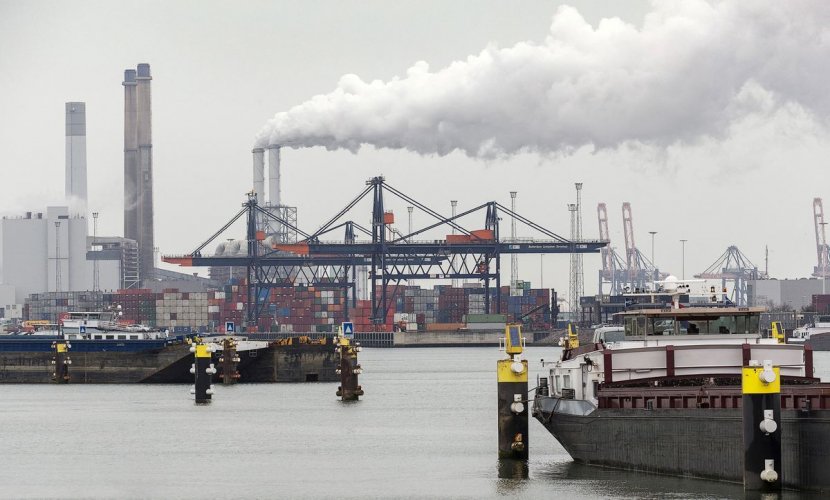
Hydrogen projects located in the Rotterdam port area and exporting countries will be able to increase hydrogen supplies to 4.6 million tons per year by 2030.
The figure was based on "specific projects and realistic plans" that companies and exporting countries are working on, reports with reference to the management of the port Reuters.
According to new data, the largest port in Europe will be able to deliver annually to the northwestern part of the mainland three times more hydrogen than previously predicted.
The proposal from the port and a group of 70 companies and exporting countries was heavily focused on imports.
Around 600,000 mt/year of low-carbon hydrogen is planned to come on stream in the Rotterdam region by 2030, with imports amounting to 4 million mt/year, the port authority said.
"Hydrogen made in Latin America or Australia for instance, can be shipped to Rotterdam efficiently and on a large scale, processed here, and then be transported to the hinterland," the Port of Rotterdam said.
The biofuel to be delivered by the port is a blend of "green" hydrogen produced from renewable energy sources and "blue" hydrogen produced from natural gas in a CO2-neutral process. Currently, no green or blue hydrogen is imported into Rotterdam, a port spokesperson said, adding its previous expectation was to reach 1.5 million tonnes of sustainable hydrogen by 2030.
Hydrogen in Rotterdam is currently only derived from gas in a process that creates considerable CO2 emissions.
Hydrogen is an alternative to natural gas as energy and a raw material. The European Union is banking on hydrogen derived from renewable energy in the transition to cleaner energy.
According to the REPowerEU strategy recently developed by the European Commission, in 2030 Europe should consume 20 million tons of hydrogen per year, both European and imported. The proposals of the European Commission, set out in REPowerEU, were the EU's response to the Russian invasion of Ukraine. These proposals aim to rid the EU of Russian fossil fuels by 2030.
Recall that on May 10, EU climate policy chief Frans Timmermans said that next week the European Commission will propose a new bill to support green hydrogen projects. The EU will also propose introducing rules governing what types of hydrogen are considered "green". This is to ensure that hydrogen imported from outside of Europe is also accepted as "green".
As reported EcoPolitica before, Frans Timmermans stated that the future European clean energy system will rely on imported green hydrogen, because Europe will never be able to produce its own hydrogen in sufficient quantities.