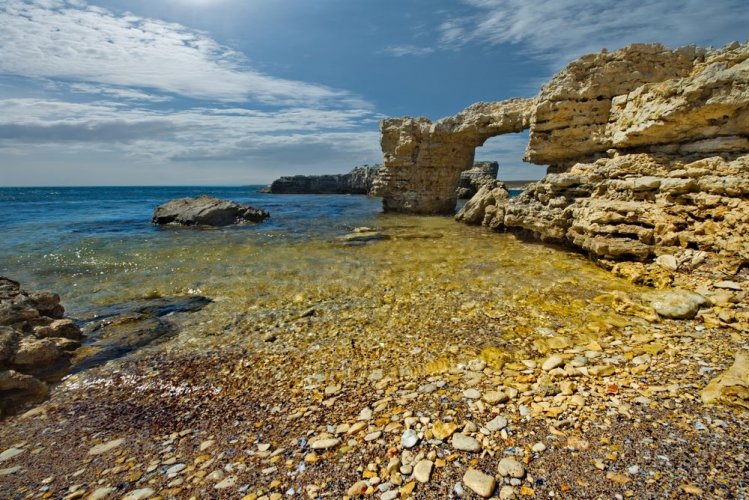
Turkish geologist Dr. Osman Bektash said that global warming will lead to the extinction of many species in the Black Sea, because toxic gases from the lower layer of water will penetrate into the surface water.
In his opinion, the future catastrophe cannot be avoided, reports NV.
The material explained that the Black Sea consists of three layers, namely:
- the lower one, containing poisonous gases, in particular hydrogen sulfide;
- intermediate, acting as an air conditioner with a temperature of about 8°C;
- the upper one is rich in oxygen and biodiversity.
Bektash warned that due to global warming, the middle layer began to thin. That is, in the future, poisonous gases from the lower layer will enter the upper one. This will threaten everyone who lives near the sea.
He notes that this situation cannot be changed.
Earlier, EcoPolitic wrote, that Oleksandr Krasnolutskyi, the Deputy Minister of Environmental Protection and Natural Resources, said that Russia's armed aggression could cause the destruction of Black Sea ecosystems.
As EcoPolitic previously reported, over the past 20-30 years, the condition of the Black Sea has worsened, in particular, pollution by garbage, plastic, pesticides, metals, etc. has increased.