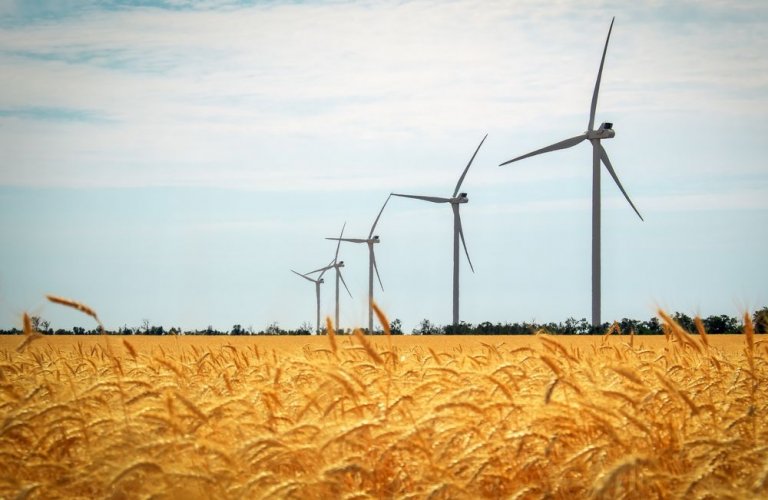
Wind energy in Europe continues to show positive dynamics in the deployment of new capacity. In 2025, 19.1 GW of new generation capacity was installed, of which 15.1 GW was in EU countries. Europe's wind energy sector now has a total capacity of 304 GW. However, there are still bureaucratic and technological barriers to the development of wind farms.
This was reported by the Ukrainian Wind Energy Association (UWEA) with reference to data from WindEurope.
Share in the energy balance
Throughout 2025, wind power plants in the European Union generated 465 TWh of electricity. This gave wind energy a 19% share of the bloc's total energy demand.
In some European countries, the wind segment covered more than 30% of consumption. In particular, in Denmark it is 50%, in Ireland and Lithuania – 33% each, in the UK – 31%, and in Sweden – 30%.
The share of wind energy is between 20% and 30% for six other countries. These include Spain with 23% of total demand and Germany with 28%.
Technical trends
The wind energy segment demonstrates active technological progress. UWEA cites several figures:
- Average turbine capacity. For onshore wind power plants, this was 5.4 MW, while for offshore – 10.7 MW.
- Capacity utilization factor. This indicator was 25-40% for onshore plants and about 50% for offshore.
Europe’s wind power sector is following a new trend – repowering. This refers to the modernization of old wind power plants, which allows the number of units to be reduced threefold while simultaneously tripling generation volumes. During 2025, 0.9 GW of capacity was decommissioned, while 2 GW of upgraded capacity was brought online. According to preliminary forecasts, from 2026 to 2030, Europe will upgrade 8 GW of the 16 GW scheduled for decommissioning.
Rates of generation growth
In Europe, new projects that will add 20.9 GW of wind power generation are set to be financed. This applies only to those that received a final investment decision during 2025. The total capital investment is estimated at €45 billion.
However, analysts have found that the pace of capacity expansion is insufficient to meet Europe’s 2030 targets. To do so, more than 30 GW need to be added each year, compared to the actual 19 GW.
Overall, by 2030, Europe plans to install equipment to generate an additional 151 GW of energy, of which 112 GW will be in the European Union. If these plans are implemented, Europe’s total wind capacity will reach 439 GW, with 343 GW in the EU. Onshore wind power plants remain the priority, as offshore projects are still more expensive and complex. For example, in 2025, 90% of new projects were in the onshore sector, while offshore added only 2 GW of capacity.
Barriers to WPP development
For large-scale wind power plant network deployment in Europe, according to WindEurope, there are two critical barriers:
Burdensome regulation. The permitting process remains very lengthy, even though countries are attempting to implement reforms. There is, however, an exception. In Germany, permitting times have been reduced to 17 months, which contributed to a significant increase in new permit issuances. In 2025, a record 20.8 GW of permits were issued in Germany.
Electric grids. Outdated approaches to connection and limitations in transmission capacity are technological barriers faced by new projects.
EcoPolitic previously reported on the gradual recovery of the wind energy sector in Ukraine. During the past year, 2025, more new wind farms were installed than in the previous three years combined.