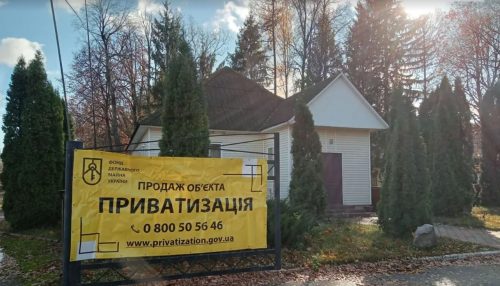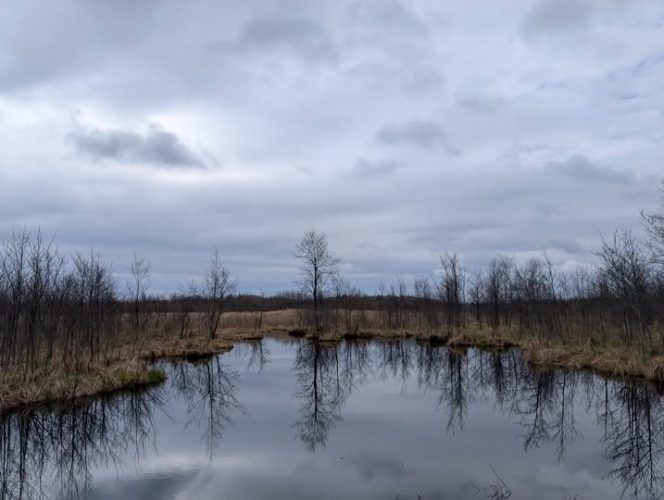
Attempts are once again being made to put a section of the Berezivske deposit in the Rivne region up for auction for peat extraction. However, the area is home to one of the largest natural wetlands, which, according to experts, should become part of a nature reserve rather than being drained for mining operations.
The Ukrainian Nature Conservation Group (UNCG) is calling on the new leadership of the Ministry of Economy and Environment not to approve the sale of this plot.
Activists have learnt that the State Service of Geology and Subsoil of Ukraine has once again approached the Ministry of Economy to seek permission to put the disputed plot up for auction.
Attempt No. 2
Earlier this year, the authorities had already rejected the State Service of Geology and Subsoil’s attempts to sell mining rights in the Berezivske deposit. However, the service has resubmitted virtually the same proposal to the ministry, without even adjusting its boundaries.
EcoPolitic reported that in April, the Ministry of Economy cited violations of Ukrainian legislation and blocked the sale of the bog at auction. The reasons for the refusal included the site's location within the region's ecological network and its designation as part of the forest fund. They also noted that the former Ministry of Environment had already approved the annexation of part of the disputed territory to the Rivne Nature Reserve.
A unique ecosystem
This concerns “Berezyna” – a site of more than 2,000 ha in the Varash district near the Rivne Nature Reserve. The ecosystem is comprised of bogs and forests. According to experts, these wetlands are among the largest in Ukraine that are still preserved in their natural state.
“We urge the new leadership of the Ministry of Economy not to approve putting this plot up for auction and to intensify efforts to expand the Rivne Nature Reserve in order to permanently protect this valuable natural area,” insist the UNCG.
Earlier, the Ministry of Economy reported on work on a document to protect wetlands. A government decree is expected to limit possible uses of such lands to those that do not harm the ecosystem.
According to the United Nations, one of the factors that has led to global water bankruptcy is precisely the loss of wetlands. Over 50 years, their area on the planet has decreased by more than 400 million ha, which is roughly equivalent to the entire area of the European Union.