A new forecast by the oil and gas giant BP (formerly British Petroleum) showed that the Russian-Ukrainian war will affect the long-term demand for energy and accelerate the global green transition.
A sharp rise in energy prices in 2022 has forced governments to accelerate domestic energy production, including nuclear, renewables, hydropower and coal, reports Reuters.
"Increased attention to energy security as a result of the Russian-Ukrainian war has the potential to accelerate the energy transition as countries seek to increase access to domestically produced energy, much of which is likely to come from renewable sources and other non-fossil fuels," stressed the chief BP economist Spencer Dale.
It is noted that the war in Ukraine will slow down global economic activity by 2035 by about 3% compared to last year's forecast due to higher food and energy prices, as well as a decrease in trade activity.
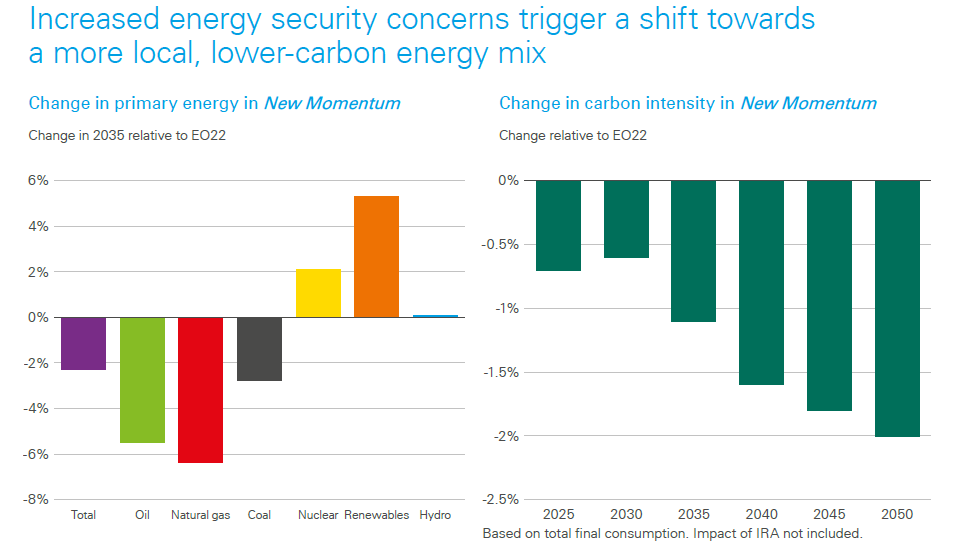
BP also lowered its forecast for demand for oil and gas in 2035 by 5% and 6%. This forecast is based on governments' current energy transition plans. The changes will be concentrated mainly in Europe and Asia, which are largely dependent on energy imports.
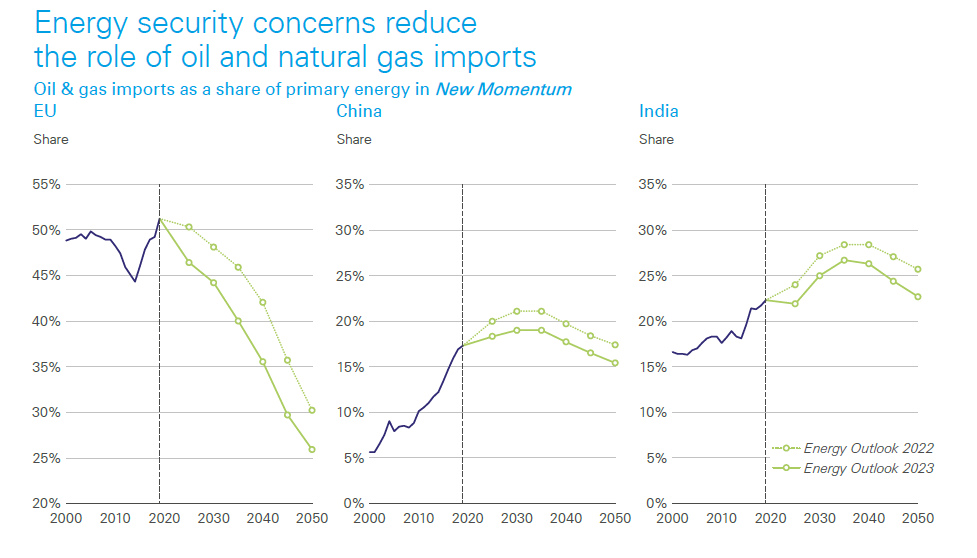
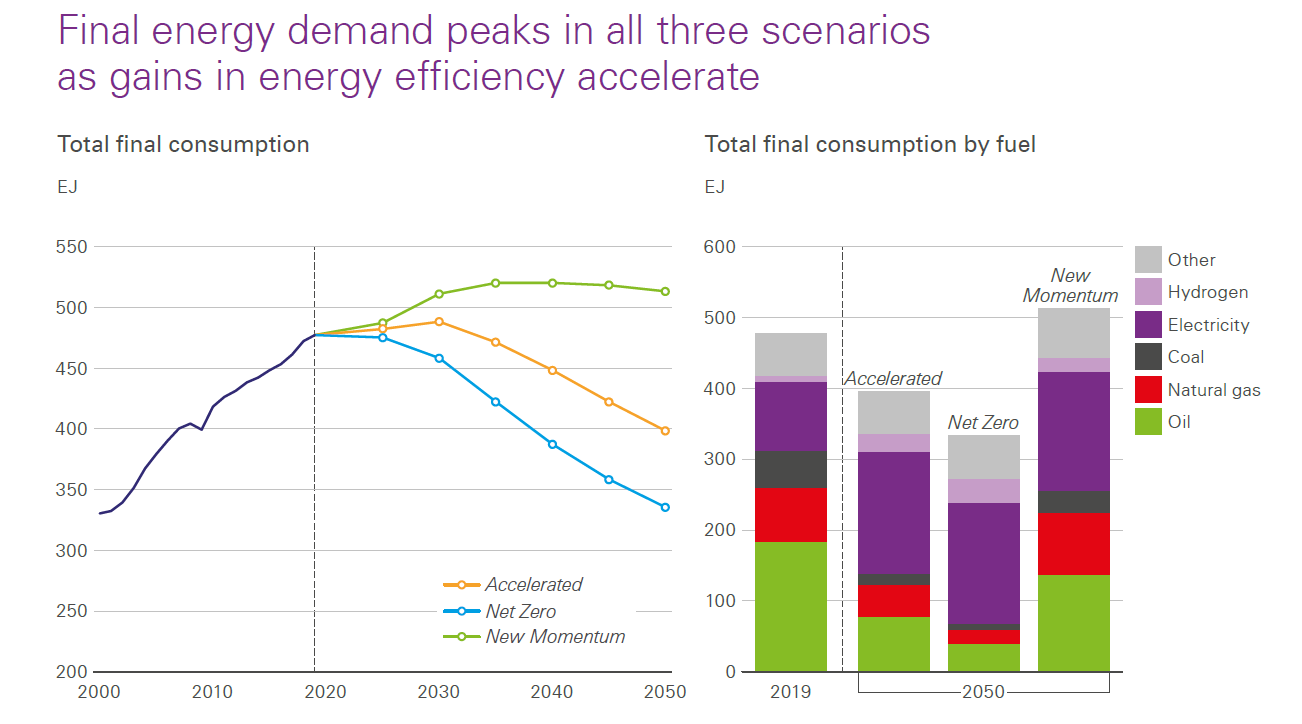
Global energy demand is expected to peak between the late 2020s and 2035. In addition, primary energy consumption in 2035 will be 2% lower than last year's forecast. Half of this decline will be due to improvements in energy efficiency, and the other half will be due to a decrease in economic activity.
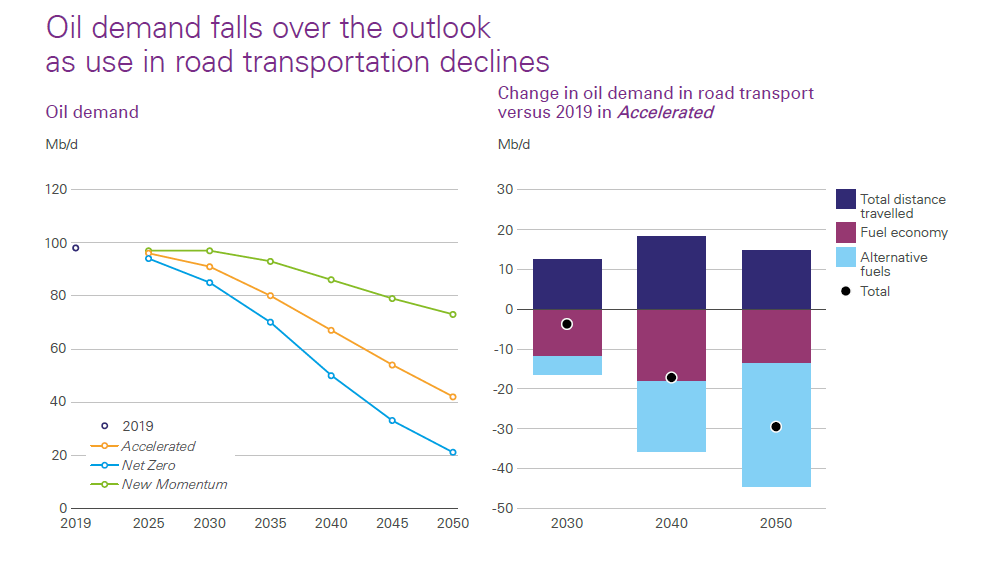
According to BP's three scenarios, oil demand will begin to decline rapidly after 2030, but it will continue to play an important role in the global energy system. World demand will reach 70-80 million barrels of oil per day by 2035, currently it is 100 million barrels per day.
The report also highlighted that carbon emissions in 2030 under one of the scenarios would be 3.7% lower than in the previous forecast. Global CO2 emissions peak in the 2020s and will be about 30% below 2019 levels by 2050.
As EcoPolitic reported earlier, the president of the Professional Association of Environmentalists of Ukraine Lyudmila Tsyganok said that the war in Ukraine will provoke a massive and powerful transition to green energy.