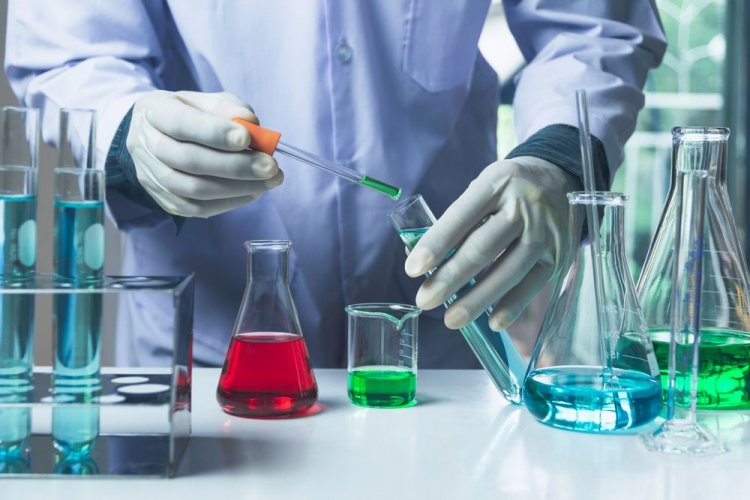
On Tuesday, October 18, the Verkhovna Rada of Ukraine adopted as a basis the government draft law No. 8037 "On chemical safety and management of chemical products."
The document, among other things, provides for the cancellation of licensing for the production of particularly dangerous chemicals, the list of which is determined by the Cabinet of Ministers as ineffective and not in accordance with EU standards, the representative of the Cabinet of Ministers in the Verkhovna Rada Taras Melnychuk reports on Telegram.
The corresponding decision was supported by 311 people's deputies.
Melnychuk emphasized that the draft law will also introduce a number of new documents of a permissive nature aimed at implementing EU legislation into national legislation and fulfilling the requirements of the Minamat Convention.
He explained that the document was developed for:
- prevention of the negative impact of chemical products on the environment and public health;
- establishment of relations arising in the field of chemical safety management, taking into account Ukraine's international obligations in this field.
Deputy Minister of Environmental Protection and Natural Resources Yevgeny Fedorenko noted on Facebook that before this bill, the chemical industry operated under the Soviet regulatory system, which was ineffective and did not meet today's challenges.
"As a result, especially dangerous substances removed from the markets of other countries are freely exported to Ukraine, the risks are not assessed, the use of chemical products often occurs without understanding their dangers," he emphasized.
Fedorenko also emphasized that this industry is regulated by 2 technical regulations in the EU:
- REACH, which operates according to the principle "no information about a chemical substance – no market";
- CLP, which provides for the classification of chemical substances and mixtures according to 27 hazard classes, establishes mandatory warning labeling of chemical products, requirements for their packaging, etc.
He also added that draft law No. 8037 will help to introduce similar approaches in Ukraine, namely to introduce:
- international classification of hazardous chemicals;
- unified registration system and database;
- restriction and prohibition of the use of particularly dangerous substances;
- proper state control over chemical products;
- responsibility of business entities;
- free access of Ukrainians to information about the chemical composition of products that are put on the market.
"Ukraine is already on the way to qualitative European changes in chemical safety issues. We are waiting for the adoption of the draft law as a whole for the further implementation of its norms in life," Fedorenko noted.
As EcoPolitic reported before, Minister of Environmental Protection and Natural Resources Ruslan Strilets said that Ukraine has increased the level of fulfillment of European integration obligations in the environmental sphere from 61% to about 63%, and in 2 years this indicator will be able to reach 75%.