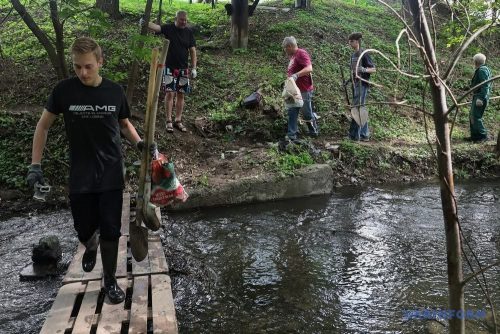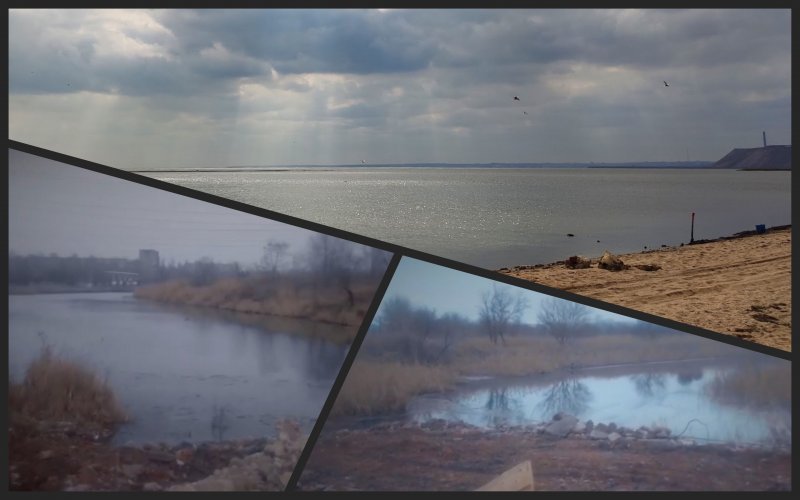
In Mariupol, in the Donetsk region, the Russian occupiers filled up the river channel Kalchyk in the Kalmius district of the city, which will have catastrophic ecological consequences.
The flow of the river is almost completely stopped, which will increase the level of salinity of the water in the Sea of Azov, it is reported adviser to the mayor of Mariupol Petro Andryushchenko on Telegram.
He explained that the flora and fauna of Kalchik are doomed to perish. In addition, increasing sea salinity will create favorable conditions for jellyfish and cause significant damage to fish populations.
The mayor's advisor said that the river was filled up during the repair of one of the bridges.
"They destroy everything they touch. They simply make everything around uninhabitable. It is also not far from the deployment of the rivers in the other direction," Andryushchenko wrote.
Earlier, EcoPolitic wrote, that in Mariupol, the occupation authorities dismantled a brick mini-dam on the Kalchyk River, which protected the river from waterlogging. Now the flow of the river has slowed down, its waters have become gray-green in color and have a strong smell of decay, and the chalk began to turn into a swamp.
As EcoPolitic previously reported, the Russian occupiers are planning in the Mariupol district restore kaolin mining, and also start zirconium mining. The consequences of such mining will be critical for the ecology of the entire area.