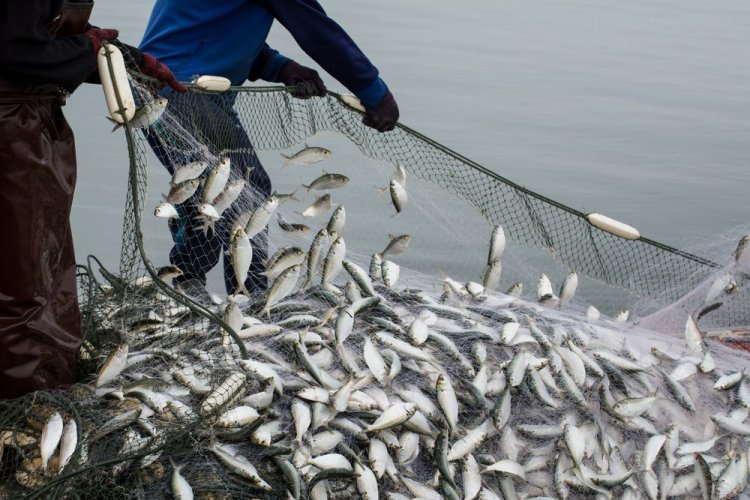
In Poltava and Cherkasy oblasts, poachers, despite the spawning ban, caught 753,000 hryvnias worth of fish, particularly in protected areas.
Also in Poltava region, violators transported 1952 kg of fish without the necessary documents confirming the legality of its origin, according to the State Fisheries Agency and the Cherkasy Fish Protection Patrol on Facebook.
Thus, fishermen of Poltava region used nets and electric fishing rods, as well as fished in forbidden places, exceeding the daily norm.
"Poachers, ignoring the spawning ban, are massively destroying aquatic bioresources, causing irreparable damage to the environment," - said the State Fisheries Agency.
During the week, fish patrols revealed a number of high-profile facts of poaching:
- in the Nizhnosulsky National Nature Park on the Sula River, a citizen "caught" UAH 158,000 in losses with a net;
- in the village of Hradizk, the violator transported 367 kg of freshly caught fish without documents confirming the legality of its origin;
- in the Sulina Bay of the Kremenchug Reservoir three people "poached" a liver, causing damage to the environment for 180 thousand UAH;
- in the protected zone of the regional landscape park "Nizhnevorsklyansky" two violators caught fish with 5 nets, which caused 45 thousand UAH of damage;
- in the village Kagamlyk recorded illegal transportation of 1585 kg of fish without the necessary documents.
For On May 23-29, fish inspectors of Cherkasy region recorded 65 violations of legislation in the field of protection of aquatic bioresources, which caused UAH 366,095 in losses. They seized almost 70 kg of fish and 57 prohibited fishing gear, of which 42 units. - by acts of derelict property.
"Among the identified violations of fishing rules: 5 gross offenses under Part 4 of Art. 85 of the Code of Administrative Offenses, 16 protocols under Part 3 of Art. 85 of the Code of Administrative Offenses and 2 cases under Part 1 of Art. 88 of the Code of Administrative Offenses, ”said the Cherkasy Fish Protection Patrol.
Fishermen also added that they will continue to perform their direct duties to maintain order in the reservoirs during the spawning season.
Ukrainians were also urged to follow fishing rules and report violations to the hotline: (063) 896-65-93 - Cherkasy Fisheries Patrol, 0 (800) 50-52-50 - State Fisheries Agency.
We will remind, n and Odesa poacher "Caught" with a catch of almost 100 thousand UAH
As EcoPolitics reported earlier, in Transcarpathia banned from June 1 to catch crayfish.