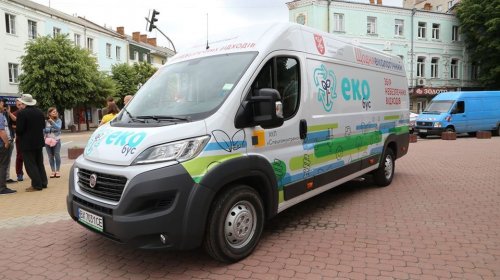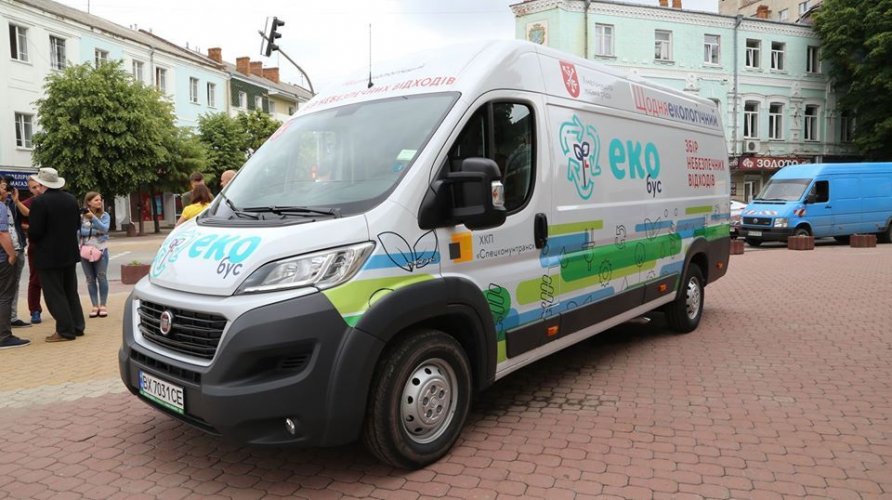
These towns are currently the only ones in Ukraine where a mobile hazardous waste collection scheme is in operation. Residents can choose a location that suits them and, at a time that suits them, hand in items that do not belong in the bin — from batteries to out-of-date medicines — for disposal.
EcoPolitics has, as usual, compiled information for its readers on the eco-bus timetables.
Lviv
As usual, the Lviv eco-bus will stop not only in the city itself but also in other towns and villages within the municipality — Vynnyky, Dublyany, Lysynychi, Ryasne-Ruske, Zashkiv, Rudne and Bryukhovychi.
As specified by the state-owned enterprise ‘Bodnarivka’, each person may hand in up to 10 kg of batteries and rechargeable batteries, up to 5 mercury thermometers and up to 10 fluorescent lamps for free disposal.
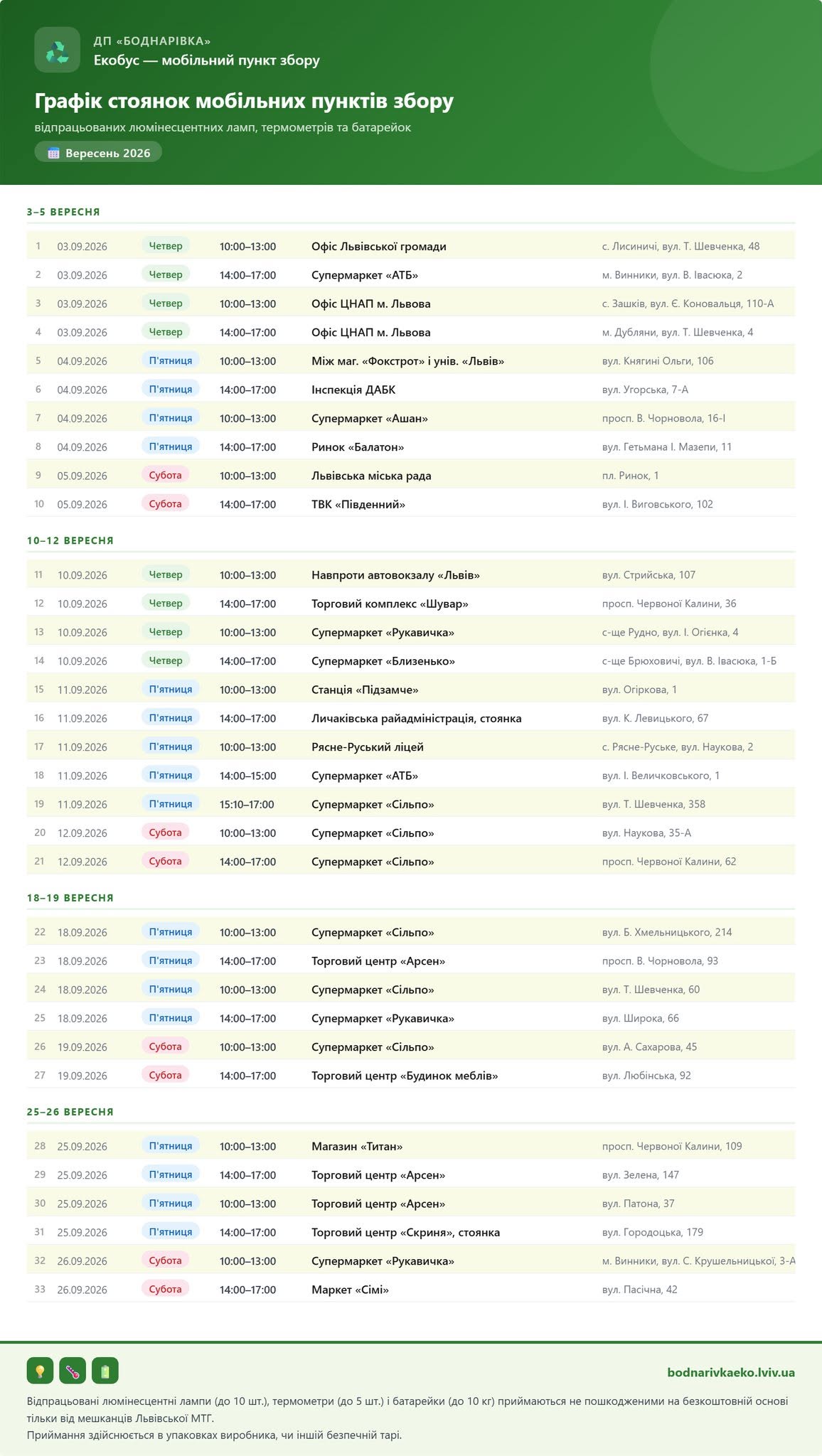
Source: State Enterprise ‘Bodnarivka’
Poltava
The mobile waste collection point will operate both in Poltava itself and in the surrounding settlements — the villages of Palchykivka, Patlaivka, Klymivka and Vakulenets. It will run from Monday to Friday, staying at each location from 09:30 to 17:30.
According to data from Poltava KATP-1628, in addition to the Lviv list of hazardous household waste, the Poltava eco-bus also collects medicines that have passed their use-by date.
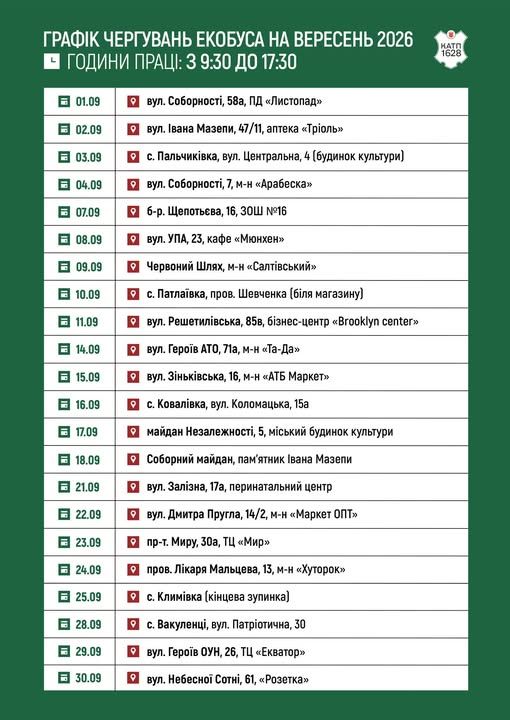
Source: KATP-1628
Khmelnytskyi
The eco-bus operates here from Wednesday to Sunday. Twice a month, a specialised vehicle will collect waste from the settlements within the starosta districts centred on the villages of Kopystyn and Bohdanivtsi.
The list of hazardous waste that can be handed over to the eco-bus for disposal includes batteries and rechargeable batteries, mercury thermometers, fluorescent lamps, electrical and electronic equipment, paints and adhesives, cleaning products and out-of-date medicines.
The Khmelnytskyi City Council points out that waste is accepted only from members of the public, and not from businesses or organisations — a separate procedure is in place for them.
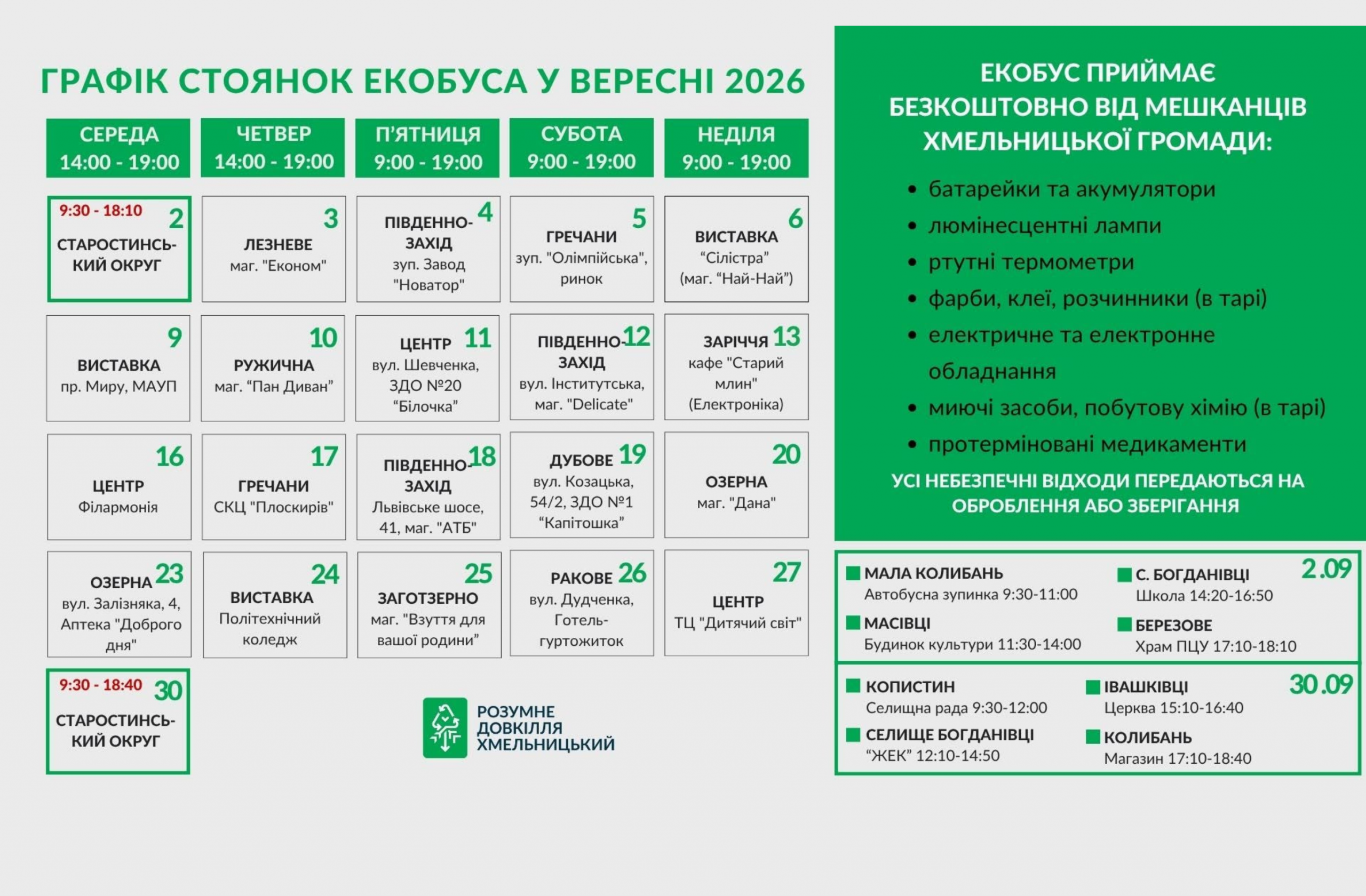
Source: Khmelnytskyi City Council
If you want to get into the habit of sorting your rubbish, EcoPolitic has put together some basic tips for you.