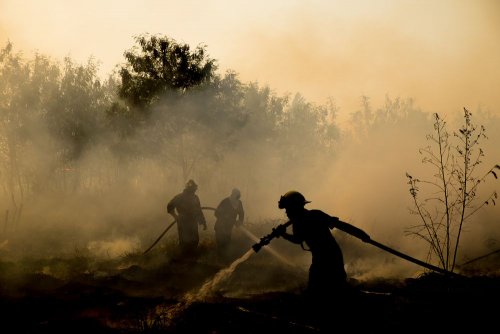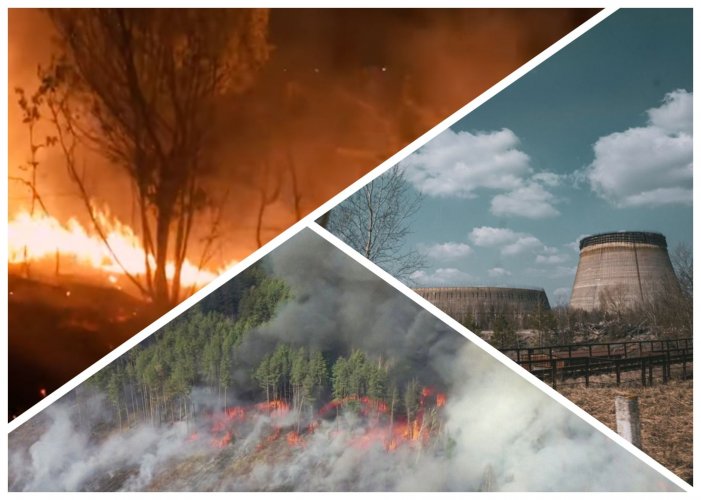
Among the critical consequences for the country's environment, Ukrainians are most concerned about the possibility of radiation contamination and mining of territories.
Such results poll "Opinions and views of the population of Ukraine regarding the environmental consequences of the war" was voiced during an expert discussion held in Ukrinform.
The survey showed that half of Ukrainians are most afraid of radiation contamination in the event of shelling of nuclear power plants. 56.4% of respondents called this consequence the most critical for Ukraine, and 50.9% - for themselves personally.
The mining of agricultural lands and forest plantations frightens 39.5% (impact on the country) and 31.1% (personal fears) of the respondents.
In third place among the possible environmental consequences that cause concern among the citizens of Ukraine is the spread of toxic substances as a result of shelling of oil depots, gas storage facilities and chemical industry facilities. 36.5% and 27.2% of respondents, respectively, consider this problem to be a critical consequence for the country and themselves.
Among other consequences of the war for the state of the environment in Ukraine, respondents named:
- pollution of rivers, ponds and water areas of the seas due to the sinking of ships, the spread of oil products and explosives;
- destruction of protected areas, destruction of ecosystems, death of animals and birds, forest fires;
- destruction of treatment facilities, dams, water supply networks;
- clogging of territories with fragments of destroyed buildings, broken cars, remnants of household items and equipment, etc.;
- significant air pollution.
Air pollution and littering of territories are considered by most respondents to be less critical consequences of the war. Only young people, pupils and students (21%), are concerned about the problem of air pollution.
As for the differences between respondents from different regions, residents of the western regions estimate the threats of radiation contamination and the spread of dangerous substances due to shelling of oil depots 10% higher.
At the same time, respondents from the eastern regions assess the mining of lands more as a personal threat.
But the threat of pollution of water bodies is estimated higher than other respondents by residents of the South of Ukraine.
In general, environmental problems in Ukraine concern mainly representatives of the 30-49 and 18-21 age groups with an average income level.
Finally, the level of informing the population about the environmental consequences of the war is considered sufficient by every second Ukrainian (50%). At the same time, 43% of respondents noted that there is rather a lack of information on this issue, which, according to researchers, is an important factor for strengthening the communication component of the work of the Ministry of Environmental Protection and Natural Resources of Ukraine.
Earlier EcoPolitics wrote that Ukraine will create radiation monitoring system, synchronized with the EU.
Recall also that the Public Health Center of the Ministry of Health of Ukraine gave practical advice and guidance to be observed in the event of a radiation accident.