Animal rights activists called on Ukrainians to take care of their pets during their stay in the shelter and to collect emergency suitcases for the animals.
Facebook charity UAnimals has put together some advice for pet owners.
"The morning started again with air raids all over Ukraine and there are already the first shellings. Considering the fact that the terrorist country is not going to stop attacking the civilian population, we decided to remind you that it is necessary to put in emergency suitcases for your pets", said the animal rights activists.
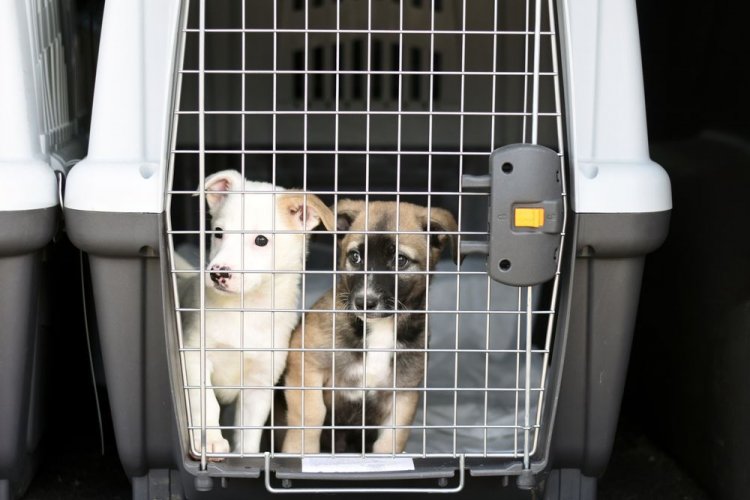
They emphasized that, first of all, it is necessary to take care of the carrier for the animal, where the pet has access to oxygen. It should also be comfortable for transportation.
"It doesn't matter if it's a plastic carrier or a special emergency backpack," the message explained.
It is also worth stocking up on food and water for at least 3 days. For convenience, you can take a small bowl from which to feed the animal.
It is also necessary to collect all available documents for the animal and take care of the veterinary first-aid kit.
"First of all, focus on your animal's health and stock up on all the medicines it needs in everyday life. You should also put drugs for nausea, food poisoning, allergies, and antipyretics in the first aid kit. It is best to take care in advance and consult with your veterinarian about the contents of the first-aid kit," animal rights activists said.
They urged Ukrainians to take leashes for cats and dogs, because sooner or later the animal will get tired of being in a carrier all the time. It is best to take the one that is worn on the body, so that the animal does not slip out of it in case of stress.
The message added that it is also necessary to take care of cleaning supplies, in particular, to stock up on bags, wet and dry napkins.
It is also worth putting your favorite toy in the emergency suitcase.
"For an animal, evacuation is the same stress as for a person. In stressful moments, the animal can be distracted with a toy or a hug," animal rights activists advised.
What else is worth doing:
- carry out the necessary vaccinations;
- hang an address book with the contacts of the animal's guardian on the collar and carry out chipping;
- discuss with relatives what to do with the animal in the event of an emergency.
Earlier, EcoPolitic wrote, that in the recently liberated Lyman, in Donetsk region, animal rights activists rescued a contused bear from a private zoo.
As EcoPolitic previously reported, Kharkiv animal rights activists Tetyana and Andriy, fleeing from the war, also saved all the residents of their home private shelter, and these are more than 70 cats, a dog and a guinea pig.