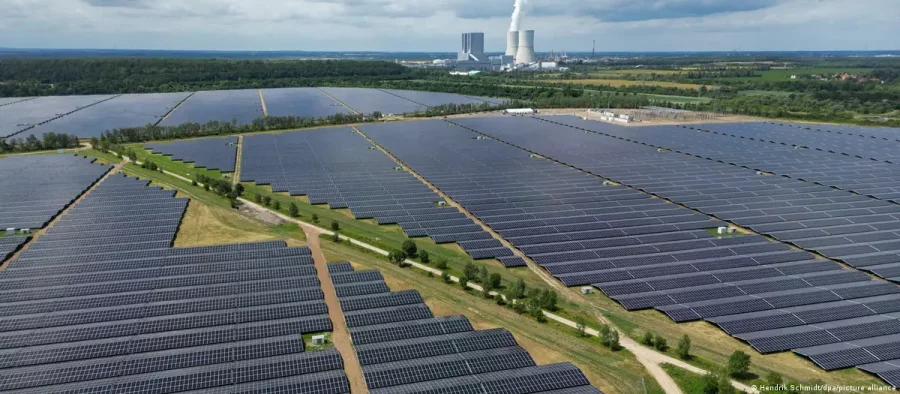
In East Germany, near Leipzig, the largest European Witznitz SPP with an area of 500 hectares was launched. Its clients were such giants as the oil and gas concern Shell and Microsoft Corporation.
It is reported by DW.
The Witznitz energy park consists of 1 million 100 thousand photovoltaic panels. They are located on an area of 500 hectares, which is approximately equal to the area of 700 football fields. The capacity of the power plant is 650 MW. For comparison: at modern nuclear power plants, the capacity of one power unit is usually from 1000 to 1200 MW.
According to the operator of the power transmission system – the company 50Hertz, thanks to modern equipment and the use of the electrotechnical effect of reactive power, this SPP for the first time can ensure the stability of the network even in the dark.
Construction of the Witznitz power plant began in 2020, and already in December 2023, its first phase began generating electricity. The implementation of this project was fully financed by the insurance concern Signal Iduna. He sees a large solar power plant as a source of stable income, as well as his contribution to the "green transition" and, accordingly, a winning image project.
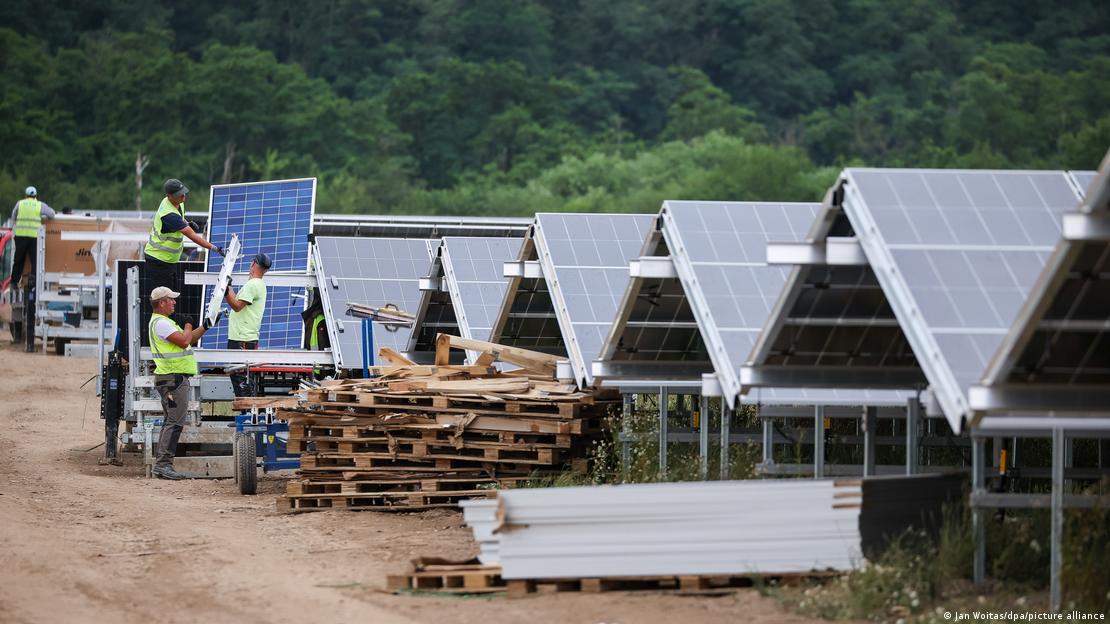
Photo: Jan Voitas/dpa/pizzature allianze
Shell has contracted almost all the capacities of the Witznitz power park for 15 years. It will resell approximately half of the received energy to Microsoft Corporation. Both the British oil and gas company and the American IT giant need large volumes of "green" electricity to meet their own ambitious goals to decarbonize their businesses.
"The Witznitz Energy Park will become one of the central elements of our portfolio. We are happy to make an important contribution to the cause of decarbonization," said Christoph Lueken, CEO of Hansainvest Real Assets, the investment division of the Signal Iduna concern, at the official opening ceremony.
The other day EcoPolitic talked about the fact that Germany from 2025 replaces a guaranteed return for renewable energy sources (RES) on a one-time investment subsidy and cancels the reward for electricity produced by RES during negative prices, when excess electricity is already supplied to the grid. We also told that Germany's emissions in 2023 decreased to 673 million tons and reached the lowest level in the last 70 years.