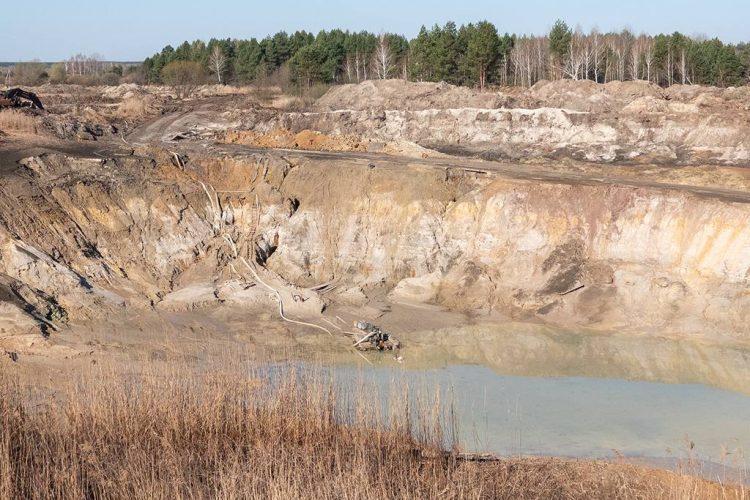
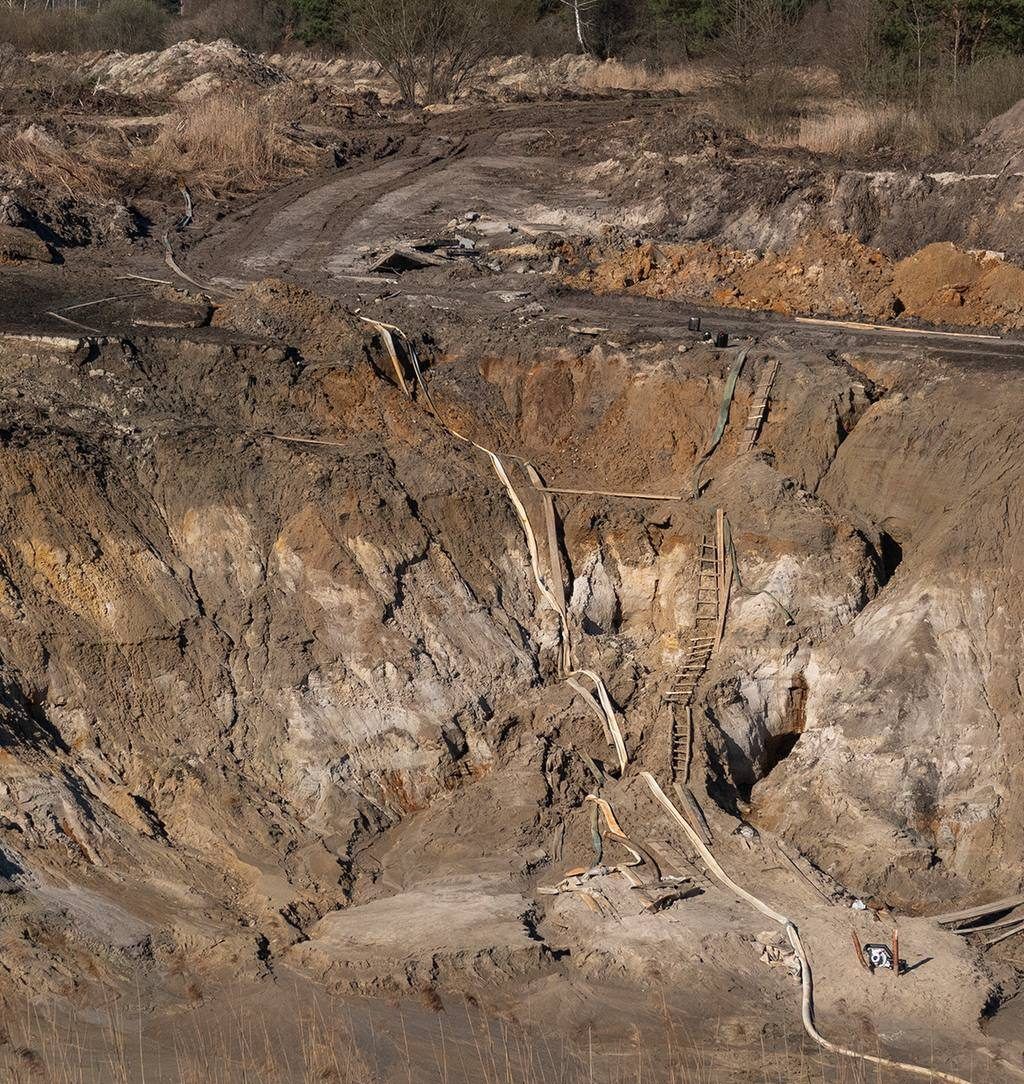
Mining operations just 300 meters from the nearest homes, the drying up of wells, and deforestation—a full-blown environmental disaster is unfolding near the Negrebivsky Quarry in Zhytomyr Oblast. The community, experts, and local lawmakers are documenting violations and appealing to relevant authorities. However, for the past six months, the Ministry of Economy, Environment, and Agriculture has refused to grant the State Environmental Inspection permission to inspect the mining company’s operations.
This was reported by participants at the press conference “The Problem of the Negrebivsky Quarry: The Mining Business of Former Party Members vs. the Local Community” at the Interfax-Ukraine press center.
“We have written countless letters to various organizations that should be responding to this, but we have not received an adequate response. The community is engaging environmentalists and lawyers on its own so that we can address our problem and resolve it. But so far, neither the relevant ministry nor the mining company itself is listening to us,” said Natalkia Opimakh, a resident of the village of Negrebivka and a representative of the Radomyshl territorial community’s initiative group.
Residents of six nearby villages in two administrative districts of the Radomyshl territorial community are already feeling the consequences of the complete disregard for environmental standards.
Problematic extraction
According to the community representative, exploratory work on the dolomite mining site was conducted here as far back as the 1960s–70s, but was quickly halted due to water in the fractured bedrock. Over 200 cubic meters per day had to be discharged into the local river and underground cavities.
Even at that time, the river, which essentially became a canal, became shallow, and many wells lost their water. Now, residents regularly suffer from droughts.
In the decades after the pilot quarry was closed, the surrounding territory somewhat recovered and became forested, but now the community once again stands on the brink of an environmental catastrophe.
In 2010, the State Service of Geology and Subsoil granted a special permit for extraction to the company Dolomine. In November 2025, machinery entered the quarry.
“The company's activities are accompanied by criminal proceedings, court cases, and changes of ownership, but there are no inspections by the relevant authorities,” – claims Nataliya Opimakh.
Source: facebook.com/UkrainianNatureConservationGroup
Water issue
Local residents use only water from their own wells, drilled to a depth of 10–14 meters, for irrigation. This water comes exactly from those fractured rocks, from which quarry pumps are extracting groundwater.
The community asserts that the water level in the wells has already dropped, since the company is pumping out and discharging millions of tonnes of quality water. Moreover, they do this even through land that does not belong to Dolomine by servitude. Environmental experts state that these waters are now highly mineralized and negatively affect the river.
Deforestation
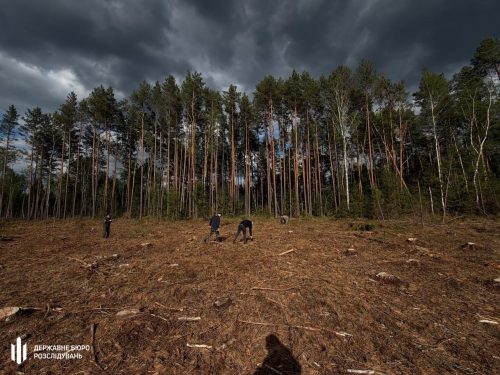
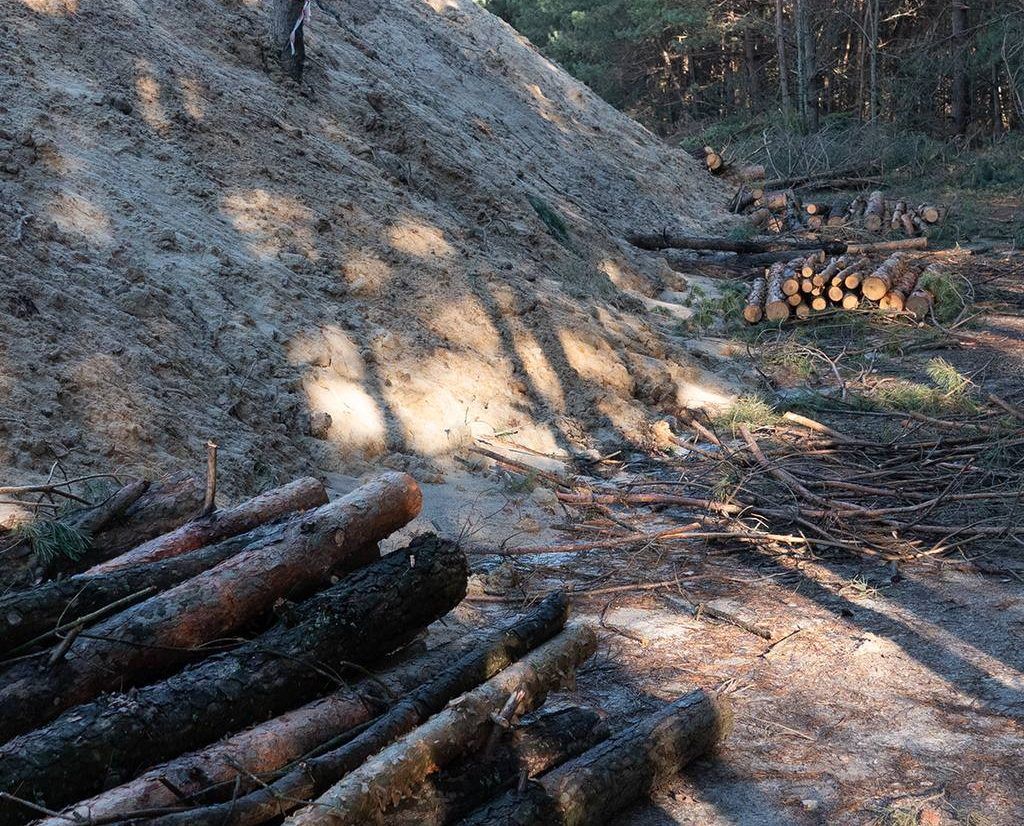
Without the necessary permits, the company felled the surrounding forest, an incident documented by the police, the public, and a deputies' working group. A criminal case was opened, albeit through the courts.
Nataliya Opimakh claims that Dolomine even tried to cover up evidence of its crime – raising five-meter-high sand and clay embankments over the stumps.
Source: facebook.com/UkrainianNatureConservationGroup
A precedent that highlights systemic problems
In the opinion of Petro Tiestov, Head of the Analytical Department of the Ukrainian Nature Conservation Group (UNCG), the situation regarding the Nehrebivsky quarry vividly demonstrates a range of systemic issues:
- Lack of protection. The area is of significant value and, with a proper approach to nature conservation, should already have received protected status, which would make further mineral extraction impossible. Three independent expeditions of environmental experts were conducted on site, and the community commissioned separate studies. Based on these findings, a package of documents was prepared to grant the area protected status. However, the Zhytomyr Regional Military Administration does not support the establishment of a nature reserve, relying on the position of the State Service of Geology and Mineral Resources. Experts believe this restricts the community’s right to preserve their local environment.
- Ignoring environmental requirements. The operator received a permit to conduct works only on the second attempt, and only under the condition of fulfilling nearly 150 environmental conditions outlined in the Environmental Impact Assessment. These included geological studies, installation of soundproof barriers, dust suppression measures, and the identification of rare species. According to the expert, realizing that compliance with these conditions would make extraction itself impossible, the company decided to ignore them.
- Lack of environmental oversight. Despite appeals from local authorities and the community, the State Environmental Inspectorate has yet to inspect the company’s activities. According to Petro Tiestov, the reason is the stance of the Ministry, which for an extended period has failed to grant permission for an inspection.
“Even if the ministry now grants permission and, we hope, it identifies violations and stops this quarry’s operation, the polluted river is already beyond restoration,” the eco-expert emphasized.
The European Union has clear requirements for Ukraine, which plans to join the bloc. Among them are strict adherence to environmental impact assessment standards and ensuring the proper application of environmental law.
Should the authorities fail to respond, the approach seen in Nehrebivka could easily spread throughout the country. Businesses may see a precedent for destroying nature in pursuit of commercial interests without facing any consequences.
Earlier, EcoPolitic reported on the destruction of forest near the Nehrebivsky quarry. It turned out that a pine forest with trees 80–90 cm in diameter was listed as “shrubland” on paper.