The primary objective of the EU Emissions Trading System (EU ETS) remains to further promote decarbonization, and the European Commission views the Industrial Decarbonization Bank as its main driver.
Jakub Bednarek, a lawyer and head of the ESG team at Maruszkin, shared these and other key points regarding the upcoming revision of the EU ETS, which officials presented at a roundtable with high-level stakeholders, on LinkedIn. The meeting took place the day after the EU executive branch published its proposed benchmarks on May 11.
The expert highlighted the following key points outlined by European Commission representatives:
- The main objective of the functioning of the EU Emissions Trading System (EU ETS) remains unchanged – it is the continued promotion of decarbonisation. According to the European Commissioners, so far the cost of carbon emissions (not necessarily the EUA quota price) paid by the industry has been relatively low.
- The conditions introduced during the most recent review regarding free allocation of quotas will likely be applied more actively and gradually strengthened.
- The Commission is considering possible adjustments to the reserve benchmark indicators, which may potentially include sectoral changes. Currently, the EU ETS system is based on 52 product benchmarks and 4 reserve/process benchmarks.
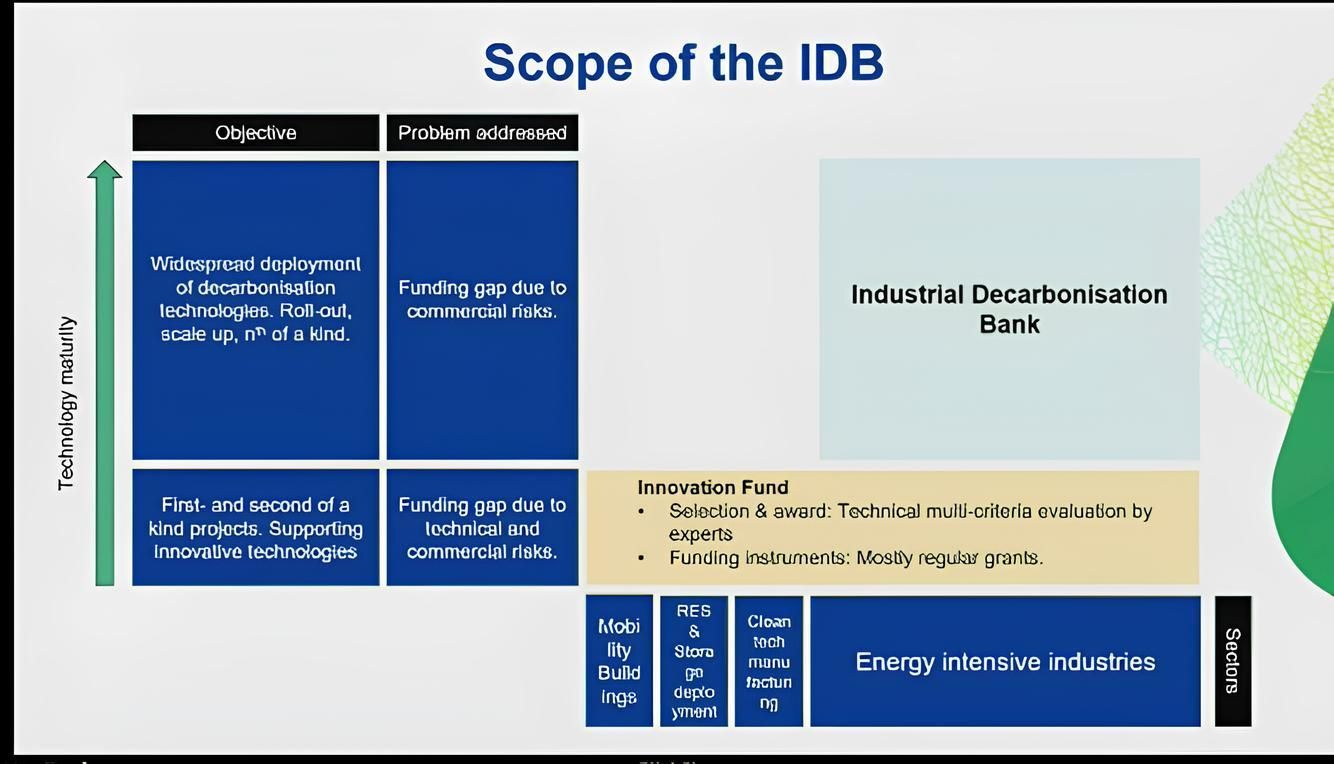
- It is expected that competitiveness protection will largely rely on financial support. EU industry is facing not only higher operating costs than many foreign competitors, but also higher capital expenditures. Expanding “green” investments requires a sound business case, and the European Commission sees the Industrial Decarbonisation Bank (IDB) as its key driver.
- A key element of the Industrial Decarbonisation Bank is the Investment Booster program. It is expected to operate on a “first come, first served” basis, rather than through competitive selection. Funding will be allocated to projects that meet defined administrative criteria.
Source: European Commission
Recently, EcoPolitic reported that the European Commission has presented updated EU ETS trading system benchmarks to be applied during 2026–2030. The public consultation on these will continue until June 8.