The European Union has announced a list of strategic environmental projects that will receive funding under the LIFE program. Seven initiatives from different participating countries will receive €103 million to implement measures in the field of biodiversity and water security conservation, ecosystem restoration, and circular economy development.
According to the European Commission, in addition to their purely environmental component, these projects will strengthen economic stability in the bloc, help develop food and environmental systems, and improve the quality of life across the continent.
Which projects will receive funding?
The Finnish ACWA project is aimed at conserving water resources. Its goal is to restore and protect water bodies such as streams, lakes, groundwater and coastal waters, and river basins. The total amount of funding is €16.5 million.
France plans to implement the LIFE ADAPT EST project, which aims to strengthen climate change resilience in the Grand Est region. To this end, it will use tools such as water resource management, the development of infrastructure capable of withstanding extreme weather, and the expansion of climate knowledge. Funding amounts to €15.6 million.
In Greece, the focus will be on improving marine ecosystems. The LIFE SIP GR Blue program aims to reduce both litter and noise pollution on the islands and coasts. €8.9 million will be allocated for the implementation of these measures.
The CEL4LIFE project from the Netherlands involves supporting Limburg in transitioning to circular economy principles. The objective is to halve the use of primary raw materials in construction, manufacturing, and the chemical industry. This project will receive €6.9 million.
The Portuguese project LIFE IP AGRILOOP will receive €15.8 million from the EU. It is aimed at increasing resource use efficiency in the Azores. Circular solutions are planned to be introduced in agroforestry, tourism, and the agri-food sector.
In Slovakia, the NatAdaptSK project aims to mitigate the effects of climate change on affected communities. The EU will provide €10.1 million for the implementation of nature-based solutions in forest, water, agricultural management, and biodiversity conservation.
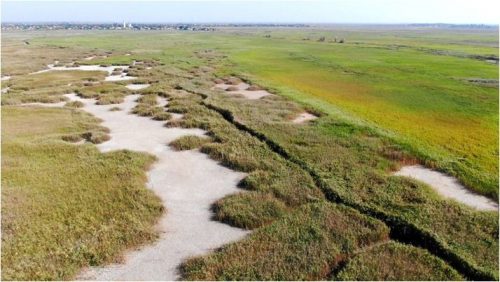
The largest project ever funded under the LIFE program is the Spanish HumedalES. Its highly ambitious goal is to restore 26,200 hectares of wetlands at 107 Natura 2000 sites. In this way, the Spanish aim to improve water security in the country, strengthen flood protection, and create habitats for various species of flora and fauna. The European Union will allocate €29.7 million for project implementation.
Earlier, EcoPolitic reported that the EU launched the ETS2 Early Financing Mechanism. This emissions trading system will directly affect citizens, so the European Union will allocate €3 billion to ease the transition to new rules for the most vulnerable citizens.
Denmark created a state support mechanism for farmers who choose to refrain from cultivating their land. In this way, the government intends to reduce emissions in the agricultural sector and decrease the harm caused by pesticides.