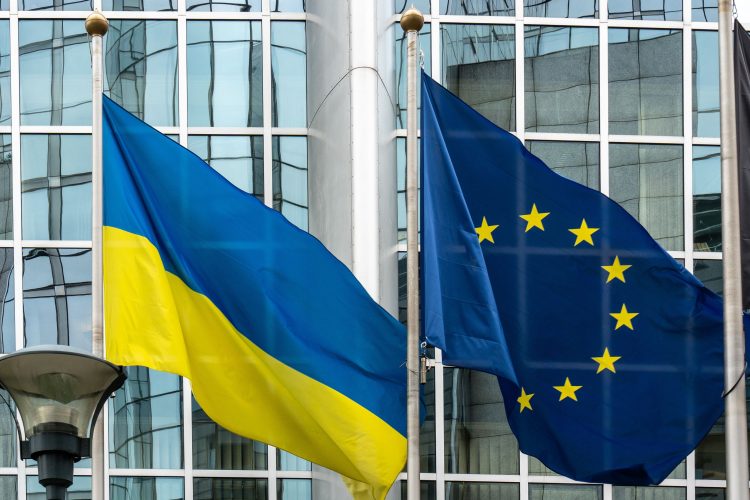
Ukraine continues to work on implementing European legislation. However, Chapter 27, "Environment and Climate Change," is arguably the most challenging—it requires legislative changes, investments in the eco-modernization of industry, and transition periods.
This was reported by representatives of the Ministry of Economy, Environment, and Agriculture of Ukraine during an information session with the European Commission’s Directorate-General for Enlargement and Eastern Neighborhood.
Scope of work
In total, within Chapter 27 alone, Ukraine must review over 200 European legal acts and incorporate them into domestic legislation. These cover virtually all sectors of the economy and areas of public life.
“Ukraine has developed its negotiation position and a draft National Program for adapting legislation to EU law. Full transposition and implementation of Chapter 27 require perhaps the greatest number of transitional periods, and this is a challenge for Ukraine. Plans for the implementation of several directives have already been prepared,” stated Iryna Ovcharenko, Deputy Minister of Economy, Environment, and Agriculture of Ukraine.
Practical steps
The Ministry of Economy assures that Ukraine has already achieved a high level of alignment with European environmental legislation. As an interim achievement, they also mention the consistent implementation practices, especially in the area of environmental impact assessment (EIA).
Some examples provided by the Ministry:
- Ukraine is aligning its legislation with the EU in the field of waste management by adhering to the waste management hierarchy and developing infrastructure.
- River basin management plans have already been approved, with European approaches being implemented in monitoring, wastewater treatment, and cost recovery for water services.
- The level of approximation to the EU Marine Strategy is also high.
- Ukraine has already submitted proposals concerning Natura 2000 sites.
EcoPolitic emphasizes that Ukrainian environmental legislation is in fact subject to strong criticism from both business and environmental experts.
In particular, the private sector is dissatisfied with the current EIA procedure, which, according to experts, contains an embedded corruption mechanism.
At the same time, water management could lead to a shortage of drinking water, since priorities for resource use could shift to land reclamation due to the transfer of a number of facilities to the State Fisheries Agency.
Experts are also outraged by the government's and the Ministry of Economy's initiatives in the forestry sector, particularly the attempts to cancel EIA for clear sanitary felling.