Behind the façade of environmental friendliness and the status of the communities of Skole and Yaremche as tourist centres lie consumerist decisions, adopted by local councils, that are frankly harmful to nature. Activists accuse the communities of destroying protected forests and high-altitude mountain pastures, as well as depleting the water levels of mountain rivers through permits for the construction of hydroelectric power stations.
The Ukrainian Nature Conservation Group (UNCG) has published an extensive list of anti-environmental decisions made by local councils.
A mountain resort instead of a protected forest
As one example, the UNCG cites a plan to remove 190 hectares from the boundaries of the ‘Zelemyn’ nature reserve and the ‘Dubynske’ tract. According to the activists, this plan was recently drawn up by the Skole Town Council in collaboration with forestry officials.
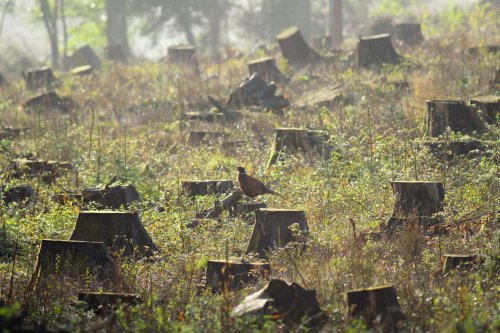
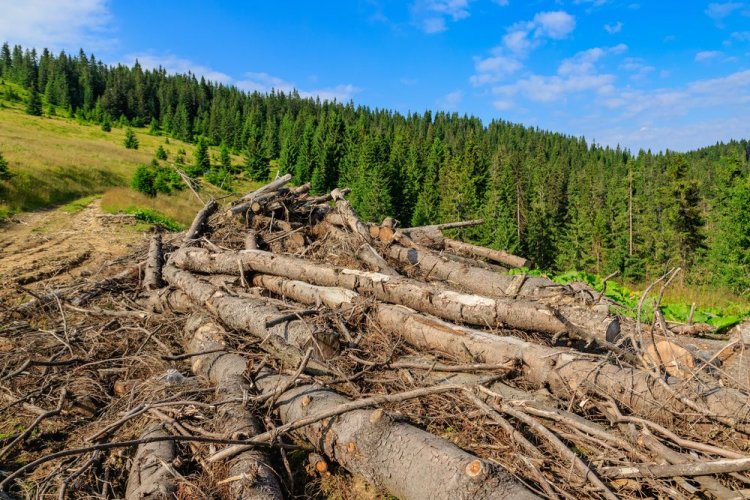
Under the local authorities’ plan, unique quasi-primary forests, where some trees are over 185 years old, are to be felled. All this to build a new ski resort on Mount Benky.
The most cynical aspect is the ‘replacement’ proposed by the authorities. The foresters are offering to ‘compensate’ for hectares of protected woodland with an area of the same size comprising young trees, recently cleared areas and even a plot that the very same foresters stripped of trees a year ago.
A Dam Within the Emerald Network
Another highly questionable decision is the city council’s permit for the construction of a small hydroelectric plant on the Stryi River. According to UNCG, the energy facility is planned between the villages of Tyshivnytsia and Mezhybrody, just below the “Knyazhi Skeli” (Princely Rocks).
Environmentalists point out that this section of the Stryi is a free-flowing river that belongs to the Emerald Network and is home to a number of rare fish species.
“Damming such a river directly violates EU norms and directives, as well as the European principle ‘do no significant harm to the environment’, according to which such hydro projects cannot be classified as ‘green’ at all,” activists write.
Destruction of Alpine Meadows for Wind Energy
No less destructive are the decisions made by the councils of the Yaremche community-specifically the wind power plant project backed by the local authorities of Mykulychyn. This involves the installation of as many as 20 wind turbines on the highland Carpathian meadows of Gordya, Syholka, and Tovstyi.
The construction of the wind power plant will cause systemic intrusion into the region’s fragile ecosystem, as the laying of cable lines and roads threatens to disrupt the natural balance. Nevertheless, instead of protecting these areas, the authorities have opted for utilitarian use.
The activists also noted that the leadership of Yaremche openly supports off-road (jeeping) activities. Moreover, the authorities have even appealed to the government and parliament to legalise such destructive tours within the Carpathian National Park.
“All this ‘eco-friendliness’ of Skole and Yaremche is nothing but hypocrisy and greenwashing. Both communities have exploited the brand of national parks on their territory for years. They promote themselves using the protected Carpathians, using nature reserves as tourist magnets and channeling the proceeds into local budgets. Yet instead of protecting nature, the local councils keep passing decisions that destroy it,” UNCG emphasises.
EcoPolitic reported that jeep enthusiasts in Yaremche even blocked the work of the environmental inspectorate and law enforcement. National parks are trying to restrict access for these extreme tourists to their territory by installing hidden traps and visible barriers.
At the same time, the destruction of the Runa meadow for the construction of a wind power plant is ongoing. The Ministry of Economy told activists that it cannot do anything. Although earlier, the State Inspectorate for Architecture and Urban Planning (DIAM) had recognized that constructing foundations separately from the entire structure in order to avoid the environmental impact assessment procedure was illegal. Recently, a court confirmed that the trees cut down to build the road to Runa were primeval forest. The logging permit was canceled, but no one can bring back the ancient forests.