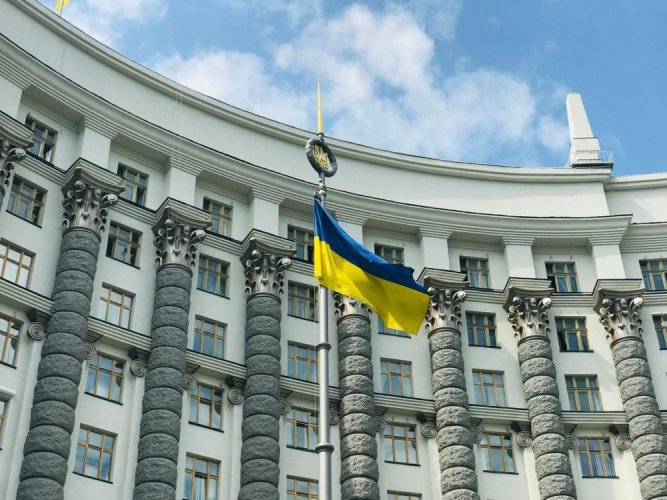
The Cabinet of Ministers of Ukraine is drafting a resolution on the streamlining of central government agencies. This threatens to shut down a number of agencies responsible for natural resource management. Ukrainian environmentalists and experts view this as a systematic dismantling of environmental governance institutions.
This is stated in a joint open statement, which has already been signed by over 30 environmental NGOs, scientists, and environmental experts. They are demanding that the liquidation of these state agencies be prevented.
Streamlining = liquidation?
According to the information outlined in the statement, the reform will lead to drastic changes.
The State Agency of Water Resources of Ukraine and the State Service of Geology and Subsoil of Ukraine will be dissolved. Their functions will be transferred to the State Agency for Environmental Management. Behind this new name will lie the renamed State Service of Ukraine for Geodesy, Cartography, and Cadastre, which will be granted additional powers.
The State Agency of Ukraine for Land Reclamation, Fisheries, and Food Programs will also be closed. Its powers will be assumed by the new State Agency for Biodiversity. Under this new name lies the former State Agency of Ukraine for Forest Resources.
Following the effective dissolution of these agencies, the government plans to further amend legislation and streamline government bodies.
Degradation of environmental governance
Environmentalists are convinced that such an approach will only lead to chaotic layering of functions, resulting in the loss of logic and coherence in state governance. At the same time, the state's inability to effectively preserve and restore biodiversity will not be remedied.
The agencies that are subject to elimination actually have a narrow functionality in specific areas. It is this focused expertise that ensures consistent state policy.
"Transferring these diverse functions to two agencies with ambiguous and artificially expanded mandates – 'natural resource management' and 'biodiversity' – will inevitably lead to a loss of professional specialization, lower quality of management, and dilution of authority. In such a model, none of the management areas will possess the necessary institutional capacity," the statement reads.
Long-term risks
Such optimization appears to be a mechanical redistribution of functions that does not take into account the specifics of each area. Experts recall previous experience with such "optimization" – the creation of a hybrid Ministry of Economy that absorbed the Ministry of Environment.
Experts see the following risks:
- Complicating EU integration processes. The proposed changes potentially contradict the Association Agreement with the EU;
- The emergence of additional obstacles for responsible business;
- Corruption risks due to the concentration of powers in vulnerable sectors.
"The provisions of the draft constitute a direct threat to the state's environmental security, sustainable development, and the green recovery of Ukraine. Ultimately, this does not indicate optimization, but rather the targeted destruction of the environmental governance system," emphasize environmental organizations.
Therefore, the environmental community sets forth the following demands:
- immediately halt the progress of the draft resolution;
- prevent the dissolution of specialized environmental agencies;
- ensure open consultations with the public and experts;
- develop a systematic reform of environmental governance that guarantees the strengthening of institutions, not their dissolution.
Let us remind you that in the summer of 2025, the Ministry of Environmental Protection was merged with the Ministry of Economy. This sparked outrage among the eco-activist community and demands to reinstate a separate environmental authority.
EcoPolitic reported that now, only 10% of the staff of the merged ministry are engaged in nature conservation issues.