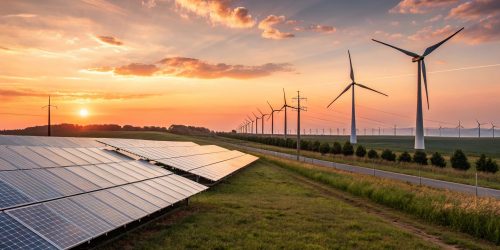
In the heated debate over the future of the European Union Emissions Trading System (EU ETS), the Spanish government is advocating for the preservation of this climate policy tool. With a high share of renewable energy in its power grid, the country is not critically dependent on fossil fuels and does not face the problem of natural gas dictating overall energy prices.
According to the Financial Times, Spanish Energy Minister Sara Aagesen Muñoz stated that using the crisis in the Middle East to change a system that works is irresponsible.
This statement came as Italy and a number of other countries are calling on the EU to suspend the European Emissions Trading System (EU ETS). Opponents of the EU ETS argue that the “carbon tax” raises energy costs by 11%, which is too much for businesses amid the crisis in the Strait of Hormuz.
“Using this crisis to change a system that works is irresponsible and a grave mistake. The ETS must be preserved, and we cannot ignore the lessons of the war in Ukraine,” the Spanish minister emphasized.
The Emissions Trading System encourages European industry to decarbonize by requiring payment for generated greenhouse gas emissions. In 2022, the EU already faced a large-scale energy crisis due to Russia’s invasion of Ukraine. At that time, gas supplies to the bloc were reduced, yet even then, the carbon market was not suspended.
Spain is one of eight countries that supported the EU ETS in a joint letter last week. Overall, under the current government, the share of “green” energy in the country has increased to 57%.
“We are more competitive precisely because there are many hours when gas does not determine the electricity price,” Aagesen noted.
Possible actions by EU authorities
The Spanish Minister for Energy stated that she supports measures to direct revenues from the ETS towards decarbonization and to reduce price volatility through the stability reserve.
Recently, European Commission President Ursula von der Leyen announced that this reserve will be proposed as a resource to curb carbon market prices in the short term.
The EU leaders’ summit is scheduled for March 19–20, at which they plan to discuss a review of the EU ETS to ease the financial pressure on industry. Ahead of the summit, the President of the European Commission has proposed options for lowering energy prices.
EcoPolitic previously reported that the governments of eight EU member states officially called for the preservation of the emissions trading system in an open letter.
The Vice President of the European Commission stated that no one is planning to suspend the EU ETS, although the system will be reviewed this year.
Meanwhile, the most influential EU business association, BusinessEurope, is asking the EU authorities to review the Market Stability Reserve (MSR), regulate carbon price fluctuations, and finally harmonize climate policy with the competitiveness of industry.