24 economically developed countries have caused significantly greater losses of plant and animal species outside their borders than inside them.
This is stated in a study published in the scientific journal Nature.
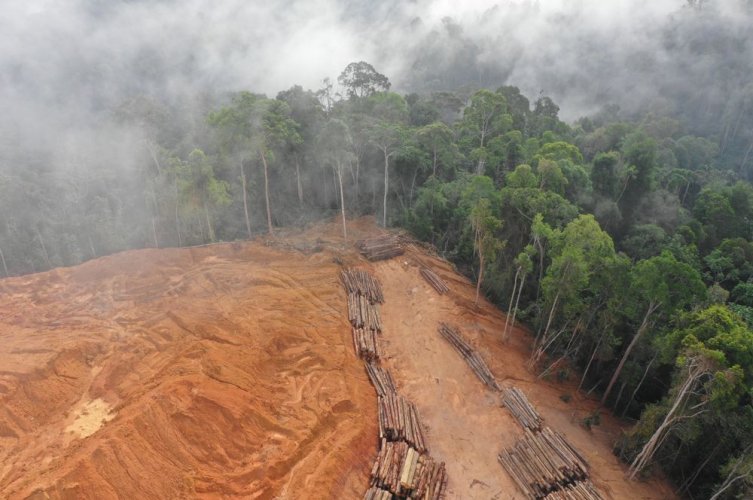
Its authors concluded that the world's richest countries together have caused 15 times more biodiversity loss at the international level than at the national level, stimulating deforestation to meet demand for agricultural and forestry products.
The study maps global biodiversity loss hotspots, showing that rich countries often affect species in nearby regions, but can also put pressure on distant ecosystems. In particular, this happens because the expansion of crops for export outpaces the expansion of crops consumed domestically, so international trade plays an important role in deforestation.
Where the hot spots were found
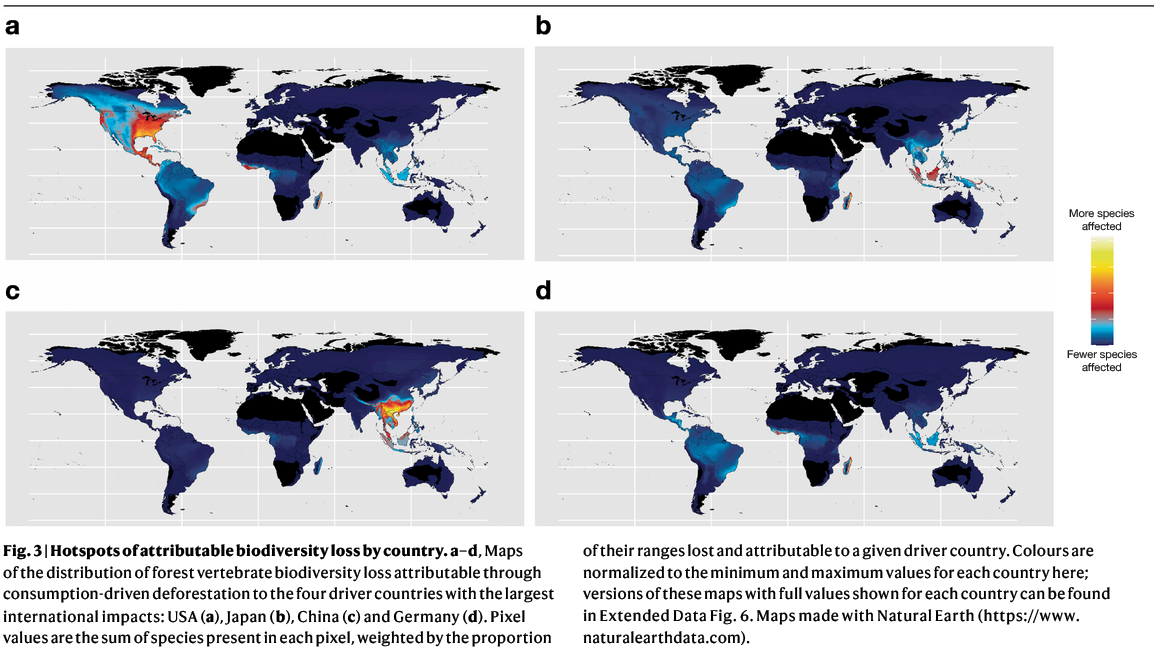
18 of the 24 countries studied had a greater impact abroad than domestically. Scientists say that the United States, Japan, China, Germany and France have made the greatest contribution to global biodiversity loss.
Source: nature.com.
For example, Germany's international impact on biodiversity is concentrated in West Africa, while France has been identified as a driving force behind biodiversity loss in Madagascar. Meanwhile, biodiversity loss associated with the United States is most pronounced in Central America.
The study shows that a country's influence on species loss decreases with geographic distance, meaning that biodiversity loss tends to be concentrated in neighboring tropical countries.
There are exceptions, however, where economically developed countries have a significant impact on biodiversity in remote regions, such as Madagascar, where deforestation for vanilla production plays an important role.
The scientists emphasized the need to develop policies that would take into account biodiversity losses beyond national borders.
What the EU is doing
The EU accounts for about 10% of global deforestation, mainly due to imports of palm oil (34%) and soybeans (32.8%), followed by timber, cocoa, coffee, rubber and corn.
To address this problem, the EU has introduced rules to curb deforestation related to its market. The new EU Forestry Strategy 2030 aims to improve the quality and quantity of forests, while enhancing their role as carbon sinks.
In April 2023, the European Parliament approved rules requiring companies to ensure that products sold in the EU do not contribute to deforestation or forest degradation.
They were originally due to come into force in December 2024, but their implementation was postponed for a year: large companies must comply by December 2025, and small businesses by June 2026.
The new law covers key products such as palm oil, soy, cocoa, coffee, livestock, wood, beef, leather, paper, furniture, cosmetics, and chocolate. Companies must also verify compliance with human rights standards and protect the rights of indigenous peoples.
In early December 2024, the European Parliament and the Council agreed to postpone the implementation of the EU Deforestation Regulation. EcoPolitics also recently reported that in 2022 and 2023, during the full-scale invasion, Ukraine lost forest cover over an area of more than 1579 km².