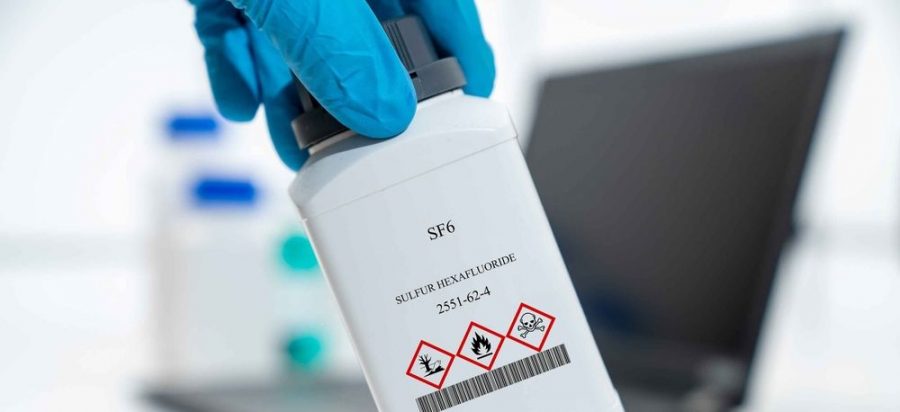
On 19 November, at the COP31 climate summit, Germany launched an international initiative to reduce sulphur hexafluoride (SF6) emissions in the energy sector, the Global SF₆ Pledge. The European Union joined it on the same day.
This was reported by the European Commission on its official website.
The declaration has been signed by 35 countries, which together account for roughly a third of the global economy. The initiative, called the "Global SF6 Pledge", is supported by the World Bank and the Climate and Clean Air Coalition.
"We fully support the fight against SF6, the most potent greenhouse gas in the world. SF6 has to go," said Wopke Hoekstra, European Commissioner for Climate, Net Zero and Clean Growth.
He called on other countries to sign the declaration and gradually phase out the gas.
What the signatories commit to
Countries that have joined the declaration are expected to:
- improve data on SF6 stocks and emissions;
- minimise emissions through environmentally sound management of the gas;
- promote the deployment of SF6-free technologies.
Why sulphur hexafluoride is dangerous
SF6 is mostly used in power grid equipment, in particular in switchgear. It remains in the atmosphere for thousands of years, and its global warming potential is roughly 25,000 times that of carbon dioxide.
The European Commission explains that implementing the declaration will help avoid a situation in which electrification and grid expansion around the world lock in the use of SF6. Equipment containing this gas has a very long service life, so this would lead to additional emissions for decades.
What the EU says
The EU notes that alternatives to sulphur hexafluoride already exist for many applications, but policies are needed to help bring them to market. Under the EU F-Gas Regulation, SF6 in new switchgear is, as a rule, to be phased out by 2032. Strict rules also apply to preventing F-gas leaks from installed equipment throughout its operation and at the end of its life.
EcoPolitic previously reported that at COP31 countries have still not reached agreement on fossil fuels, finance for developing countries and adaptation to climate change.