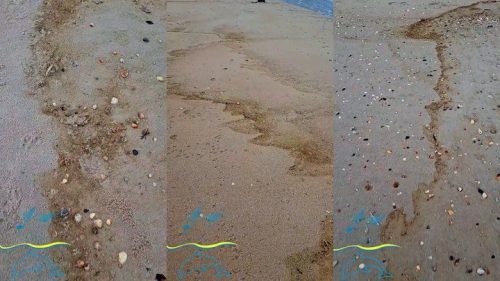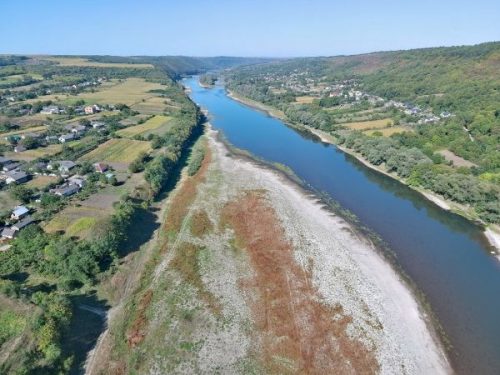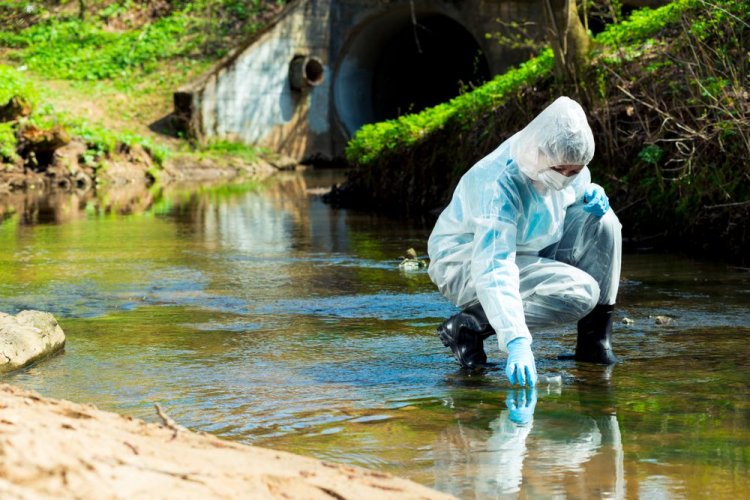
Rescuers began to clean reservoirs of machine oil from the Kakhovska HPP

Rescuers began to clean reservoirs of machine oil from the Kakhovska HPP shutterstock

The Minister of Internal Affairs Ihor Klymenko said that the rescuers are promptly collecting the oil stain that leaked from the Kakhovskaya HPP due to the explosion.

They managed to localize it, reports the Government portal.

"Currently, our rescuers are collecting this oil so that it does not get further into the water bodies. We take fences from all the wells that are in the territory of the Kherson region. We also take fences from the Dnieper estuary and the Black Sea coast," he said.

Klymenko also said that the high water began to gradually recede, and for the third day in a row, operational services have recorded a decline.

He noted that epidemiologists, sanitary doctors, energy engineers and water management specialists work in Kherson Oblast, because a lot of transformer substations were under water. It is important to start these stations in order to prevent sewage from flowing into the Dnipro River.

Earlier, EcoPolitic wrote, that due to the explosion of the Kakhovskaya HPP, the Dnipro River got at least 150 tons of machine oil, there is also a risk of further leakage of more than 300 tons.

As EcoPolitic reported earlier, due to the undermining of the Kakhovskaya HPP, the water flooded the pumping station of Kherson CHP and damaged 129 transformer substations.
Tags: , , ,
Related
Wetlands spanning 20,000 hectares being restored in Rivne Nature Reserve in Polissia

The measures include slowing the flow of water in drainage canals so that it stays in wetlands

Where "forever chemicals" accumulate: scientists studied reservoirs on five continents

PFAS do not disappear from the environment, and their distribution depends on the region

Six months after a Russian strike, oil has again washed up on the shore of a national park in Odesa Oblast

After storms, the substance may poison the sea sands for at least ten years

Rivers remain critically low: water abstraction restrictions have been extended for over 200 businesses

Water abstraction will resume once hydrological conditions have returned to normal, but not before the end of October