10 countries pollute the world's oceans with plastic the most: the Philippines, India, Malaysia, China, Indonesia, Myanmar, Vietnam, Bangladesh, Thailand and Brazil. The paradox is that these countries do not consume the most plastic, but at the same time, they lack a quality waste management system.
This rating was prepared by Visual Capitalist.
Millions of metric tons of plastic are produced worldwide each year. While half of this plastic waste is recycled, incinerated or landfilled, much of what is left eventually ends up in the world's oceans.
"Some might think that the countries that produce or consume the most plastic are the ones polluting the oceans the most. But that's not true. According to the study, countries with a smaller geographic area, longer coastlines, high rainfall and poor waste management systems are more likely to dump plastic into sea. For example, China produces 10 times more plastic waste than Malaysia. However, an estimated 9% of Malaysia's total plastic waste reaches the ocean, compared to China's 0.6%," the paper said.

visualcapitalist.chom
The Philippines — an archipelago of more than 7,000 islands with 36,289 kilometers of coastline — is estimated to throw 35% of plastic into the ocean.
Besides the Philippines, more than 75% of accumulated plastic in the ocean is reported to come from mismanaged waste in Asian countries, including India, Malaysia, China, Indonesia, Myanmar, Vietnam, Bangladesh and Thailand.
The only non-Asian country to make this top 10 list, with 1,240 rivers, including the Amazon, is Brazil.
The ranking of the TOP 10 countries polluting the ocean with plastic looks like this:
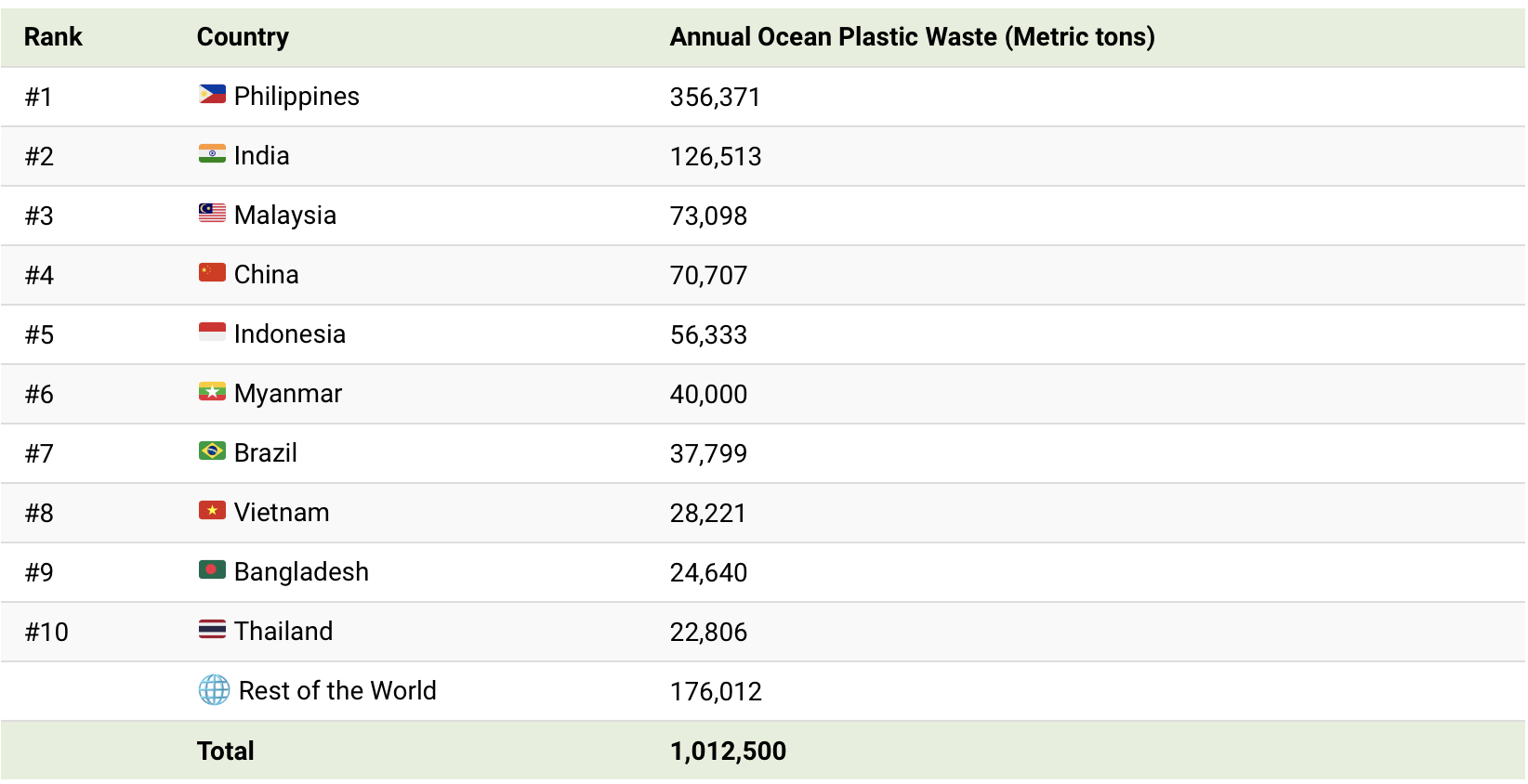
The list may surprise many, as the countries that produce or consume the most plastic are not the biggest polluters of the oceans. But countries with smaller geographical areas, longer coastlines, high rainfall and poor waste management systems are the biggest polluters.
It is noted that two key ways to reduce the accumulation of plastic are: reducing the use of plastic and improving the waste management system. At the same time, many developed countries produce a large amount of plastic waste, but either process it better or export it to other countries. Meanwhile, many low- and middle-income countries that consume a lot of plastic have yet to develop the infrastructure needed to process it, the paper concludes.
As EcoPolitic reported earlier, previously a report by the environmental group Oceana showed that the world's largest Internet company Amazon in 2021 created more than 97 million kilograms of plastic packaging waste, which can be used to circle the Earth more than 800 times.