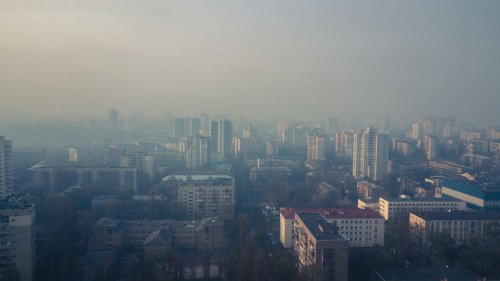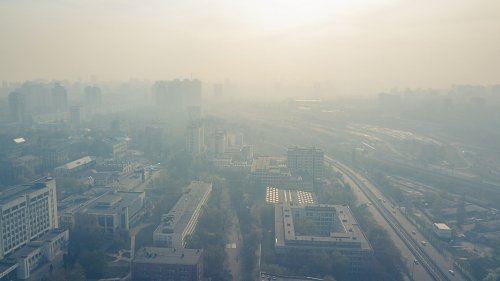
When a city is described as ‘green’, the image that usually springs to mind is one of parks, chestnut trees, flower beds and happy cyclists who never get stuck in traffic jams.
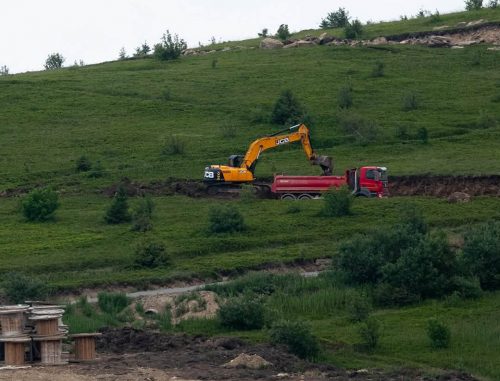
In reality, things are a little more complicated. A city may have a large park, but regularly cut down trees to make way for new developments. It may purchase electric buses, but leave residents in the outskirts without proper public transport. Or it may ceremoniously install recycling bins, but fail to ensure that the waste is actually recycled.
EcoPolitic has decided to compile its own editorial ranking, as there is currently no single official list of Ukraine’s greenest regional centres. This list should therefore be viewed as a selection of cities that already have notable environmental achievements, systematic programmes or serious ambitions worth taking a closer look at and emulating.
Which criteria really matter
We have endeavoured to be as objective as possible, so we focused on the areas used to assess entrants in the European Green Capital competition: these include air quality, water quality, transport, waste management, noise pollution levels, energy efficiency, the protection of natural areas, and a city’s preparedness for heatwaves, heavy rainfall and other consequences of climate change.
1. Vinnytsia – An Environmental Pioneer
Vinnytsia has for years topped the rankings of the most comfortable Ukrainian cities, largely due to its systematic approach to ecology and urban planning.
The city is accustomed to leading in many environmental initiatives:
- Vinnytsia’s community was the first in Ukraine to announce a “Green” course as part of the European Green Deal.
- The city was the first in our country to undergo international certification and receive the European Energy Award (EEA) for achievements in energy efficiency and emission reductions.
This regional center is also among the Ukrainian cities involved in the European U_CAN project, which supports Ukrainian communities in moving toward climate neutrality. Under this initiative, the city is implementing a project to protect and restore local rivers.
Currently, in Vinnytsia, an industrial park called “Ecological Initiatives” is being developed, which will integrate the processing of secondary raw materials – paper, pulp, and cardboard. The city is also helping homeowners associations and businesses install solar power plants, with the local budget compensating up to 40% of project costs. The city has also conducted large-scale thermal modernization of schools, kindergartens, and hospitals.
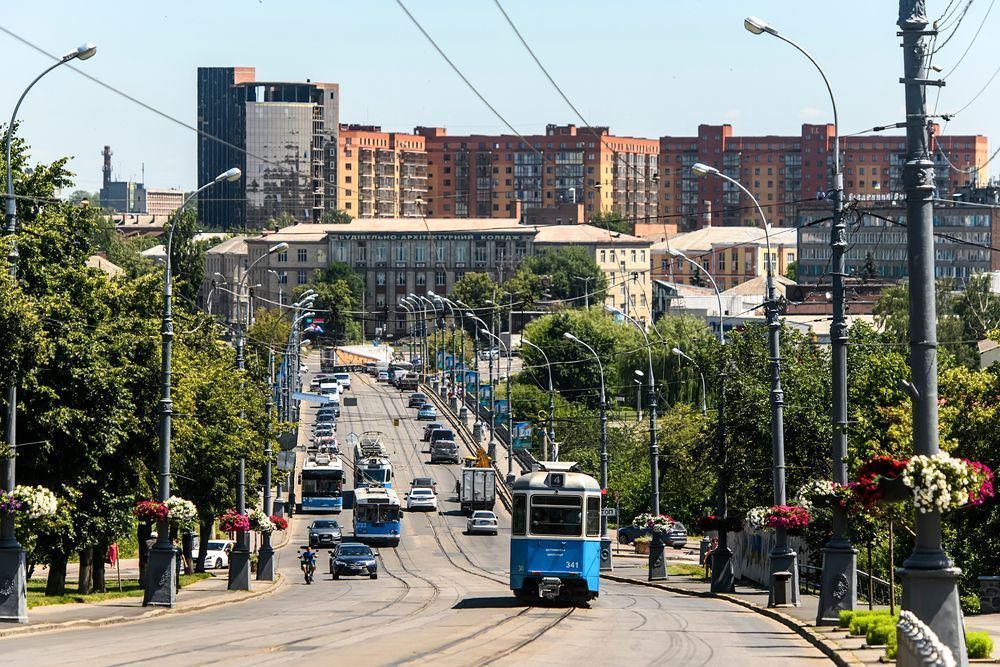
Vinnytsia has also long been associated with the famous Swiss trams, and this is one of those cases where a city symbol truly has environmental significance. It boasts the most developed public electric transport network and the longest cycling route network, which significantly reduces CO₂ emissions from private vehicles.
Why included in the ranking: electric transport, initiative, and participation in international programs.
2. Zhytomyr – a city that plans and implements, not just promises
This regional center seldom tops tourist rankings, but it regularly appears in the news regarding energy efficiency and climate projects. Zhytomyr has made a tremendous leap forward in renewable energy and energy independence and has become an ambassador of European environmental initiatives in our country. Therefore, it is no surprise that it aims to become Ukraine’s first climate-neutral city by 2050.
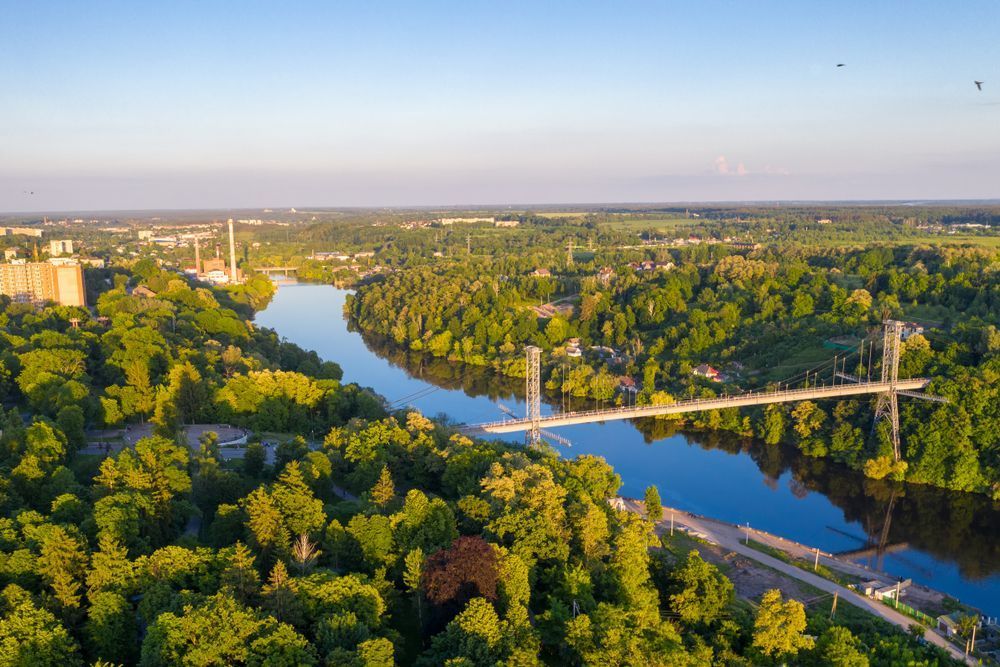
Zhytomyr participates in the U_CAN project. Within this initiative, the city received funding to renovate one of the city's greenhouses as part of a pilot project to develop urban horticulture, and will also prepare a feasibility study for the construction of a floating solar power plant.
Zhytomyr has received the EEA certificate twice, in 2019 and 2024, for its achievements in energy efficiency. In this public ranking system, the city demonstrated one of the most impressive results among Ukrainian communities.
Back in 2015, this regional center joined the Covenant of Mayors – East, an EU initiative that helps cities and communities in Eastern Partnership countries combat climate change, save energy, and transition to clean energy sources. As part of this project, the city regularly exceeds its commitments to reduce CO₂ emissions.
Zhytomyr also became the first city in Ukraine to fully switch its street lighting to energy-efficient LED lamps. The city actively attracted European loans to modernize the water utility in order to reduce water losses and improve wastewater treatment.
This does not mean that issues with transport, development, or waste have disappeared here. However, the city enjoys a major advantage: its environmental policy has been systematic for over 10 years and is not tied to “environmental” dates on the calendar.
Why we include it in the ranking: energy efficiency, a systematic approach to climate policy, and participation in international programs.
3. Lviv – many ambitions and just as many contradictions
The City of Lions is among the most active Ukrainian cities in climate policy. Like Zhytomyr and Vinnytsia, it also participates in the U_CAN project and is implementing two initiatives at once – developing energy-efficient districts and integrating strategies and policies within the context of the European Green Deal.
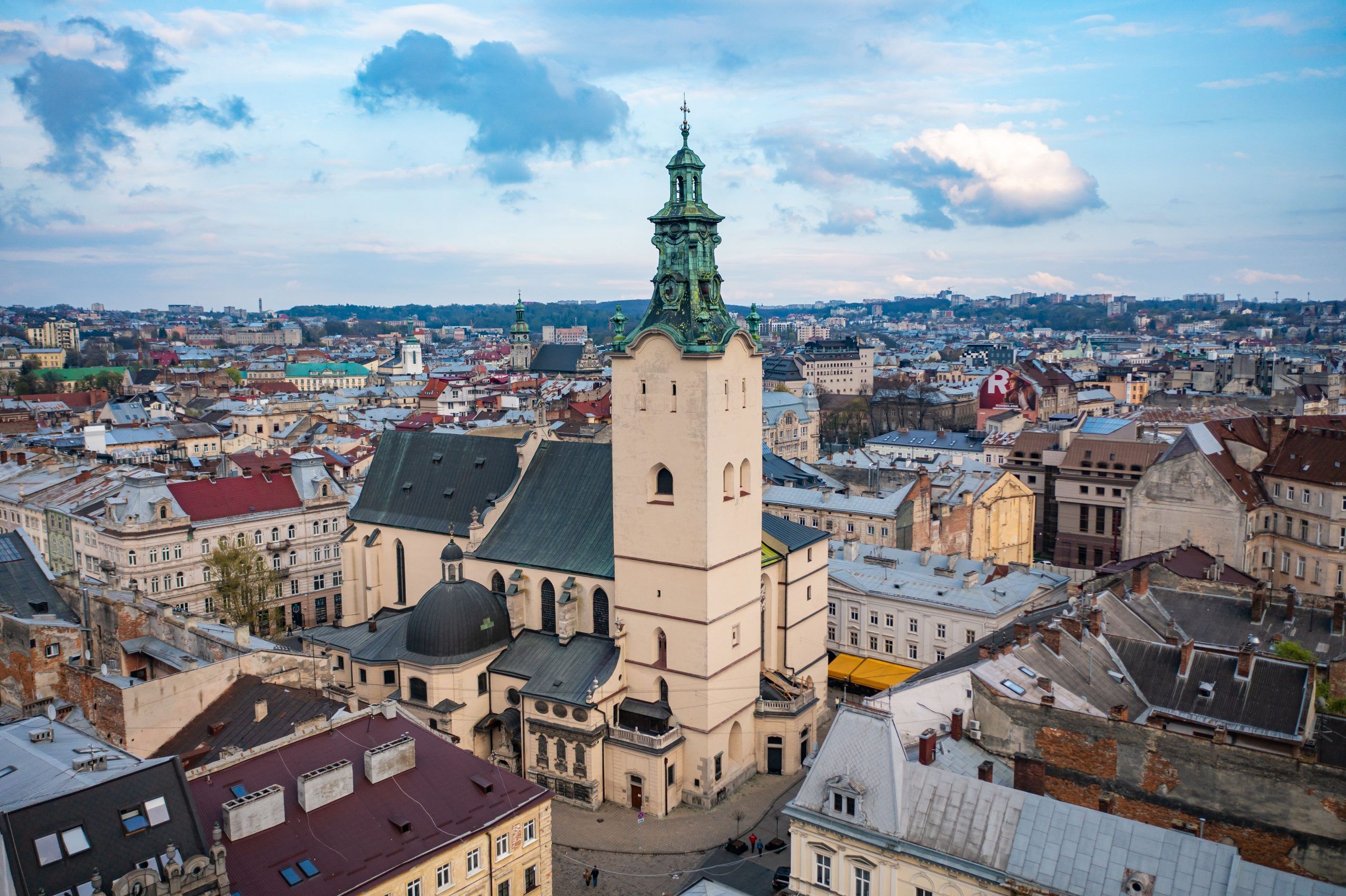
In 2025, Lviv applied for the title of European Green Capital 2027. The city did not make it to the finals, but preparing such a comprehensive document requires thorough data collection on water, air, waste, biodiversity, and climate actions – and this is already a useful exercise for the city authorities.
This regional center was the first in Ukraine to open a municipal station for composting organic waste. Residents and businesses sort organic waste, which is then turned into fertilizer for city parks.
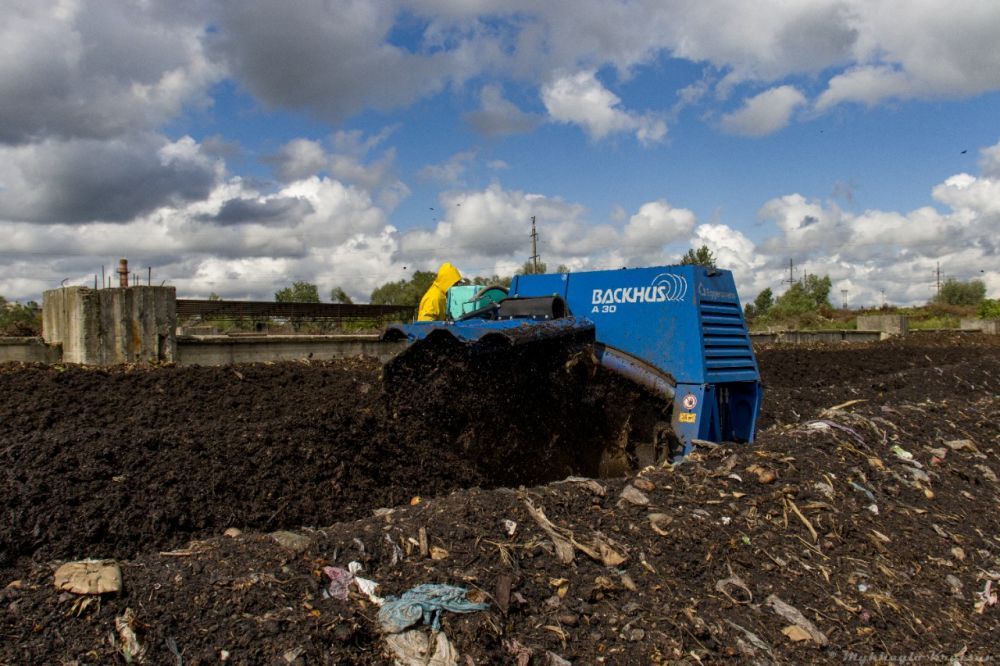
Photo: “Zelene Misto”, Facebook
To adapt to climate change, Lviv is implementing the practice of “rain gardens” for the natural collection of water during downpours, which helps to relieve the sewer system. As of April 2026, there were already four such gardens.
An EcoBus – a mobile collection point where all local residents can dispose of hazardous waste such as batteries, mercury lamps, and thermometers free of charge – also regularly operates throughout the community.
At the same time, the city faces serious transport, waste, and infrastructure challenges. Traffic congestion remains, air quality varies by district, and although a waste processing plant has been under construction for many years, it is still not finished.
Reasons for inclusion in the ranking: climate projects, targeted successes in local waste processing, an active urban community, and environmental ambitions.
4. Khmelnytskyi – a quiet yet progressive contributor to the green transformation
This regional center is rarely mentioned first when talking about green cities.
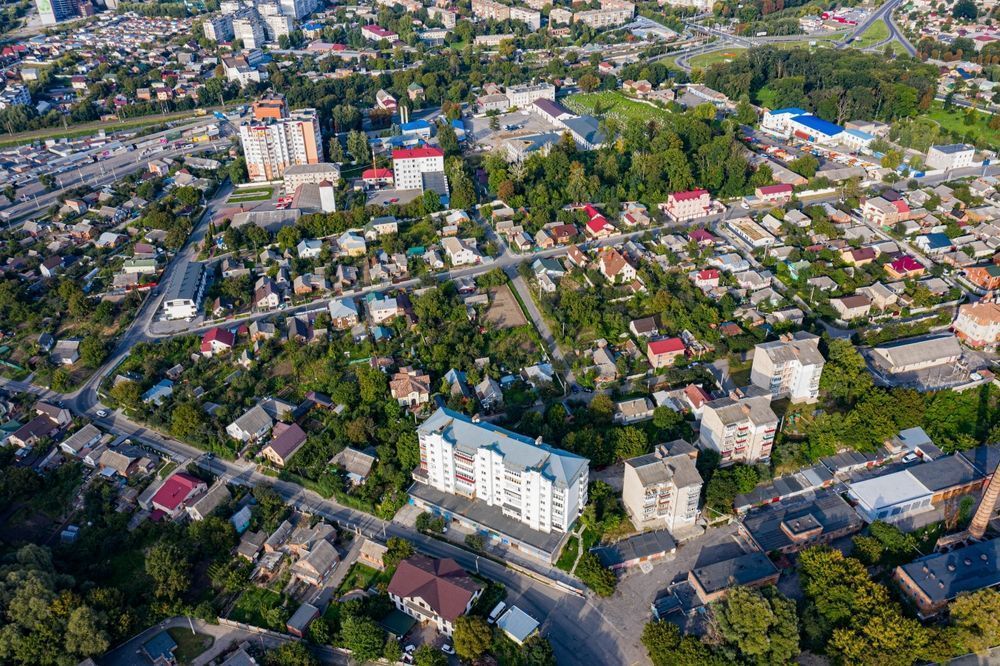
But it deserves more attention, and here’s why:
- Back in 2015, its city council joined the European Covenant of Mayors for Climate and Energy and received awards for promoting European integration and values.
- The city participates in U_CAN, working to build social and climate governance (in particular, in transport and energy) in order to increase its resilience.
- In 2023, the city developed and published the Green City Action Plan project and the Strategic Environmental Assessment Report, which have become the roadmap for improving the city’s environmental situation.
- Khmelnytskyi joined the Framework Program of the European Bank for Reconstruction and Development (EBRD) “Green Cities.” This has provided direct access to systemic investments for long-term sustainable development and modernization of the city’s infrastructure.
- In December 2024, the city became a participant in the Zero Waste Cities program. By 2028, the city community aims to achieve “Zero Waste City” status. To this end, city authorities plan to build a European-standard waste processing complex.
- In 2025, the city authorities also submitted an application for European Green Capital 2027.
Khmelnytskyi does not have large heavy industry enterprises, which is why the air quality here is better compared to many other Ukrainian cities. Additionally, the city operates an EcoBus that collects hazardous waste from residents for recycling.
Reason for inclusion in the ranking: climate planning, international partnership, and ambition.
5. Ivano-Frankivsk – compactness as an advantage
This city in Western Ukraine has focused on European sustainable development directives and actively engages the community in urban planning processes.
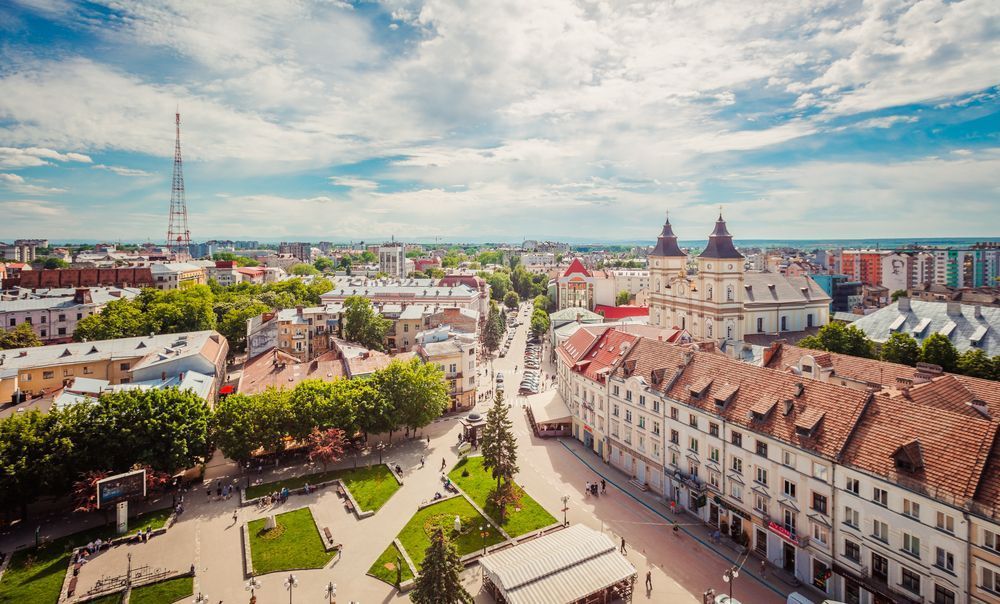
Ivano-Frankivsk is an active signatory of the “Covenant of Mayors” and has developed an Action Plan for Sustainable Energy Development and Climate. This means that the city has assumed legally binding commitments to reduce carbon emissions and adapt its infrastructure to the effects of climate change.
In this regional center, systematic efforts are being made to reduce the carbon footprint from transport. The city has implemented one of the best approaches in Ukraine to developing cycling infrastructure, creating pedestrian zones, and calming traffic. These initiatives help reduce the concentration of exhaust gases and particulate matter in the air, thereby improving its quality.
The city also participates in the U_CAN project by implementing green technologies in public buildings.
Instead of expanding outward and destroying new natural areas, the city demonstrates successful cases of revitalizing old industrial zones, for example, the innovative center “Promprylad. Renovation”. Such projects integrate the principles of green construction, energy efficiency, and resource reuse.
Ivano-Frankivsk is also actively implementing programs for the thermal modernization of residential buildings and public institutions.
Reason for inclusion in the ranking: compactness, revitalization and modernization of public buildings, and participation in climate programs.