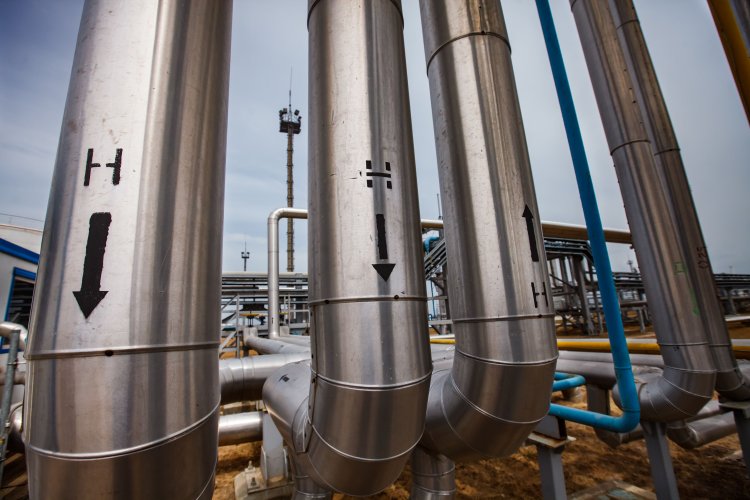
The German state-owned company Securing Energy for Europe (SEFE) plans to invest about €500 million to modernize a number of gas storage facilities and pipelines for storing and transporting green hydrogen.
The company's CEO Egbert Laegge told Reuters in an interview.
"The exact calculation of the investment is not yet available, but we are talking about amounts in the mid-three-digit range of millions of euros to convert some of our gas storages to hydrogen," he said, adding that some investment decisions will be made in 2024.
Laege added that the transfer of some of the pipelines of the transport subsidiary Gascade will require investments of billions of euros.
Germany is said to be looking to expand the use of hydrogen as a future energy source to reduce greenhouse gas emissions. Hydrogen will also help reduce dependence on fossil fuels in industries that cannot be electrified, including the metallurgical and chemical industries.
The material said that SEFE is a supplier of about 200 TWh of gas per year to industry and downstream distributors, mainly in Germany, Great Britain and seven other European markets. The company also operates 5.6 billion cubic meters of gas storage facilities, i.e. a quarter of such capacities in Germany.
The company was nationalized in the spring of 2022. Before that, it had a name "Gazprom of Germany".
Earlier, EcoPolitic wrote, that the European Commission has approved €6.9 billion in state aid for 33 hydrogen infrastructure projects Hy2Infra in seven bloc countries. 24 such projects are implemented in Germany.
As EcoPolitic previously reported, Australia has announced a $92 million investment in the construction of a hydrogen hub in the Pilbara, Western Australia.