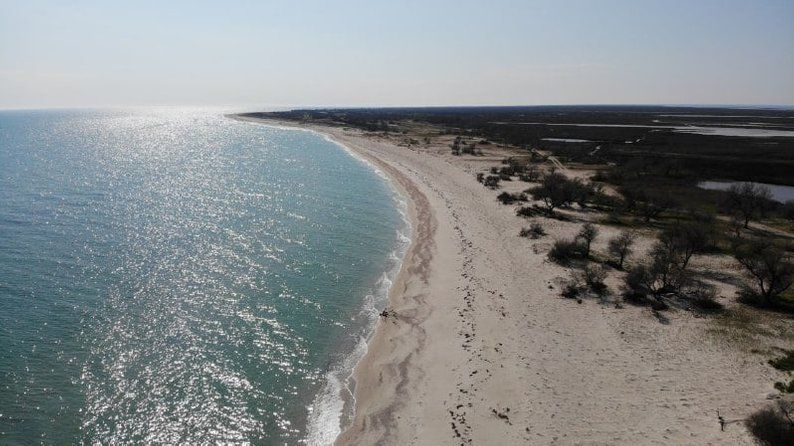
On the occupied island of Dzharylgach in the Kherson region, where a fire has been raging for almost a week, the fire destroyed the entire protected zone of the nature park on the territory of more than 1,500 hectares.
This was reported by the director of the "Dzharylgatskyi" NPP Iryna Sabashenko in a comment to Public.
According to her, the fire destroyed the main part of the steppe ecosystems of the island, where populations of all rare animals are concentrated, as well as the largest number of ungulates.
"Existing plant groups that are now in danger of disappearing, listed in the Green Book of Ukraine, belong to rare and disappearing plants. This is a group of formations of swamp sword grass, Dnieper weed, hairy weed, Bessarabian carnation, golden bearded cycad and others,"— said the director.
As a resident of one of the settlements on the temporarily occupied left bank of the Kherson region said, the fire on the island could be seen from the coast of the Dzharylgat Bay 10 kilometers away. The smoke has been visible for several days.
It takes an average of 4-5 to 8-12 years to restore steppe, meadow, and salt marsh areas, says Iryna Sabashenko. Tamarix thickets from 15-30 years.
"We are calculating the damages, but they already amount to billions of hryvnias. The fire is still ongoing, so we do not have accurate data," the director said.
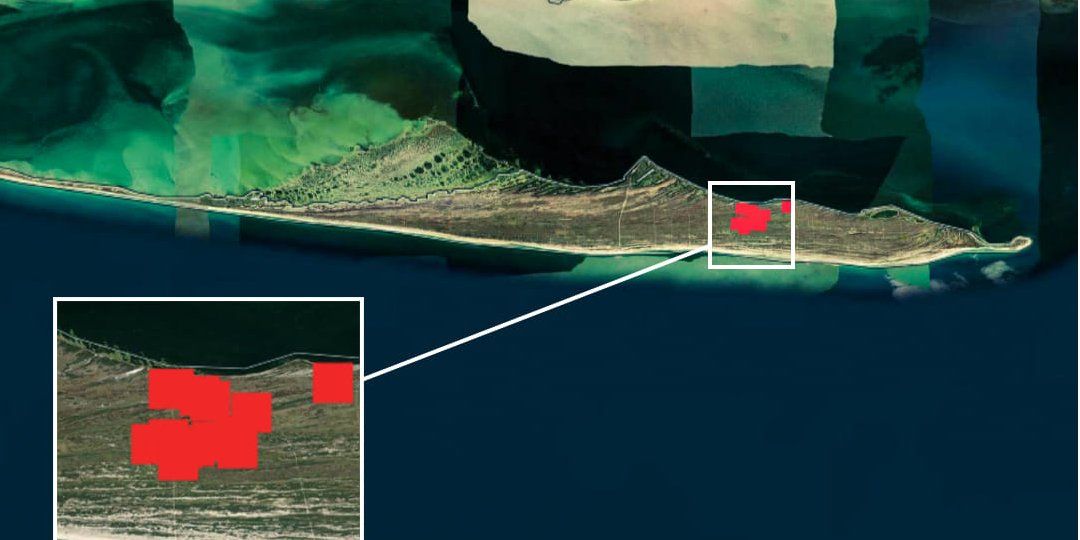
Earlier, EcoPolitic wrote, that Dzharylgach has been under occupation since the first days of the full-scale invasion. The special administration of the national park cannot ensure its preservation. The area that burns for a long time is a zone of absolute protection in the national park, where even human visits are restricted.