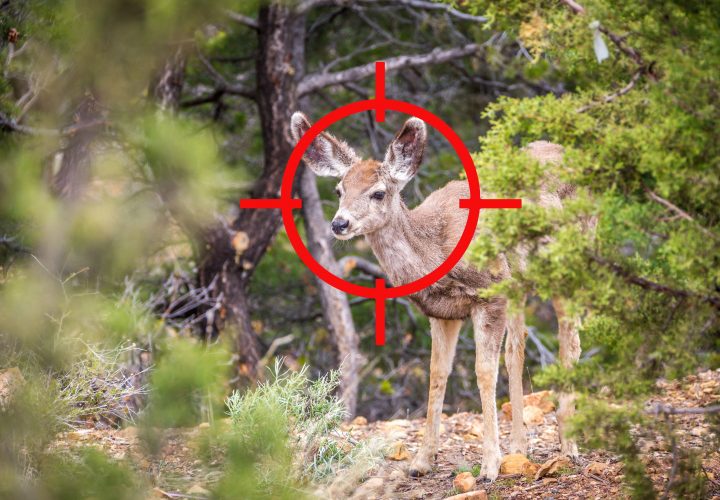
The controversial hunting bill No. 15431, which has sparked outrage amongst experts and the public, is partly at odds with European legislation. It cannot be passed without substantial amendments, particularly due to the unjustified classification of certain species as ‘undesirable’ and the use of a number of types of weapons that are banned in the EU.
This was reported by the Verkhovna Rada Committee on Ukraine’s Integration into the EU, which provided its expert opinion.
"This draft bill is anti-European and anti-Ukrainian. As well as directly breaching our European integration commitments, it is anti-European and immoral in spirit. Europe is a place where life is respected. I hope that, together with my colleagues on the Environment Committee and with the active support of the public, we will be able to prevent this bill from being passed in its current form,” said the committee chair, Ivanna Klympush-Tsintsadze.
Some people are more desirable than others
The provisions of the draft bill, without any justification, classify certain species as ‘undesirable for hunting’. Moreover, no assessment has been carried out regarding the conservation status, the purpose, the scale or, indeed, the consequences of such actions, which could serve as grounds for the culling of animals.
These provisions are in direct contravention of Directives 2009/147/EU and 92/43/EEC. Without prior studies, they do not permit their removal on the grounds of any ‘inadequacy’.
One particular point to note is that the term ‘undesirable to the hunting industry’ does not appear in European legislation. Ukrainian lawmakers, however, have decided to apply this ‘classification’ to wild animals that allegedly pose a threat to the hunting industry. This refers to animals such as foxes, wolves, jackals and raccoon dogs, as well as birds — jays, magpies and grey crows. Even feral domestic animals left unattended in hunting grounds have not been spared.
Hunting equipment
Document No. 15431 stipulates that animals may be hunted using firearms, bladed weapons and projectile weapons. It also permits the use of nets, traps, hunting dogs, hunting towers and non-poisonous bait for capturing animals.
At the same time, EU legislation prohibits the use of crossbows, as well as nets and traps. The latter are non-selective in nature and can therefore have an extremely negative impact on the local population.
The European Integration Committee also noted that the draft law contravenes Articles 11–13 of the European Convention for the Protection of Pet Animals. Furthermore, it does not comply with EU regulations as it permits the commercial use of hunting trophies.
EcoPolitic previously analysed in detail the experts’ comments on draft law No. 15431. Its drafters introduce the concept of ‘hunting tourism’, defining it as a form of active leisure.
The document has sparked a wave of criticism across society. It is regarded as inhumane and as something that will turn Ukraine’s forests and steppes into a playground for wealthy hunters.