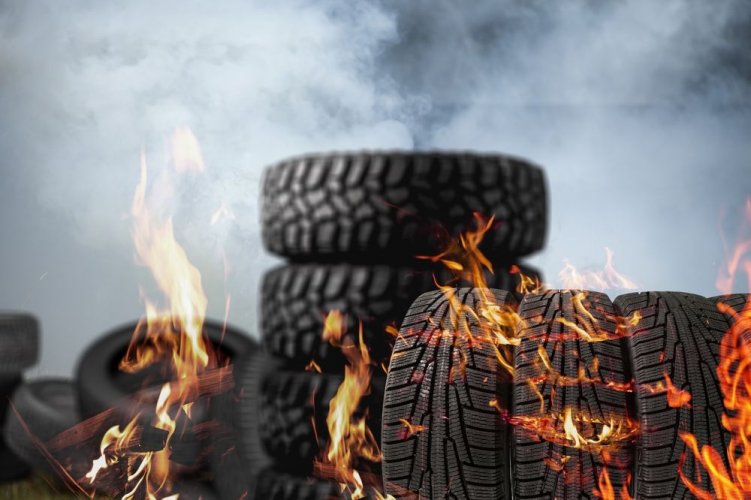
In the Lviv region, efforts are being made to establish the processing of worn-out car tires, which pose an environmental threat if improperly disposed of.
This was reported by the Department of Ecology and Natural Resources of the Lviv region.
Experts state that improperly disposed tires contain a number of hazardous substances, such as lead, zinc, and cadmium. Tires become especially dangerous when burned, as they release carbon monoxide containing benzene, toluene, xylene, and other toxic compounds. This creates additional harm to people and the environment.
According to the Department, by 2034, one of the priorities for Lviv region in waste management is the implementation of tire recycling. The region is currently preparing to introduce a systematic approach to tire disposal in accordance with European standards.

Photo: loda.gov.ua/home
Currently, one of the regional enterprises is undergoing an environmental impact assessment procedure to obtain a permit for processing worn-out tires. This will be the first legal and regulated tire disposal site in the Lviv region.
Specialists emphasized that their priority is to comply with all environmental regulations during processing, which will be facilitated by the use of modern equipment and the implementation of measures to minimize harmful emissions.
Earlier, EcoPolitica reported that in the Cherkasy region, an entrepreneur will be prosecuted for illegally processing automobile tires.