The head of the Luhansk regional administration, Serhiy Gaidai, said that even at the beginning of the occupation of Severodonetsk, people poisoned themselves with corpse poison in the water, because the Russian troops did not take away their dead.
So far, the number of dead has increased, especially in the area between the cities of Svatove and Kreminna, Gaidai said on the "Dom" TV channel.
"No one takes the Russian dead from the forests. All the forests are "seeded" with them, he said. "When the Armed Forces of Ukraine move on, we will see a solid burial ground."
Gaidai noted that this will be a very serious problem, because it is impossible to solve it in a week or even a month. However, it will be possible to begin to overcome such consequences of the war only when the Russian troops withdraw to considerable distances.
He said that the first step will be the "surface" demining of the territories. And it will take at least 10 years for complete demining. After all, in addition to ordinary mines, the Russians use plastic ones.
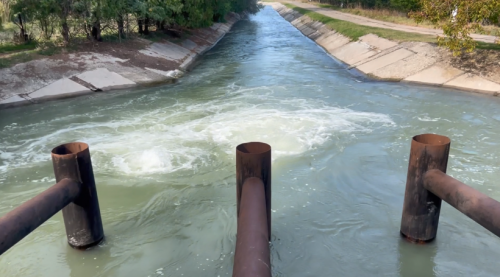
"We are negotiating with various countries regarding powerful equipment for water purification. That's why we are ready to "install" filtration in the liberated communities immediately," Gaidai said.
He also called on people not to temporarily return to the de-occupied Luhansk Region, because it could be very dangerous.
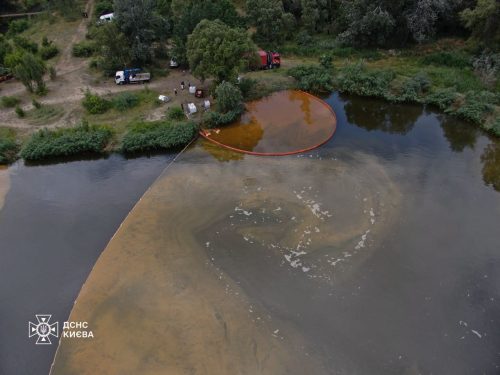
Earlier, EcoPolitic wrote, that Russian aggression caused water and soil pollution, in particular, corpse poison due to mass burials outside of any rules and requirements in the south of Ukraine, which can cause epidemics.
As EcoPolitic previously reported, a preliminary assessment of the impact of the war in Ukraine on the environmental situation showed that war is literally toxic, and future generations will live "with a toxic legacy."