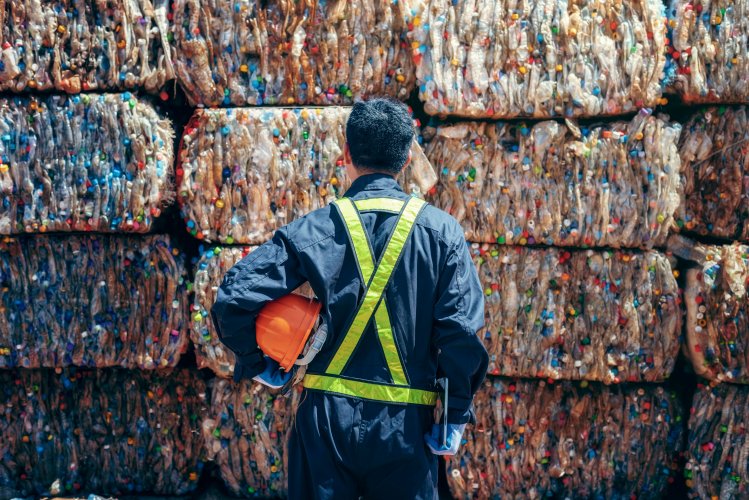
The European Union aims to have recycled materials account for 23.2% of new materials by 2030. Current trends show that this will not be easy to achieve, as the circularity rate for 2024 was only 12.2%.
According to the latest Eurostat data, this figure has increased by only 0.1% compared to 2023.
Leaders and laggards
European countries are quite heterogeneous in terms of their material circularity rate. The Netherlands has the highest rate at 32.7%. Belgium (22.7%) and Italy (21.6%) are also in the top three.
However, at the very bottom of the ranking is Romania, which reuses only 1.3% of recycled materials in new materials. The situation is not much better in Ireland and Finland, where the circularity rate is only 2%.
Lack of steady progress
Most countries show a steady increase in their circularity rate. For example, since 2015, it has grown by 9.1% in Estonia and by as much as 14% in Malta.
But some countries have regressed. Over the same period, Finland lost 3.2% and Poland lost 4.2%.
Which materials are recycled most actively:
- metal ores (23.4%);
- non-metallic minerals (14.3%);
- biomass (9.9%);
- fossil energy materials (3.8%).
Earlier, EcoPolitic reported that European recycling policy has also influenced automakers. In new vehicles, the share of recycled plastic must be at least 20%.
Due to competition with China, plastic recycling plants are closing en masse in the EU.