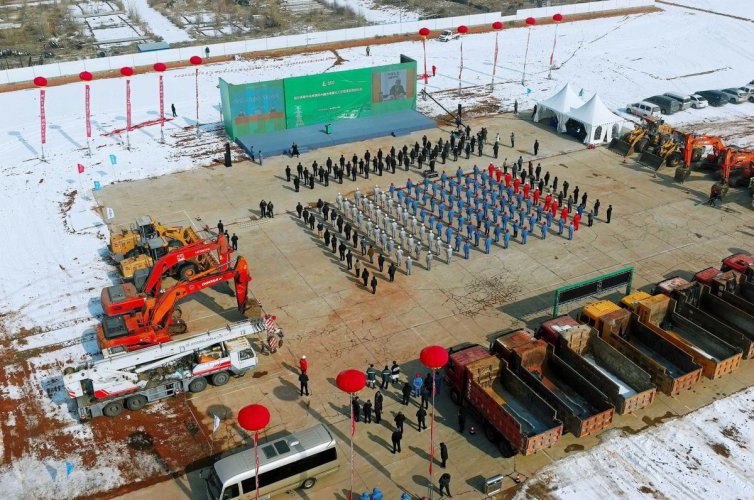
In China, the oil refining giant Sinopec has started construction of the world's largest Ordos plant for the production of green hydrogen at a cost of $831 million.
The plant will produce about 30,000 tons of renewable H2 per year and have an estimated capacity of 390 MW, according to Hydrogen Insight.
It is noted that hydrogen from Ordos will partially replace hydrogen from coal at a nearby chemical plant. It will replace Sinopec's other flagship project, the 260MW, 20,000tpa Kuqa plant currently under construction in the western region of Xinjiang. Before the Ordos project, this plant was the world's largest project for the production of green hydrogen.
The material said that the electrolyzer will be powered by 450 MW of wind energy and 270 MW of solar energy. The plant will have a hydrogen storage capacity of 288,000 m3. It will also have a network of pipelines to deliver H2 to its main customer, Zhongtian Hechuang Ordos deep coal processing plant, which produces synthetic chemicals.
The authors emphasized that there is a risk that the plant will receive part of its electricity from coal and not from renewable sources. This would dramatically increase the intensity of carbon emissions and threaten the ability to legitimately call your hydrogen green.
Earlier, EcoPolitic wrote, that a new RMI report showed that China's industry and regions have the potential to install 100 GW of renewable hydrogen capacity by 2030.
As EcoPolitic previously reported, in most Asian countries, prices and taxes on carbon emissions are too low to significantly affect the fight against climate change and force polluters to reduce emissions.