
All goods and services consumed by the population have their own carbon footprint. In the European Union in 2023, it amounted to 9 tons of CO2 eq. per capita. Compared to the previous year, this figure has decreased by 1 ton, or 10%.
This is evidenced by Eurostat data.
To calculate the indicator, analysts used data on emissions from the production of goods and services, regardless of the place of production. In other words, data on imported products were also taken into account in the calculation. The report emphasized that this refers to emissions at all stages of the production process.
The lowest greenhouse footprint per capita for this period was demonstrated by the following countries: Portugal (6.5 tons), Bulgaria (6.8 tons), Sweden and Romania (6.9 tons).
At the same time, the highest figures were recorded in Cyprus, Ireland, and Luxembourg – 14.8, 14, and 12.7 tons, respectively.
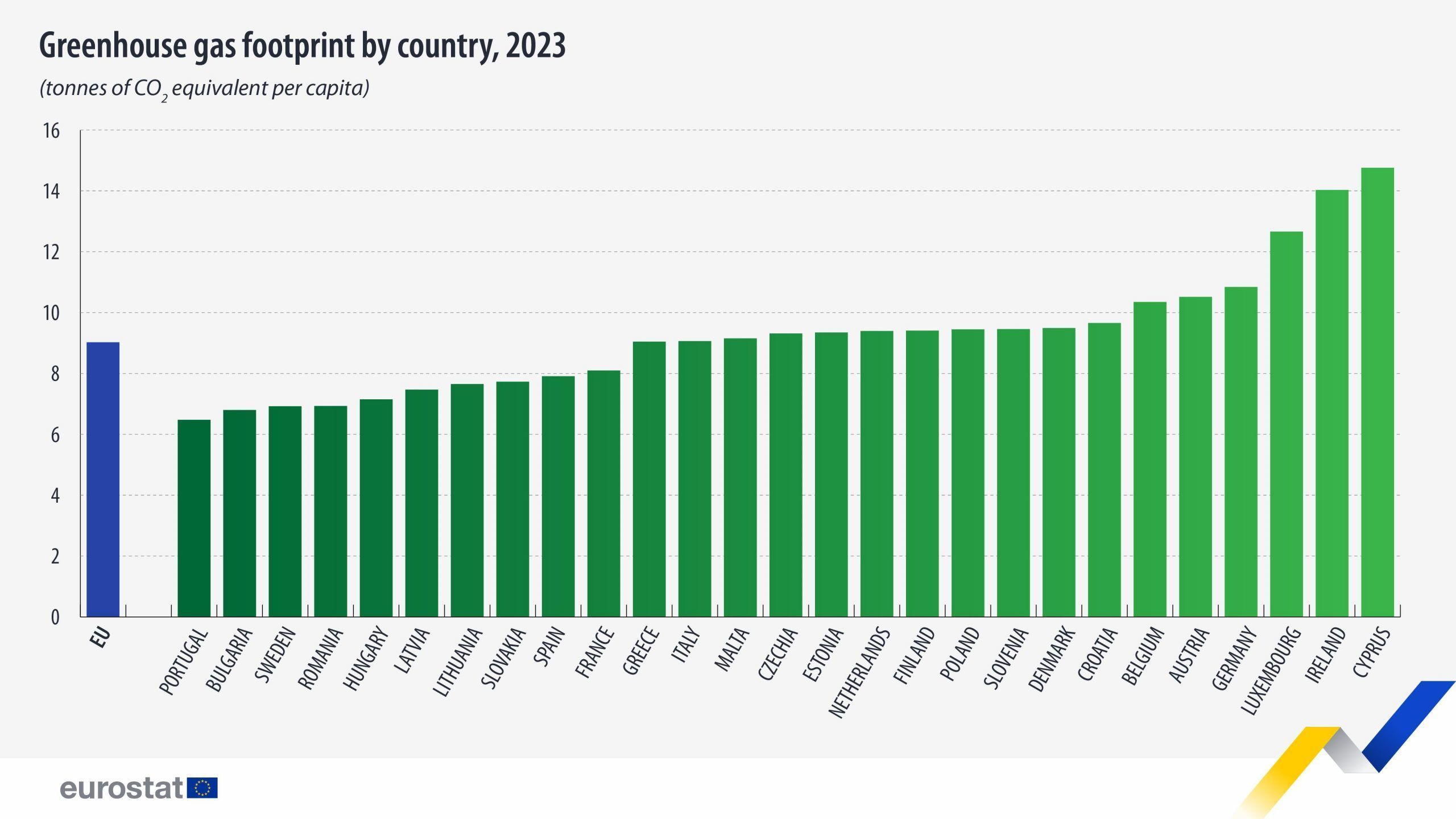
Source: Eurostat
In 2023, the greenhouse footprint from consumption was higher than the emissions from all EU production. The former amounted to 4 billion tons of CO2 equivalent, while the latter amounted to 3.3 billion tons.
At the same time, both indicators have decreased significantly over the ten-year period. Emissions from consumption fell by 12.9%, and from production by 18.6%.
Eurostat notes that emissions fell sharply in 2020 due to the coronavirus pandemic. However, by 2023, the greenhouse footprint from consumption had returned to near 2020 levels, while emissions from production had fallen by 3.5%.
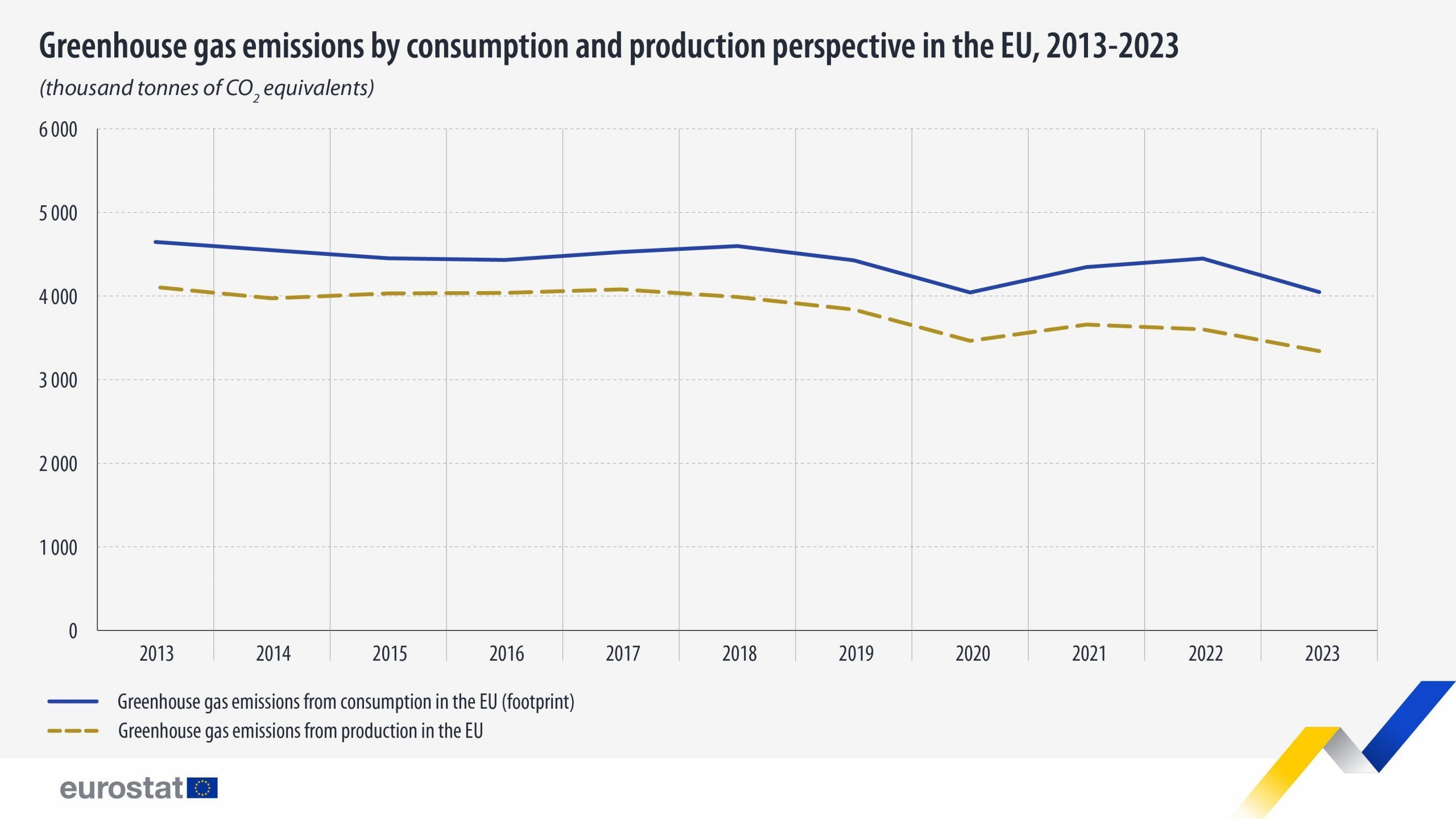
Source: Eurostat
EcoPolitica previously reported that despite international commitments under the Paris Climate Agreement, global warming is accelerating. In particular, this is due to rising greenhouse gas emissions. By the end of this year, they will be 52% above pre-industrial levels.