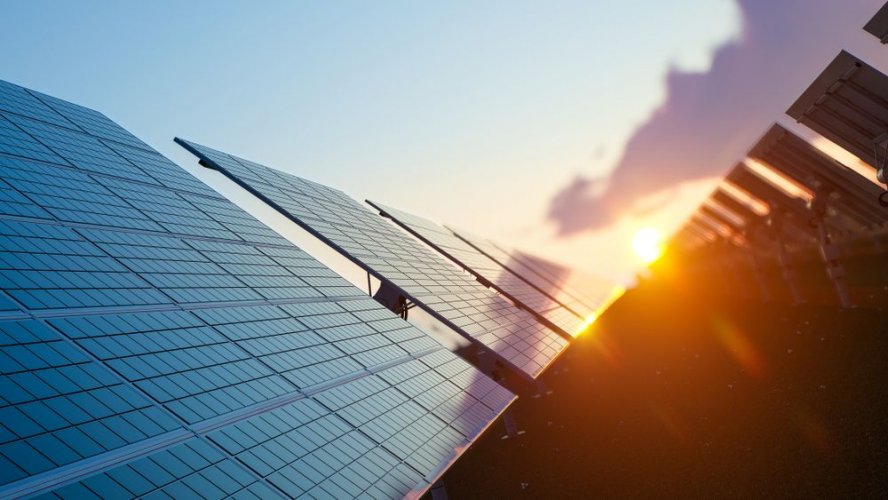
During May, Ukrainian businesses received 207.4 million hryvnias in state support from the Ukraine Decarbonisation Fund. The assistance was provided in the form of loans.
This was reported by the Ukraine Decarbonisation Fund.
All projects are energy-related
In total, five limited liability companies received state support. The funds were earmarked for the implementation of projects aimed at developing generation from renewable sources and cogeneration.
Among the funded projects:
construction of four solar power plants;
- installation of a starter set for a cogeneration plant in Vinnytsia, Zhytomyr, and Kyiv regions.
The Fund noted that after the completion of all work and commissioning of the equipment, carbon dioxide emissions will decrease by more than 8,000 t annually. Also, throughout the year, the new installations will supply over 17,000 MWh of clean electricity.
About the fund
EcoPolitic previously provided a detailed account of the Decarbonization Fund – its sources of funding and the projects it finances.
The Fund itself is accumulative. It is partly funded by the environmental tax, particularly for CO2 emissions from stationary installations, and partly by assistance from international partners.
Funds from the Fund can be used for the implementation of energy efficiency projects that contribute to the reduction of carbon emissions.
In 2024, the Fund’s accounts had accumulated UAH 2 billion, in 2025 – UAH 1.75 billion, and plans for 2026 are set at UAH 1.9 billion.
Recently, the Decarbonization Fund attracted the attention of anti-corruption media. It became known that it awarded a tender for UAH 192 million to a single company without competition or the opportunity for other suppliers to participate, for the procurement of gas consumption metering devices.
Ironically, equipment for which the state has already effectively paid will not be integrated into the gas distribution system free of charge. Its cost will be included in the tariff or service charges.