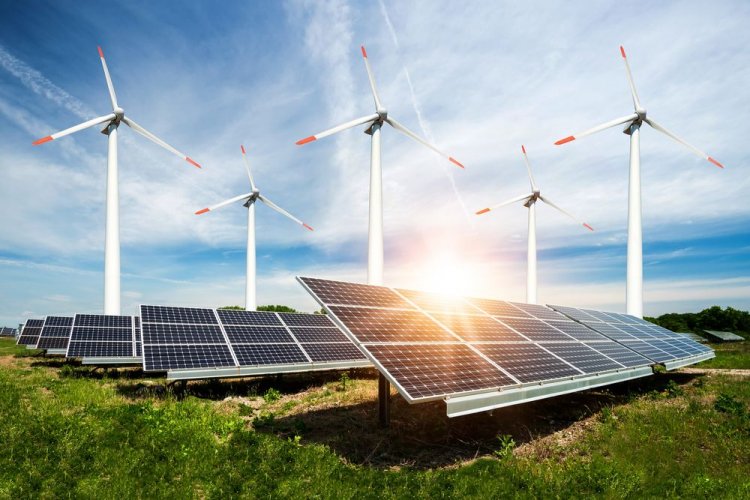
The European Commission has proposed new rules that should speed up the construction of wind and solar power plants in the European Union and protect local producers of green energy equipment from unfair competition from Chinese manufacturers.
The relevant press release is available on the European Commission's website.
These rules are aimed at helping the EU achieve its renewable energy targets by 2030, which include a significant increase in the share of wind and solar power in total electricity production.
After years of pleading from European industry, which tried to compete solely on price with cheaper Chinese offers, the European Commission added "quality, ability to deliver the project on time, responsible business conduct, cybersecurity and data security, contribution to sustainability, environmental sustainability or innovation" to the evaluation criteria for tenders and auctions.
The main provisions of the new rules:
- Fast-track zones: EU countries are obliged to create special zones where the construction of WPPs and SPPs will be significantly accelerated by simplifying procedures for obtaining permits and other administrative barriers. In such locations, the implementation of renewable energy projects is not expected to have a significant impact on the environment. Therefore, the necessary procedures will be carried out without delay to ensure the rapid implementation of specific technologies. Key elements for selecting such areas are the availability of digital tools for planning and mapping, as well as data on renewable energy capacity and potential environmental impact. Each country must have at least one such zone by February 2026.
- Non-price criteria: EU countries will be able to take into account not only the price, but also other factors, such as:
- Local environmental projects: Companies that propose projects involving the restoration of local ecosystems or other environmental initiatives may receive an advantage.
- Resilience of supply chains: Manufacturers with more resilient supply chains that are less dependent on importing components from unstable countries may also receive better ratings.
- Innovation: companies that offer innovative technologies or solutions will be able to receive additional points.
The use of non-price criteria will allow rewarding projects with higher added value, and will also help develop the European production ecosystem of net-zero technologies and ensure full and timely implementation of projects.
The European Commission noted that during the transition to a net-zero economy, the competitiveness of the European Union will depend heavily on its ability to develop and produce at home the clean technologies that make this transition possible.
In October 2023, to protect European electric car manufacturers from the influx of cheap Chinese cars, the European Commission launched an investigation into alleged illegal subsidies to Chinese electric car manufacturers by the PRC government.
Also, in order to preserve production capacities for RES development, the European Commission adopted the European Wind Energy Action Plan, European Wind Charter and European Solar Energy Charter.
At the end of February, EcoPolitic reported that the Swiss company Meyer Burger, the largest manufacturer of solar panels in Germany, is closing its factory in Freiberg and moving production sites to the USA. The manufacturer was forced to take such a step due to the lack of European protection against unfair competition from China and financial support from the German government.