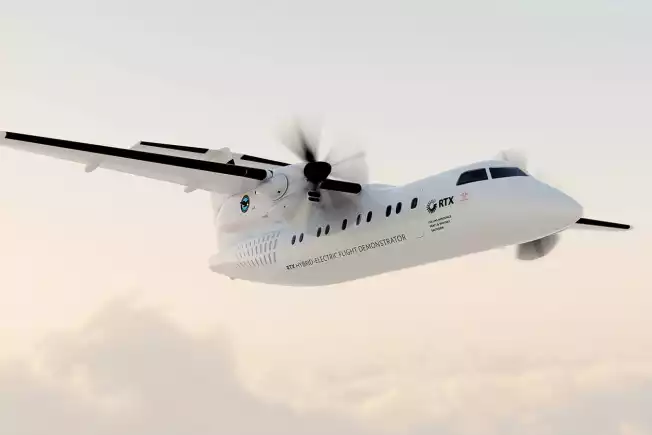
Canada has successfully tested an aircraft engine that combines the traditional turboprop principle with batteries. The new equipment consumes 30% less fuel and can be installed in any existing aircraft.
This was reported by New Atlas.
Purely electric aircraft are unprofitable
Land and even sea transport are gradually switching to electric traction. However, things are more complicated with aircraft. Currently, electric motors are only used in niche applications, such as small cargo and passenger aircraft.
Fundamental limitations are created by energy density—fuel has 20 times greater energy per unit mass than batteries. Therefore, for an electric aircraft to fly, most of its payload must be batteries. This is not cost-effective for flights longer than 300 km.
At the same time, as fuel is burned, the aircraft becomes lighter, while the weight of the electric motor remains unchanged throughout the flight. This means that a significant portion of the battery charge is spent on transporting the batteries themselves.

Source: RTX
Seeking a compromise
The RTX subsidiary, Pratt & Whitney Canada, is working with Collins Aerospace and the Government of Canada to develop a turboprop hybrid-electric engine. It is planned for use on medium-sized regional aircraft.
In March, during testing, the integrated system and batteries demonstrated successful operation at full power.
The turboprop and electric parts of the engine here “cooperate” by sharing the workload, rather than charging one another as in automotive hybrids.
During flight, up to 2 MW of power can be delivered with a single press of the throttle. In addition, the engine can function as a generator during descent, partially recharging the battery system and helping to balance consumption.
Key advantages of the new engine system include:
- 30% lower fuel consumption;
- 20% lower maintenance costs;
- the ability to operate on sustainable aviation fuel (SAF);
- can be installed in existing aircraft;
“People do not want to fly in empty aircraft filled with batteries. We are interested in reducing energy consumption per passenger-mile. The aim is to have the most efficient system, using the lowest amounts of fuel and electricity, and to minimize the energy required to take a passenger from point A to point B,” said Rémi Robache, Pratt & Whitney’s electronics program manager.
EcoPolitic previously reported that Singapore is the first country in the world to introduce a “green” tax on airline tickets. Revenue from the environmental levy will be used to purchase clean aviation fuel.