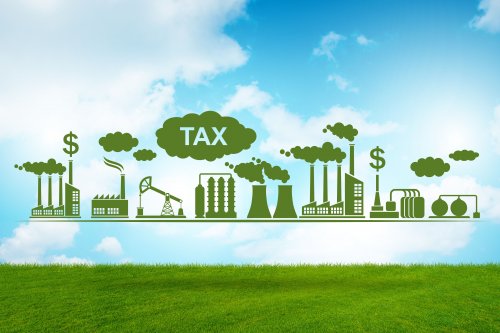
Polluting enterprises in Zhytomyr region paid UAH 61 million in environmental tax to the budget in 2025. These are rather modest figures, considering that the total amount of environmental tax in Ukraine is UAH 5.6 billion. It would seem that if the amount is small, it would be easier to allocate it to measures to improve the environment, without being tempted to finance pseudo-environmental programs.
EcoPolitic has gathered information for you on how environmental funds are usually spent in the Zhytomyr region and whether there is anything to do with the environment.
Distribution of funds
Environmental tax funds are distributed among budget funds at various levels. In the Zhytomyr region, the UAH 61 million paid by enterprises was distributed as follows:
- 16.4 million UAH – to the general fund of the state budget;
- 24.6 million UAH – to the special fund;
- 20 million UAH – to the special funds of local budgets.
Environmentalism as a very vague concept
Just like Ivano-Frankivsk region and other regions, whose eco-programs were previously analyzed by EcoPolitics, Zhytomyr region is guilty of blatantly distorting definitions when planning environmental protection measures.
If a project has even the slightest environmental component (and if you look closely, one can be found almost anywhere), it is conveniently added to the Program for Environmental Protection. The fact that this is actually the responsibility of the housing and utilities sector or landscaping does not bother the local authorities at all.
Let us examine the environmental protection program of the Novograd-Volynsk City Council for the years 2022–2026. In all its activities, the Housing and Utilities Department is a co-executor. As a result, among the projects financed in particular from the environmental fund are the arrangement of container sites for waste collection, the construction of water supply and sewerage networks, well drilling, and even the inventory of green spaces in population centers.
At the level of township communities, the situation is no better. Here is what the Novoborivska Township Council plans within its environmental protection program for 2026–2028: cleaning wells, snow removal, cleaning cemeteries, removing shrubs from streets, and the purchasing and planting of trees and flowers.
And what about at the regional level? Is it possible that funds are genuinely allocated to environmental measures there, rather than to solve municipal problems? Partially – yes. The approved environmental protection program of the Zhytomyr Regional Military Administration for 2023–2027 provides for the restoration of landscapes altered by human activity, installation of air quality monitoring stations, and protection of nature reserve fund sites. However, even here, some municipal and engineering issues are being addressed using environmental funds. In particular, the lion’s share of the money is allocated for the design, construction, and reconstruction of sewer networks. In 2024, over 7 million UAH from the regional environmental protection fund was allocated for the construction of wastewater treatment facilities in the urban-type settlement of Romaniv, while in 2026, there are plans to allocate more than 10 million UAH for the reconstruction of sewage treatment facilities in the village of Vysoka Pich.
Let us recall that during 2025, Ukrainian businesses paid 5.6 billion UAH in environmental tax. Among the leading payers were Dnipropetrovsk region, Kyiv, Ivano-Frankivsk, and Zaporizhzhia regions.