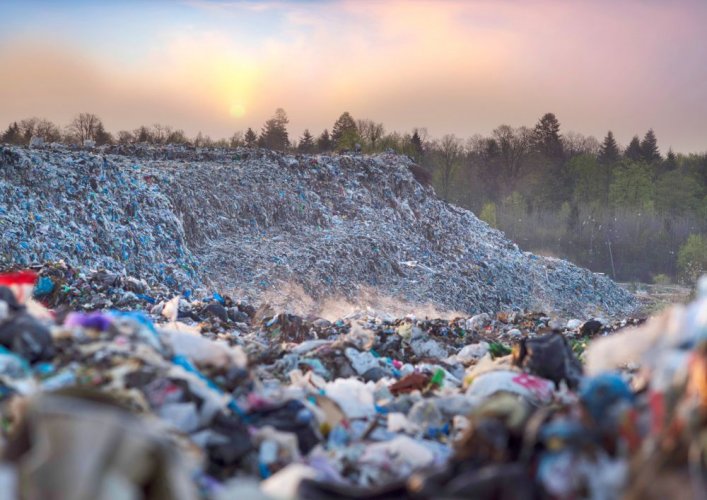
Upon joining the EU, Romania was required to close landfills that did not comply with the European Waste Disposal Directive. The deadline expired at the end of 2017, but the country has still not fully fulfilled its obligations. The European Commission has decided to bring Romania before the Court of Justice of the European Union.
This was reported on the official website of the European Commission.
Requirements are the same for everyone
European legislation has clear criteria that the organization and operation of landfills must meet. Upon joining the EU, a country is obliged to bring its landfills into line with these standards. If a landfill does not have a permit to operate or its activities violate regulatory rules, it is subject to closure and restoration of the territory.
The EU explains these requirements as necessary for the protection of public health and the environment. Uncontrolled waste storage or disposal without proper treatment poses a danger to humans, animals, soil, air, and groundwater.
The EU Landfill Directive 1999/31/EC has an ambitious long-term goal of gradually reducing landfill volumes by giving priority to recycling and other types of waste recovery.
There was the deadline for closing landfills
The European Union did not require Romania to close questionable landfills in the short term. According to the accession agreement, there was a 10-year period for this – certain landfills could operate until July 16, 2017. After that date, all landfills that did not comply with European legislation had to cease operations. The areas had to be recultivated.
As of 2017, Romania reported that it had closed and restored 92 landfills. Fifteen facilities continued to operate at that time. There were no clear plans for restoration work.
Next came a series of warnings. In October 2020, the European Commission sent an official letter of notification to Romania. In February 2024, the country received a reasoned opinion. The situation has still not been resolved.
Nine landfills have still not been restored. The European Commission is convinced that the Romanian authorities have not made sufficient efforts to protect nature and people from the risks of pollution caused by hazardous waste disposal sites.
Earlier, EcoPolitic reported that the European Commission initiated legal action against Poland as well. The reason was exceeding the maximum concentrations of nitrogen oxide emissions in the Kraków and Upper Silesian agglomerations. The country had been receiving warnings since 2016.