In the European Union, the online information platform of the European Innovation Center for Industrial Transformation and Emissions (INCITE – Innovation Center for Industrial Transformation and Emissions), which centralizes data on innovative clean industrial technologies in the EU, started working.
This is reported by PubAffairs Bruxelles.
The platform will gather information on advanced clean, carbon-free and circular practices already implemented or being implemented in large European industrial facilities and livestock farms.
Platform will aggregate data from all affected industry sectors Directives on industrial emissions (IED – Industrial Emissions Directive). Initially, the focus will be on energy-intensive industries: production of iron, steel, cement and chemicals.
Users can submit information to the platform using a simple questionnaire. Currently, about 20 examples of technologies used in current projects financed by the European Union are available on it. Examples include carbon capture and storage projects in the cement and lime industries, hybrid furnaces in the glass industry, and PFAS wastewater treatment projects.
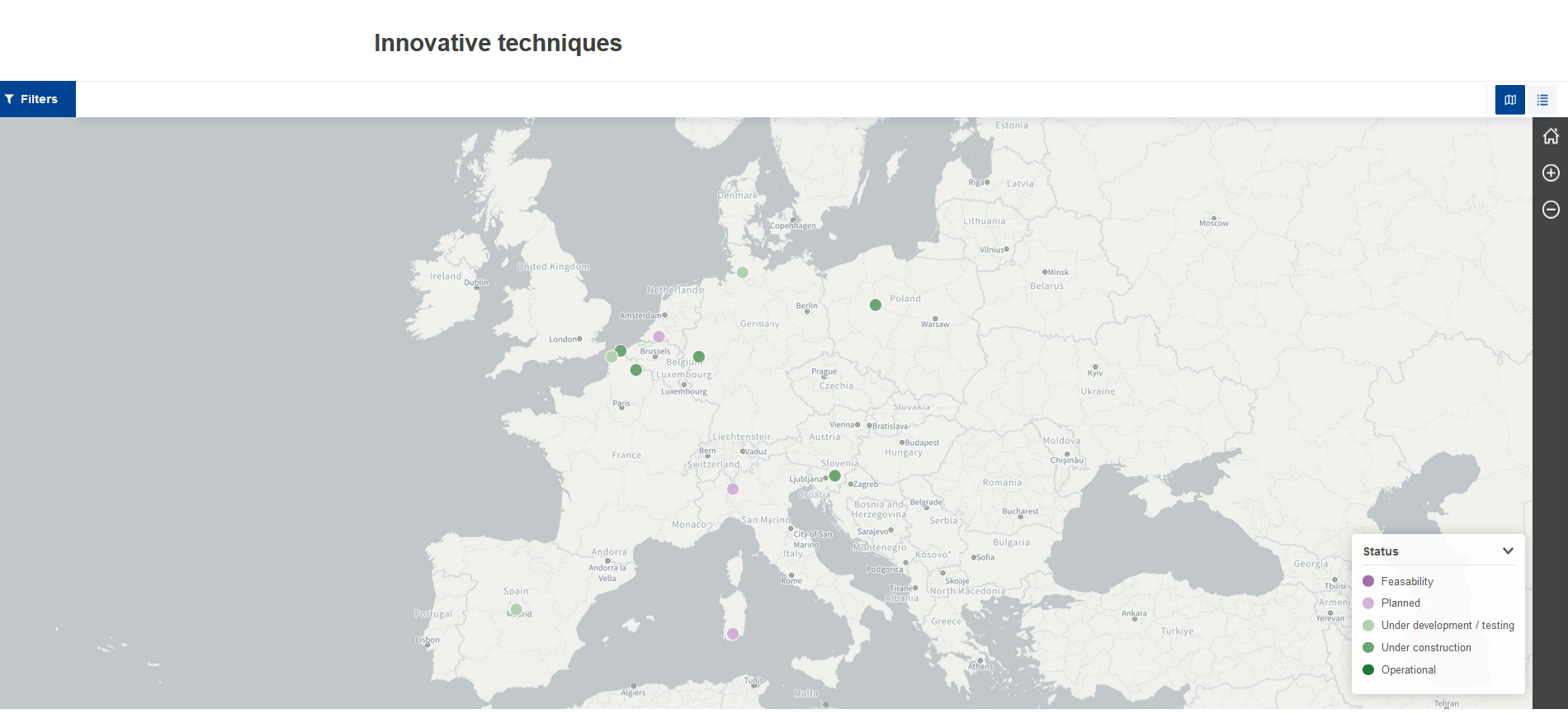
Source: innovation-centre-for-industrial-transformation.ec.europa.eu.
Why was this platform created?
- The new INCITE tool will help stakeholders make informed decisions by providing a comprehensive overview of environmental performance, technology maturity, costs and benefits, and potential trade-offs between these technologies.
- The online platform will also support dialogue and collaboration between industry, technology providers, research and technology organizations, policy makers and financial players.
- In addition, it will assist national authorities in the process of approving advanced installations of industrial enterprises.
- The platform will provide information to financial institutions so that they can choose the most promising technologies for investment.
This tool will be managed by the Commission's Joint Research Center (JRC). It will select innovative technologies that are ready to use and have significant environmental benefits and feed them into the Seville Process to develop future environmental standards and further scale up the adoption of clean technologies in Europe.
At the beginning of October, EcoPolitic reported on what became known 3 main updates in the EU Directive regarding industrial pollution. We said that plant operators will be able to use the new Innovation Center for Industrial Transformation and Emissions (INCITE), which will collect information on innovative solutions and transformational technologies, when drawing up "transformation plans" provided for by the updated Directive. Stakeholders will have access to the information collected by the Center on a publicly available online platform.