The Ministry of Environmental Protection and Natural Resources of Ukraine has formulated requirements for the development, form, and content of assessments of deviations from the conclusions of best available technologies and management methods (BAT), as well as a methodology for calculating the cost of achieving the maximum permissible emissions specified in the BAT conclusions.
The text of the relevant draft resolution of the Cabinet of Ministers of Ukraine entitled "On the Approval of Requirements for the Development, Form, and Content of the Assessment of Deviations and Indicators of the Criterion of Disproportionately High Costs of Achieving the Maximum Permissible Emissions Determined in the BAT Conclusions, Compared to the Benefits for the Environment, as well as methods for calculating the cost of achieving the maximum permissible emissions specified in the conclusions of the best available technologies and management methods in relation to the benefits for the environment" on its official website.
The draft resolution provides for the approval of the following documents:
- Methods for calculating the cost of achieving the maximum permissible emissions specified in the BAT conclusions in relation to the environmental benefits.
- Forms for assessing derogations.
- Requirements for the development, form, and content of derogation assessments.
- Indicators of the criterion of disproportionately high costs of achieving the maximum permissible emissions specified in the BAT conclusions in relation to the environmental benefits.
What is a derogation for an installation
Article 13 of the Law of Ukraine “On Integrated Prevention and Control of Industrial Pollution” provides that the permitting authority may determine less stringent maximum permissible emissions for a specific installation than the standards specified in the conclusions of the best available technologies and management methods. This is a derogation.
It is granted if there are valid BAT conclusions for the relevant type of activity carried out at the installation and applies from the date specified in such conclusions.
A derogation may be granted in two cases:
- obtaining an integrated environmental permit (IEP) for the first time for
- an installation that is already in operation;
in the event of an update of the IEP conditions in the cases provided for in paragraphs 1 and 2 of part one of Article 23 of this Law.
It is granted for the period of implementation of specific measures defined by the IEP conditions and may not exceed 7 years from the date of application of the BAT conclusions for which the derogation is granted. The period of the derogation granted is not extended.
No derogation is granted for installations that are put into operation for the first time. This means that all installations that will be put into operation after the law on industrial pollution comes into force, i.e. on August 8, 2025, must comply with BAT conclusions, if they have already been developed for this type of activity.
How to obtain a derogation for an industrial installation
If an enterprise wishes to obtain a derogation from BAT conclusions, it must develop a derogation assessment and submit it to the Ministry of Environment together with an application for an IEP (or an amendment thereto).
A derogation assessment is a justification by the operator of the installation of the need to temporarily establish less stringent emission limit values in the integrated environmental permit than those specified in the BAT conclusions. It consists of the following sections:
I. “List of reductions applied.”
II. “List of documents used to prepare the derogation assessment.”
III. “Information about the operator of the installation and the installation.”
IV. “Assessment of compliance with the conclusions of the best available technologies and management methods.”
V. “Description of the technical solution.”
VI. “Information on the impact on the environment.”
VII. “Assessment of the cost of measures necessary to achieve the maximum permissible emissions specified in the BAT conclusions and proposed by the installation operator.”
VIII. “Recommended derogation period.”
IX. “Plan for the implementation of compensatory measures, including a phased schedule for the implementation of measures, projected investments by year, and deadlines for achieving full compliance with the requirements specified in the BAT conclusions.”
X. “Appendices.”
XI. “Signature.”
The derogation shall be granted if the achievement of the maximum permissible emission standards specified in the BAT conclusions for the relevant type of activity carried out at the installation entails disproportionately high costs compared to the environmental benefits due to the geographical location, local environmental conditions of the installation or its technical characteristics, which increase the cost of achieving the maximum permissible emissions specified in the BAT conclusions for this installation compared to other installations carrying out the same type of activity or technological process.
The assessment of the derogation and its annexes must be submitted by the enterprise in electronic form through the Unified State Register of Integrated Environmental Permits.
How to determine whether an installation is eligible for a derogation from BAT conclusions
To do this, it is necessary to calculate the cost of achieving the maximum permissible emissions specified in the BAT conclusions. The enterprise must perform this calculation using the methodology developed by the ministry. It is applied if an IDD is obtained for the first time for an operating installation or in the event of an update of the conditions of the integrated environmental permit in connection with the entry into force of BAT conclusions (including updated ones) for the main types of activities or production processes included in the issued IDD.
To assess the disproportionate costs of implementing the BAT conclusions, the installation operator must calculate the economic disproportion coefficient Kен using the formula:,
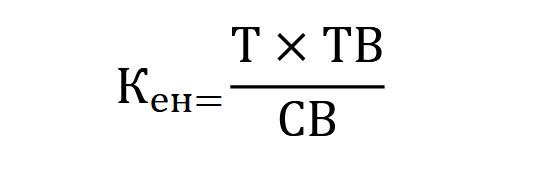
where Т is the conditional environmental benefit, UAH;
ТВ is the derogation period in years; the installation operator independently sets this value in the derogation assessment;
СВ – total cost of measures for the implementation of BAT, UAH.
The decision to grant a derogation is based on the value of Kен:
- if the value of Kен < 1, the derogation is granted for the period specified by the operator as “Derogation period, years”, but not less than 3 years;
- if the value of Ken ≥ 1, the derogation is not granted.
In cases where the values of the standards set in the BAT conclusions are determined in average daily concentrations, and the approved environmental standards are determined in maximum single concentrations, the economic disproportion coefficient is determined by the adjusted formula:
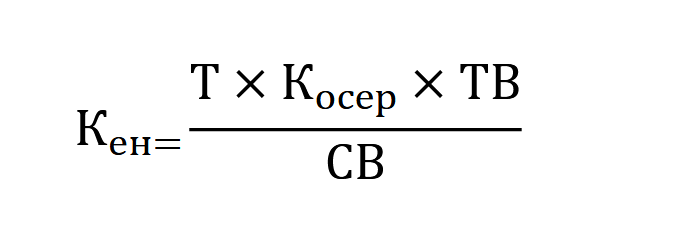
where Koser is the conversion factor for average daily concentrations to maximum single concentrations. The Ministry of Environment provides the corresponding formula for its calculation in the Methodology.
Along with the deviation assessment, the plant operator must submit:
- a complete list of the operator's installations for which the assessment of derogation is submitted;
- Ken calculations for each installation;
- supporting materials confirming the application of the criterion of disproportionately high costs of achieving the maximum permissible emissions specified in the BAT conclusions, compared to the environmental benefits;
- an implementation plan containing a phased schedule for the implementation of measures, projected investments by year, and deadlines for achieving full compliance with BAT requirements.
Just recently, EcoPolitic reported that the Ministry of Environment had developed requirements for the content and form of the installation operator's report on compliance with the conditions of the integrated environmental permit.