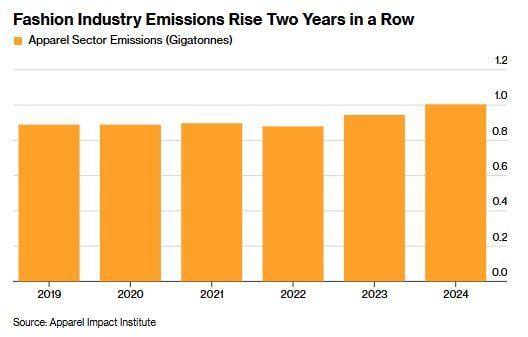
In just two years, the global clothing industry has increased its greenhouse gas emissions by 14 per cent. Experts attribute this to an increase in textile production, particularly synthetic polyester.
This was reported by Bloomberg, citing a new report from the Institute of Fashion Impact.
The latest data that the organisation has been able to obtain from manufacturers covers the years 2023 and 2024. In both periods, carbon emissions rose initially by 6.3 per cent, and subsequently by a further 7.5 per cent.
Overall, clothing production in 2024 resulted in colossal emissions – around 1 gigatonne, or 1 billion tonnes, of substances harmful to the atmosphere. By way of comparison, this was roughly equivalent to the carbon footprint of the whole of Japan that year – a developed country with a population of over 120 million.
"This trend is a cause for concern. It is a clear sign of increased material use," emphasised Kurt Kipka, director of one of the Institute’s research divisions.
Source: Bloomberg
The path to recovery and the risks facing the industry
It is extremely costly to decarbonise this sector, which is why it has such a massive impact on the environment. According to experts, producing ever-new polyester is significantly cheaper than recycling existing materials.
According to Kipka, one way to reduce emissions is to find alternatives to oil and gas for industrial operations. This primarily involves renewable energy sources, together with energy storage systems.
According to the Institute’s forecasts, the fashion sector could face a 34 per cent drop in profits by 2030 unless companies take swift action to reduce their carbon emissions.
At the same time, experts note that some progress has been made. Whilst only 100 companies had their own climate targets and commitments to meet them in 2021, by June 2026 this figure had risen to over 700. Major fashion brands are increasingly reporting an increase in the proportion of recycled fibres in new garments, as well as significant reductions in emissions.
However, declaring environmental targets does not mean achieving them. For example, Burberry had previously stated that it would achieve net-zero emissions by 2040. However, it recently pushed this deadline back by ten years.
EcoPolitics previously reported that large companies in the EU have been prohibited from the wasteful destruction of unsold clothing, footwear and accessories. Instead, they are encouraged to sell these items at a discount, donate them to charitable organisations, refurbish them or recycle them.