Experts discussed the costs of "green" technologies, energy costs and prospects for Ukraine's accession to the EU during a round table organized by the German consulting agency Berlin Economics,
Stanislav Zinchenko, Chairman of the EBA Committee on Industrial Ecology and Sustainable Development, Director of the GMK Center, spoke about the current state of Ukrainian industry and the real steps needed to modernize it in accordance with the "green" goals, report GMK-Center.
The war has significant consequences for Ukraine's industrial sector, including:
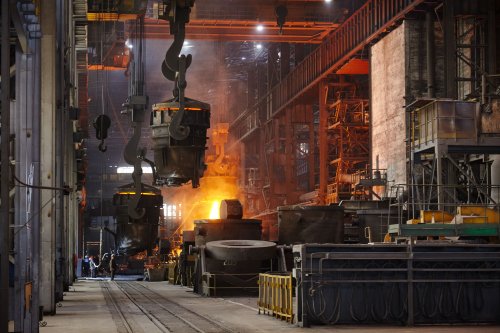
- a number of enterprises were damaged (the largest of them - Azovstal, Ilyich MMK, Severodonetsk Azot, Avdiivka Coke Plant, Energomashspetsstal and others);
- supply chain failures, logistics problems;
- falling domestic consumption.
Zinchenko noted that Ukraine has lost up to 50% of its economy and will recover to pre-war levels in as little as 5 years.
"It simply came to our notice then. Moreover, Ukraine no longer has to talk about climate targets for 2030. Plans to reduce emissions have failed in terms of carbon capacity, ”he said.
In addition, Ukraine needs a revision of the NDC-2 targets (nationally determined contribution under the Paris Agreement) and support from partners, primarily the EU, to fund post-war industrial recovery programs, access to green transition funding for Ukrainian companies, as local the economy was badly affected by the war.
What Ukraine can really do
Supporting the global community in the implementation of recovery programs will provide an opportunity to apply best practices in reducing emissions in industry, including some critical technologies:
- energy efficiency, including digital efficiency solutions;
- maximum use of excess heat (including significant potential of metallurgy);
- circular solutions (cement producers can use household waste as fuel);
- increasing the use of renewable energy sources, as well as cogeneration. For example, mining companies can switch to biodiesel or LNG and then electrify transport.
"Technology has changed fundamentally. However, the situation in Ukraine has changed, the possibilities of using these technologies have changed, ”Zinchenko said.
He also added that without large-scale external financing programs, Ukraine will not be able to meet the challenges of the "green" transition.
The main obstacles:
- technological problem . Restoring the destroyed community with the help of the world community will not allow building a "green" industry, because modern technologies can reduce emissions by only 25%. So, if a new metallurgical plant is built on the site of Azovstal in 20 years, it will have to be rebuilt. Thus, it will not complete its life cycle and will not be able to ensure a return on investment;
- difficulties of Ukrainian companies with access to financing after the war . Much depends on how the war ends, but financial institutions will appreciate Ukraine's high country risks. The country was already at a disadvantage compared to European companies in attracting funding, and now the situation may worsen. The help of international partners and access to funding for the green transition is very important;
- CBAM conditions are getting tougher . Ukraine needs special conditions, as CBAM can destroy Ukrainian industry that survived the war. Plants will not be able to make significant progress in reducing carbon capacity until 2023, when CBAM is launched. Currently, the EU does not limit 100% of our exports, so the importance of this issue has grown;
- difficult transition period . A new normal gas price is needed. High gas prices will hamper the development of technologies such as direct reduction iron (DRI) production, where gas would reduce emissions by 40%. It is advisable to intensify the development of gas production in Ukraine to meet the needs of the transition period;
- lack of staff . Incentive programs are needed to encourage professionals and workers who can leave Ukraine to stay.
The article noted that these problems are not new, but the situation has become much more complicated and the cost of error in implementing the policy of "green" transition has increased even more.
Policies and tools to overcome obstacles and implement a green recovery
Domestic opportunities to stimulate the "green" transition in Ukraine have shrunk as the economy has fallen and budget priorities focus on defense and social programs, housing rehabilitation and urban infrastructure.
“There are many areas that need funds. Therefore, I do not believe that the internal "green" funds and instruments will cope with the tasks of the "green" transition, "Zinchenko said.
Ukraine needs access to European funding instruments. And although Ukraine's European integration is a matter of the next 10 years, it is necessary to have a clear plan and clear deadlines.
"We need access to green tools today or tomorrow. Our diplomacy needs to find out what these mechanisms can be, "he added.
In addition, Ukraine needs a special approach to meeting emission reduction requirements to make climate policy as lenient and stimulating as possible.
We will remind, Ukrainian exporters to the EU will be subject to a carbon duty of more than € 1 billion annually.
As EcoPoliticа reported earlier, UVEA offered steps for the revival of RES in Ukraine.