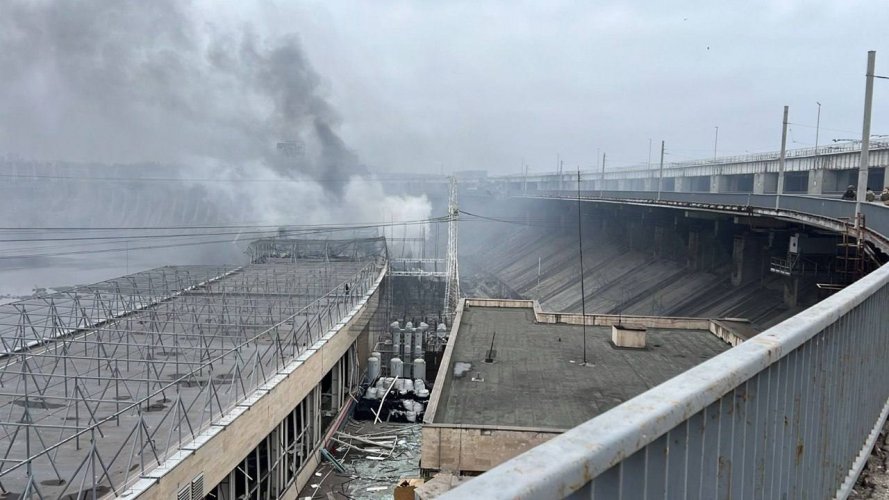
According to preliminary estimates, the environmental damage caused by Russia's missile strike on the Dnipro hydroelectric power plant on March 22 amounted to about UAH 140 million.
This was stated by the Minister of Environmental Protection and Natural Resources Ruslan Strelets on the air of the United News telethon.
Mr. Strelets explained that environmental damage is not only damage from the destruction and pollution of water. It also includes damage from explosions and burning, as well as their impact on all ecosystems.
He emphasized that the calculation of losses is ongoing and the amount of damage will increase.
"As of today, we have a figure of UAH 140 million. This is another case in our general track of calculating environmental damage in order to bill the occupiers later," said Strelets.
On the morning of Friday, March 22, Russian troops carried out the most massive attack on the Ukrainian power system in recent times, including shelling the Dnipro hydroelectric power plant in Zaporizhzhia. This could have created a new environmental disaster, but there is no threat of a breakthrough.
As EcoPolitic previously reported, environmental inspectors found 4.2 times the permissible concentration of oil products in the Dnipro River after the Russian shelling of the Dnipro HPP on March 22, 1.4 km from the plant and 2.9 times 2.5 km away. Estimated losses from oil pollution amounted to UAH 159 thousand.