The European Business Association (EBA) insists on the need to revise the Second Nationally Determined Contribution (NDC2) to the Paris Agreement, taking into account the current state of the Ukrainian economy.
The call for the need to revise NDC2 for Ukraine is published on the official website of the EBA.
Representatives of the association emphasize that over the past three years, the key factor in shaping carbon emission requirements in Ukraine has been military action, not business activity. Therefore, Ukrainian businesses are convinced that climate goals need to be revised and adapted, as they must remain realistic and achievable.
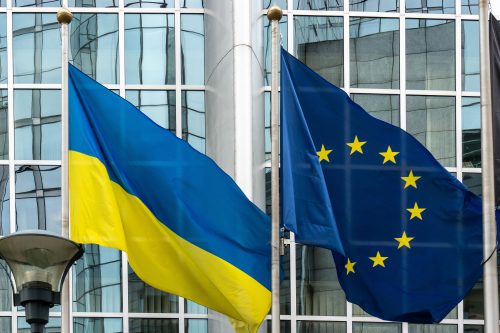
To this end, the business community has called on the Ukrainian government to adapt national climate commitments to the current military and economic conditions. In addition, the association has informed the European Commission of the position of Ukrainian businesses and approaches to setting updated climate targets that will take into account the current challenges and contribute to further economic recovery.
EBA representatives emphasize that in wartime, environmental goals need to be adapted so that they do not hinder economic development but, on the contrary, help to restore it.
In particular, the association emphasized to the European Commission that Ukrainian businesses want to see climate policy that remains responsible but also takes into account the economic challenges Ukraine is currently facing.
As EcoPolitic wrote earlier, in the context of full-scale war, the current goal of reducing emissions by 68-73% by 2035 from 1990 levels, as set out in Ukraine's NDC2 draft to the Paris Agreement, may be quite ambitious.
The Federation of Employers of Ukraine (FEU) proposes that the Ministry of Environmental Protection and Natural Resources of Ukraine set a more realistic climate target of a 65.1% reduction in greenhouse gas emissions by 2035.
The EBA notes that Ukraine should achieve the emission reductions envisaged in NDC2 not through deindustrialization, but by reducing the carbon intensity of production. A prerequisite for this is access to European instruments to stimulate decarbonization.