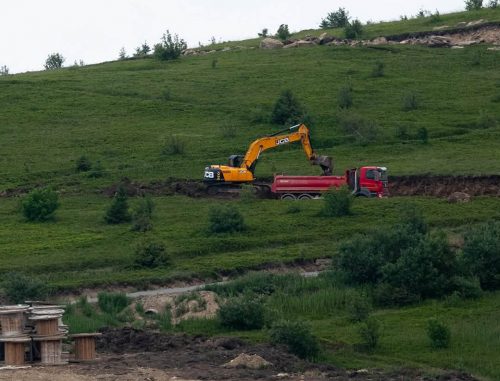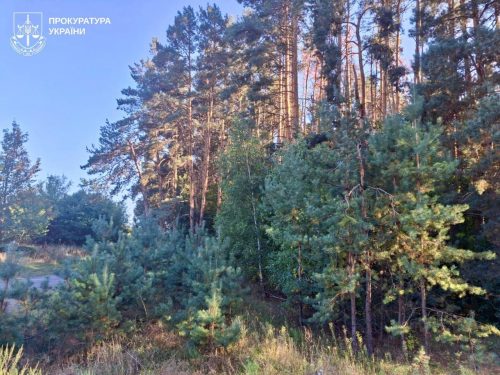
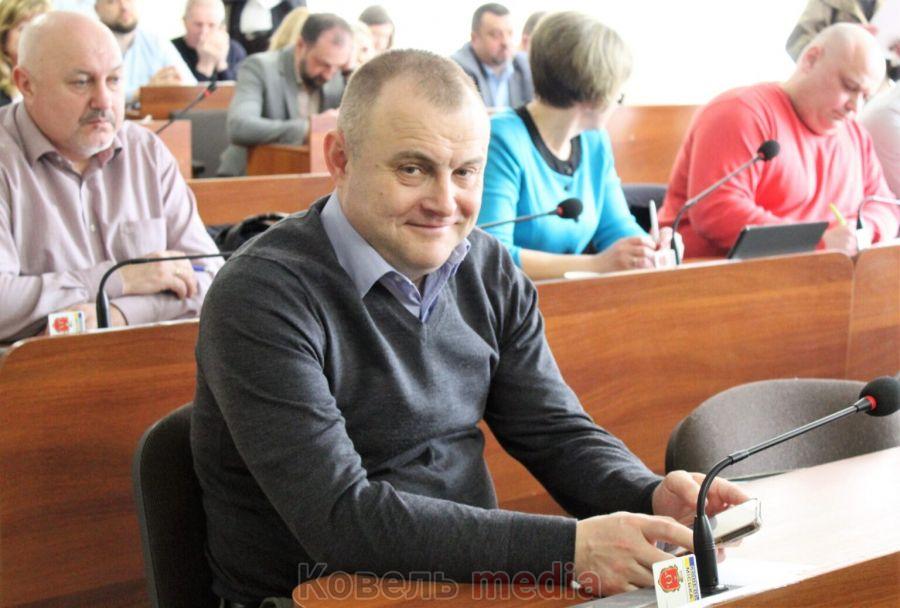
In Volyn, a member of the Kovel City Council, Pavel Semenyuk, was suspected of organizing a criminal scheme to export illegal timber worth more than 44 million UAH.
The wood was sold to Europe as pallets, because such goods are not subject to certification, the Informant reports.
It is noted that Semenyuk is the head and ultimate beneficiary of the Agropromtech Center VKPP and the head of the permanent commission on regulating land relations. The enterprise is engaged in sawmill and planing production, logging and production of wooden containers (pallets).
"Pavlo Semenyuk and his family built an illegal business on the production and export of boards and wooden pallets to Europe," the article says.
The authors said that unscrupulous enterprises, in particular those related to Semenyuk, can commit major abuses. The founders of a number of such companies are members of the Semenyuk family. They use illegally cut wood to make pallets, and also buy pallet blanks from illegal wood from local illegal sawmills that illegally cut roundwood.
They emphasized that these goods are exported to Europe under the guise of certified EPAL pallets. However, the companies use a license that officially belongs to "Agropromtehtsentr", which is prohibited by the rules of the European Pallet Association e.V. (EPAL).
It is noted that from May 2022 to March 2023, four related enterprises exported pallets and boards for a total volume of lumber of 141,140 m3. However, only 85,835 m3 were officially purchased.
It was established that in the period from 2021 to eight months of 2022, "Agropromtechcenter" used 28,820,395 m3 of round forest materials of unknown origin with a total cost of UAH 44,804,459 in the production process.
Earlier, EcoPolitic wrote, that in Lviv region, the management of the branch of the state enterprise "Forests of Ukraine" organized an underground data center for cryptocurrency mining in the office premises of "Rava-Ruske Forestry". According to preliminary estimates, losses from such activities, which lasted more than a year, amounted to more than 1.5 million hryvnias, and those involved earned at least 4 million hryvnias.
As EcoPolitic previously reported, People's Deputy from the "Servant of the People" faction, chairman of the Subcommittee on Protection and Optimal Use of Subsoil Pavlo Yakymenko was suspected of facilitating the illegal obtaining of a permit for beryllium production. We are talking about a company that is partly owned by his father, and mining is partly planned in the reserve.