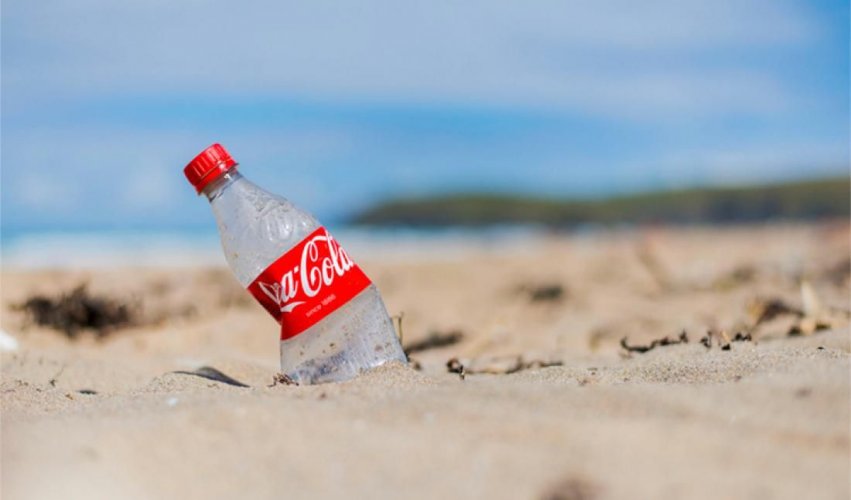
Statements by major brands, including Coca-Cola and Unilever, about the environmental friendliness of plastic packaging mislead consumers.
This is stated in the report of environmental non-profit organization Change Markets Foundations, reports The Guardian .
Claims that companies are using ocean or recyclable plastic to combat the plastic pollution crisis are among the most common examples of greenwashing, the organization says.
According to the report, companies' statements provided inconclusive evidence of how they are handling the pollution crisis. The organization believes that PR about environmental initiatives is done in order to hide the damage that is actually caused to nature.
"Our latest investigation has uncovered a number of misleading claims made by well-known people who are trusted by consumers. This is only the tip of the iceberg and it is vital that regulators take this issue seriously," said George Harding-Rolls, head of the Changing Markets Foundation. The industry happily brags about its environmental achievements while exacerbating the plastic crisis.
For example, the same Coca-Cola spent millions to promote a campaign that tells that its bottles are 25% made of marine plastic. At the same time, the company is silent on the fact that it is the world's largest plastic polluter.
The maker of Mentos candy, Perfetti Van Melle, is telling customers about its new supposedly eco-friendly cardboard boxes, but hiding the fact that the packaging is actually a non-recyclable composite of cardboard, aluminum and plastic.
Head & Shoulders shampoo (Procter & Gamble) is bottled in new bottles made from plastic collected on beaches. However, the blue color of the bottle is proof that it is not subject to further processing.
Meanwhile, Unilever, which replaced PET bottles with detergent with bags. The manufacturer did this as part of its reuse promotion campaign. However, if PET bottles are suitable for recycling, then the packages are not.
The study covers 15 countries and regions on five continents. Examples show that brands advertise and sell products claiming they are the best for the environment. But the reality remains different: packaging is not recycled, is difficult to recycle, or uses a small fraction of "oceanic" plastic.
Change Markets Foundations, together with Zero Waste Europe, called for the creation of closed recycling systems to solve the problem of plastic pollution.
"We need to make systemic decisions, such as an absolute reduction in the use of plastic packaging, for example," the report said.
Before Ecopolitic wrote that in January 2022 the Government of Ukraine registered draft law No. 6446 "On Amendments to Some Laws of Ukraine Regarding the Regulation of the Use of Environmental Labels and Declarations", which, among other things, provides for the withdrawal of pseudo-ecological products from circulation.