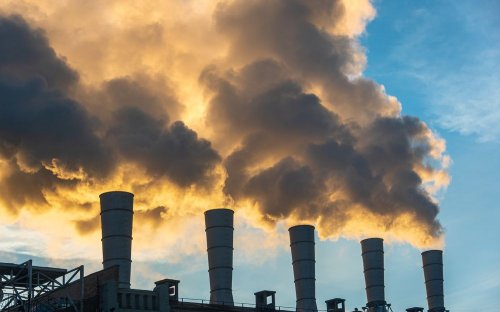
Brussels (Belgium) is preparing a new work program for the European Commission for 2026, which shows a significant shift from an ambitious "green" course to a more economically balanced approach.
This is stated in the draft climate plan of the European Union, Euractiv reports.
The EU draft for 2026 provides for an update of renewable energy rules. The changes may concern terminology, in particular, renewable energy will be called "clean" energy. This will allow EU countries to use nuclear power plants to generate energy and capture and store carbon (CCS).
According to experts, the European Commission may become less ambitious in terms of expanding "green" programs and more focused on balancing, "moderate" development, which will take into account economic risks and budget constraints. Euractiv's sources call this a kind of "skew", because instead of aggressive intervention and new regulations, the EU's focus may shift to optimizing and improving the efficiency of existing mechanisms in the energy sector.
EU climate goals through 2040
Leaders of the European Union plan to agree on setting a new bloc-wide climate change target for 2040. At the same time, country leaders are demanding that the EU authorities provide greater support to industries such as metallurgy and automotive manufacturing to achieve climate goals.
The EU planned to adopt a new climate change target by the United Nations’ deadline in September. But negotiations failed when France, Poland, and other countries demanded that officials first discuss the 2040 target.
According to experts, EU leaders will also demand that the European Commission develop a stronger "enabling framework" to support industry and citizens during the "green" transition.
Some European governments believe that the EU should achieve its climate goals in a "technology-neutral way."
EcoPolitic readers will recall that the European Parliamentary Majority, which includes the European People's Party (EPP), the Socialists and Democrats (S&D) and the Liberals (Renew Europe), agreed to amend directives concerning environmental responsibility for enterprises and businesses.
In particular, the rule (Corporate Sustainability Due Diligence Directive, CSDDD), which obliges companies to take into account human rights and environmental standards in their supply chains. It will now be applied only to large businesses with more than 5,000 employees and a turnover of €1.5 billion or more. Previously, the thresholds were much lower: 1 thousand employees and €450 million.