The UK will once again move towards zero emissions. Prime Minister Keir Starmer has endorsed the Carbon Budget Implementation Plan, which sets out the government's commitments to achieving environmental goals.
The Guardian explains the essence of the plan and notes that most of its measures are essentially a repetition of existing ones.
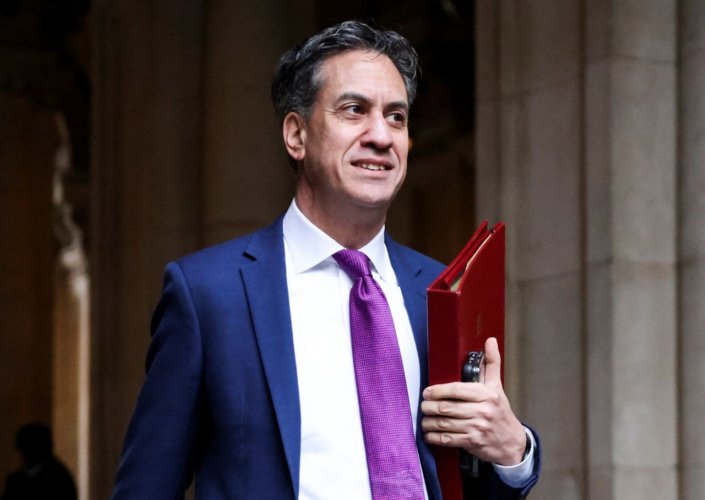
"This government is proud to be judged on this measure. At COP30 next week, we will show that we are ready to fight for our planet with words and deeds," said Ed Miliband, Secretary of State for Energy Security and Net Zero.
However, the publication clarifies that the publication of the Plan was the result of pressure from environmental activists. They obtained a court order requiring the British government to publish the environmental document.
Both businesses and ordinary citizens will feel the consequences
According to the plan, Britain will decarbonize its electricity supply by 2030 and drastically reduce greenhouse gas emissions by 2037. To achieve this, the plan's measures cover all "dirty" industries, from energy to housing and utilities. Here are a few examples:
- Landlords will be required to provide tenants with access to electric vehicle charging.
- Discounts for industry to reduce energy costs.
- The share of sustainable aviation fuel will be increased to 22%.
- The majority of Britons will need to switch to heating with heat pumps, which have been recognized as a low-carbon option.
If the plan is successfully implemented, energy utility costs in the UK are expected to decrease by £300.
Position of environmental experts
“If everything is done right, this could ensure lower bills, warmer homes, and thousands of good green jobs. It will help overcome the deep inequality felt throughout the country and build a fairer, more prosperous future,” the publication quoted Asad Rehman, Executive Director of Friends of the Earth.
Nevertheless, environmental activists still point out a number of shortcomings, including:
- Lack of commitments to reduce flights. On the contrary, the UK government supports expanding airports.
- Insufficient attention to developing the public transport network. The main focus is on increasing the share of electric vehicles rather than planning new railway lines, whereas it is rail that can relieve road congestion and thereby reduce emissions.
- Uncertainty regarding specific steps to reduce agricultural emissions. The environmental community notes that this requires reducing the area of land used for livestock. However, the plan refers to changes in land use without specifics.
As a reminder, the UK and the EU have previously agreed to work on merging their emissions trading systems (ETS).