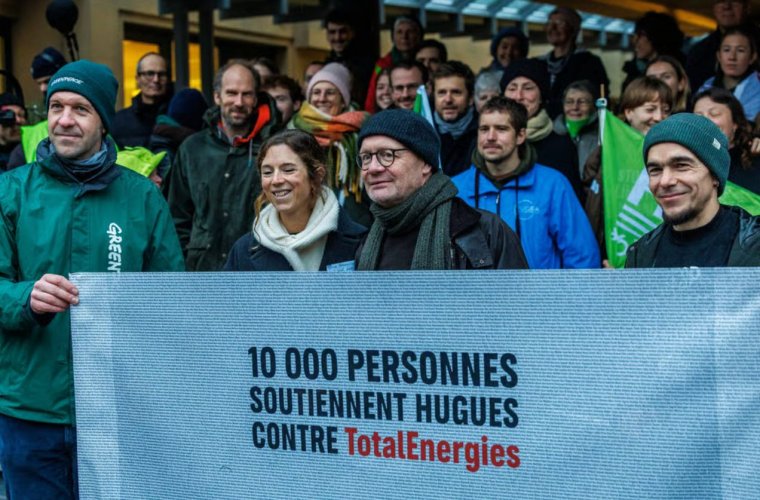
An unusual court case is underway in Belgium. Farmer Hugo Felis has blamed oil and gas company TotalEnergies for his crop failures and is seeking compensation for the damage it causes to the climate.
According to Politico, he also wants the company to stop investing in new fields and reduce its emissions.
The story of one farm
Hugo Felis' farm is located in western Belgium, in the province of Hainaut. The man has been raising livestock and growing vegetables for over 35 years. However, in recent years, his farm has increasingly suffered from natural disasters and the effects of climate change.
An incredible storm in 2016 destroyed the entire strawberry crop on Felis' farm and most of the potato crop. This was followed by droughts in 2018, 2020, and 2022, which damaged the harvest and prevented him from preparing feed for his cows for the winter.
“I have personally experienced climate change. It has affected not only my farm, but also my daily life and even my morale,” said Hugues Falys.
He switched to organic farming and reduced his livestock numbers. However, all his efforts are futile, as the climate continues to change.
This is how Felice's battle with the French company TotalEnergies began. He is convinced that those whose activities are destroying the climate and thus destroying his life's work must pay.
Collective irresponsibility
The total annual emissions of TotalEnergies' assets are comparable to the annual emissions of the entire United Kingdom. However, the complexity of the case lies in the fact that there are many similar polluting companies, and the effects of global warming have been developing for decades. Citing these arguments, the oil company is in no hurry to take responsibility for the droughts and storms on Felice's farm.
However, the man's lawyers are presenting a number of arguments against the company in court. These include attempts to undermine scientific conclusions about the harm caused by fossil fuels, greenwashing, and anti-environmental lobbying.
Source: Getty Images
Broader context
Felice's lawsuit is not the only climate-related lawsuit. There are currently up to 3,000 cases worldwide related to the impact of companies on the climate.
Activists in various countries are putting pressure on the judicial system in an attempt to break through the wall of protection surrounding oil and gas giants and force them to finally operate in accordance with modern "green" principles.
"There are various entities that support the status quo of a fossil fuel-based economy. It is important that there are different lawsuits in different parts of the world, for different victims, against different companies," said Matthias Petel, a member of the Human Rights League's environmental committee.
Why this case has a chance to set a precedent
Previously, similar cases, where specific companies were held responsible for global change, have failed. But environmentalists are convinced that the context has now changed.
There have been legal developments that give hope for a new trend to emerge. For example, in 2021, the Amsterdam-based environmental organization Friends of the Earth Netherlands (Milieudefensie) secured a ruling against oil and gas giant Shell. The court ordered the company to reduce its emissions by 45% over ten years.
The farmer says he does not simply want financial compensation for the devastation of his farm. He wants to bring about a profound change in values at companies like Shell, forcing them to align their activities with the Net Zero climate goal by 2050.
"This is the first time that a court, at least in Belgium, can hold one of these polluters legally responsible for the climate damage that citizens like Hugo have suffered over the past decade," Yori Thijs, spokesperson for Greenpeace Belgium, told POLITICO.
EcoPolitic has reported on how global warming directly affects people. For example, one in five deaths from cardiovascular disease in Europe is caused by climate change.