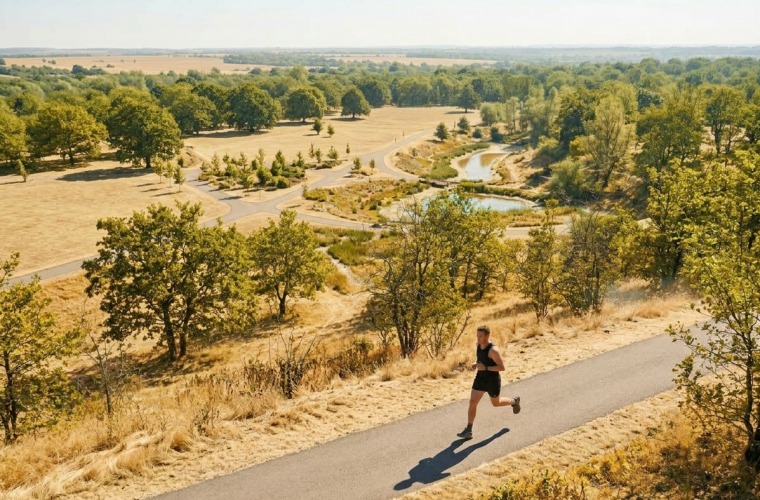
Scientists have identified a less obvious impact of global warming on public health. Due to the heat, physical activity becomes undesirable and even dangerous; however, a sedentary lifestyle, in turn, increases people’s risk of heart disease, diabetes, and even cancer.
The Guardian reports on this, citing a recent study published in the journal Lancet Global Health.
How heat affects activity
For their analysis, the researchers selected the period from 2000 to 2022 and data from 156 countries worldwide. The aim of the study was to model how global warming will affect people’s physical activity by 2050.
The researchers found that every month with an average temperature above 27.8 °C reduces people’s active lifestyle by 1.5%. However, in poorer countries, the figures are even higher—1.85%.
The dangers of inactivity
Lack of movement generally shortens lifespan. In terms of specific diseases, reduced physical activity increases the risk of cardiovascular diseases, type 2 diabetes, certain cancers, and mental disorders.
According to the World Health Organization (WHO), inactivity already accounts for 5% of adult deaths. At the same time, about 30% of people globally do not meet the weekly exercise guidelines.
Scientists add even more alarming projections. The decline in activity poses a deadly threat – more than half a million premature deaths every year.
At the same time, this can also lead to economic challenges. Due to lost labor productivity, economies will lose from 2.4 to 3.68 billion dollars by 2050.
Which countries will suffer the most
Heat and the inactivity it causes will have the greatest impact on low-income countries. Primarily, this concerns Africa, Central American countries, and the Caribbean.
“It's not just a story about climate, it's also a story about inequality. Places expected to face the greatest increase in climate change-induced inactivity are often those with fewer resources for adaptation,” said the study's lead author, Cristian Garcia-Vitolsky, research fellow at Lancet Countdown Latin America.
The importance of adaptation
In the context of global warming, declining physical activity is not about personal laziness or individual lifestyle. It’s a national health issue that should motivate governments to take concrete action.
“Staying active in a warming world depends not only on personal motivation, but also on urban design, infrastructure, and access to reliable information. In practice, climate-resilient physical activity policy helps people remain active safely even under hotter conditions,” said Garcia-Vitolsky.
Among ways to improve life quality in hot conditions, scientists mention expanding urban tree cover for shade, providing access to cool places for sports, and informational support. However, the main condition remains globally reducing emissions.
EcoPolitic previously reported that heat can reduce electric vehicle battery performance by more than 40%.
In Spain, in order to help people cope with the hottest months, they plan to create a network of cool shelters.