Participants of Carpathian Conventions in Rzeszow, Poland, strongly condemned Russia's military aggression against Ukraine and its negative consequences for the environment.
They accepted 2 Ministerial Declarations on the implementation of the global framework program for the preservation of biodiversity and on the impact of the war on the environment in Ukraine and the need for cooperation and assistance, reports Ministry of Environmental Protection and Natural Resources.
The message noted that all participating countries, namely the Czech Republic, Hungary, Poland, Romania, Serbia, Slovakia and Ukraine, unanimously supported both documents. The conference consisted of two blocks – "Biodiversity" and "Impact of war on the environment in Ukraine".
"The natural heritage of Ukraine continues to suffer significant damage due to the military aggression of the Russian Federation. Today, 10 natural parks, 8 natural and 2 biosphere reserves are still occupied. On the territory of those parks that were freed thanks to the efforts of the Armed Forces, work on demining the territories and calculating the damage to the nature reserve fund is still ongoing. A terrorist country must fully pay for the consequences of its crimes against Ukraine and our nature," Deputy Minister of Environment and Natural Resources Oleksandr Krasnolutsky told the participants of the conference.
He also emphasized that Ukraine receives tremendous support from partners under the Carpathian Convention. This is evidenced by the inclusion on the agenda of the Conference of the proposal of the Ministry of Environment regarding the impact of the war on the environment of Ukraine and the creation of a separate Declaration to help Ukraine.
The press service noted that the declaration refers to:
- condemnation of Russia's military aggression against Ukraine and its negative ecological, socio-economic and humanitarian consequences for the Carpathian region;
- confirmation of close cooperation of Ukraine with the participants of the Convention;
- creation of a mechanism for providing assistance in post-war reconstruction;
- possible patronage of the countries participating in the Convention over Ukrainian natural parks and other material and technical assistance.
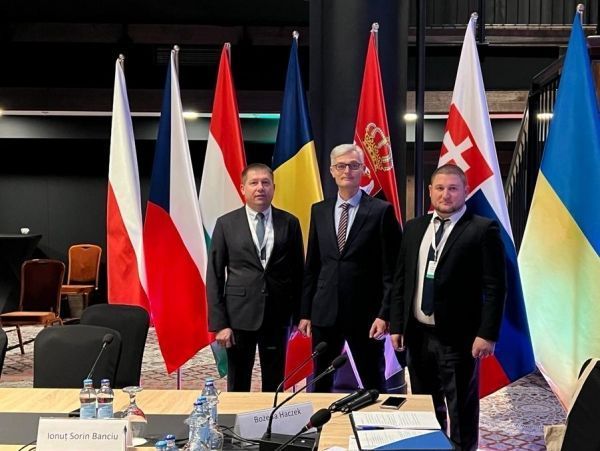
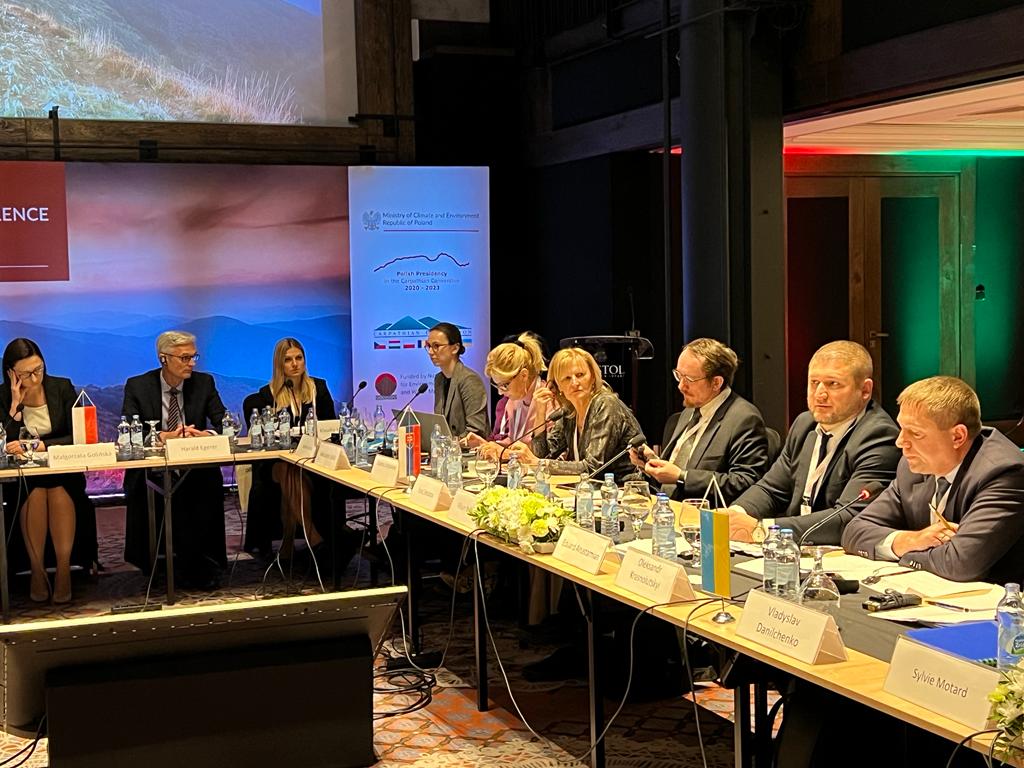
Director of the Department of Nature Reserve Fund and Biodiversity of the Ministry of Environment, Eduard Arustamyan, emphasized that the preservation of biodiversity is one of the key tasks of the Carpathian Convention. In Ukraine, for the preservation of rare species of flora and fauna, work on the creation of national nature parks continues and cross-border cooperation is formed.
He noted that one of the tasks of Ukraine at the Conference was to work together with its participants to develop as large a set of solutions as possible and to adopt the experience of partners.
"The Ministerial Declaration on Biodiversity Conservation also mentions the important contribution of the Carpathian region to the implementation of goals and objectives that will be adopted at the UN Conference on Biodiversity COP15 in Montreal in December 2022," the message emphasized.
As EcoPolitic reported earlier, in delegates of the international conference of the Ramsar Convention (COP14), for the first time in its 50 years of existence, voted for restrictions on Russia's rights as a Contracting Party.